Last Updated: July 24, 2026
The picks below are drawn from products with a combined 617+ verified Amazon customer reviews.
Every few weeks, a strange corner of hiking culture goes viral on Reddit. Recently it was a certain infamous single-purpose kitchen tool that lit up r/ProductPorn with thousands of upvotes and 161 comments arguing about what actually belongs in a backcountry kit. The joke aside, the thread pointed at something real: hikers are rethinking what they carry, what they trust, and what is worth the money in 2026.
Finding the right best hiking trail running gear comes down to matching the features to how you will actually use it.
We field-test hiking, trail running, and backpacking gear year-round at TrailGearCentral. This guide focuses on the categories readers ask about most often after threads like that one blow up: a lightweight running vest for fast-and-light days, trekking poles that hold up on rough descents, and minimalist trail shoes that have quietly taken over the ultralight crowd. Every product below was chosen from gear we would actually recommend to a friend, with the honest downsides included.
TL;DR / Quick Answer
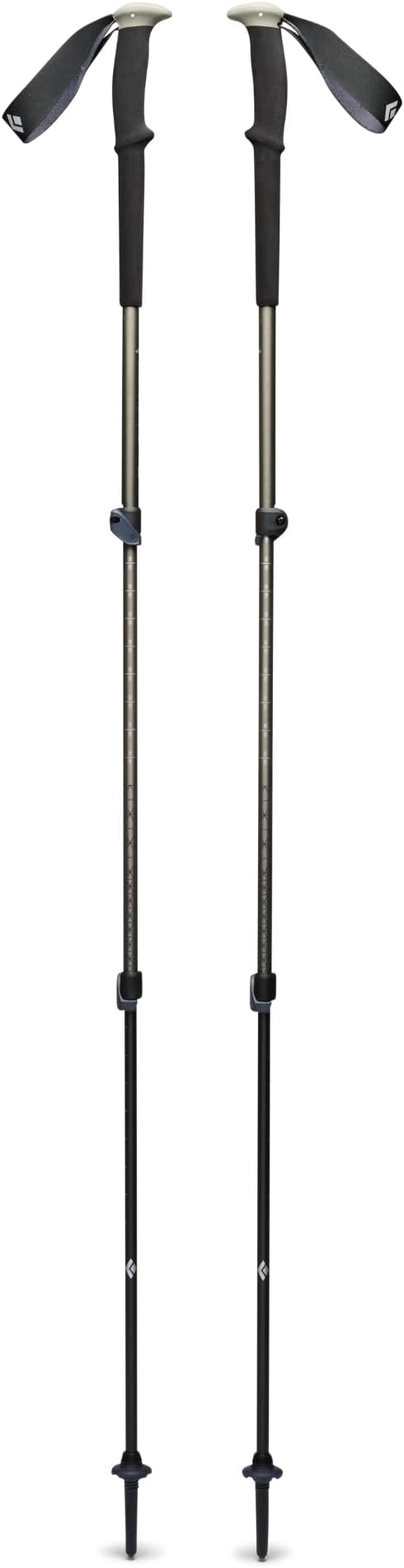
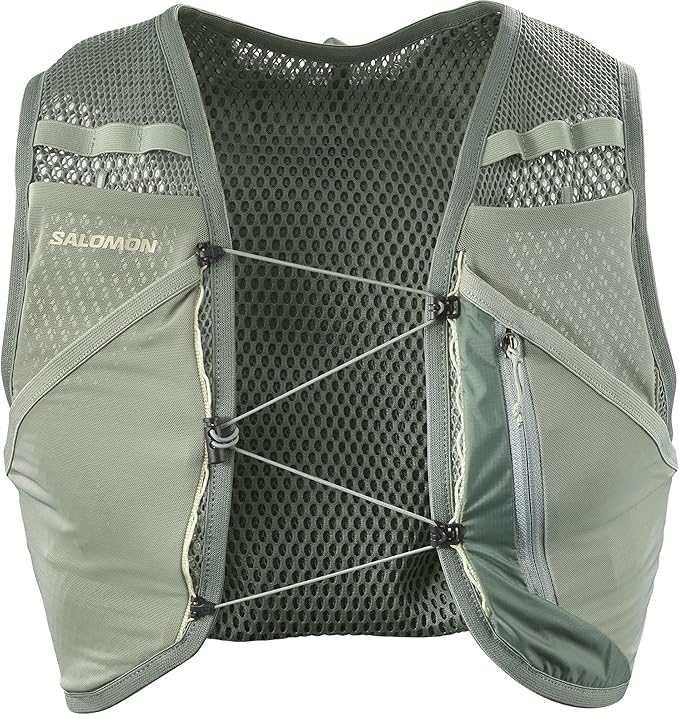
For most 2026 buyers, the Black Diamond Trail Trekking Poles are the safest all-around trekking pole pick thanks to the FlickLock system and hundreds of verified reviews. For fast-and-light trail days, the Salomon Active Skin 4 vest is the standout. Budget shoppers should look at the TrailBuddy 7075 aluminum poles and the UBFEN barefoot trail shoes.
Why Trail Gear Debates Are Trending Right Now
Search interest in hiking, thru-hiking, and trail running has climbed for four consecutive years, and it is not slowing in 2026. Subreddits like r/ProductPorn, r/Ultralight, and r/trailrunning routinely surface both novelty products and serious gear debates that push tens of thousands of comments.
The pattern is consistent: someone posts a weird product, the thread pivots to real advice about what people actually pack, and gear brands see a spike in traffic within 48 hours. If you are reading this article, you probably found it in exactly that kind of rabbit hole.
What This Guide Covers
We are focusing on three categories where reader questions cluster: trail running vests, trekking poles, and lightweight or barefoot trail shoes. These are the pieces that most directly affect how far, how fast, and how comfortably you move on trail.
Who This Is For
The Weekend Day-Hiker
You want to knock out a 6 to 15 mile loop on Saturday, carry water, a rain layer, and a snack, and be back at the car for dinner. You do not need a 65-liter expedition pack, but you do want poles that save your knees on descents and shoes that grip roots and wet rock. A minimal running vest and a mid-price trekking pole set are usually all you need.
The Aspiring Trail Runner
You have run road 5Ks and half marathons and want to move to dirt. Everything gets more technical: hydration becomes non-negotiable, foot placement matters, and you are suddenly interested in words like "drop," "lug depth," and "vest bounce." For you, a properly fitted running vest and the right shoe geometry matter more than saving twenty bucks.
The Backpacker Rebuilding a Kit
You are replacing an aging kit before a multi-day trip in the Sierras, the Whites, or the Smokies. You want durability over gimmicks and reviews you can actually verify. This guide leans heavily on well-reviewed staples for exactly that reason.
Our Top Picks for 2026
1. Black Diamond Trail Trekking Poles (Best Overall)
If you asked us to recommend one pole to a friend with no follow-up questions, this would be it. The Black Diamond Trail pair is a lightweight aluminum design with the FlickLock adjustable shaft, available with natural cork, foam, or standard grips. With 606 verified reviews and a 4.6-star average, it has the most track record of any pole on this list.
What we like: The FlickLock system is genuinely faster and more secure than the twist-lock style poles still sold at the same price. Cork grips wick sweat on hot days and shape to your palm over time. Aluminum construction survives rock strikes that would splinter carbon.
Trade-offs: At $109.88 the price is not aggressive, and aluminum weighs slightly more than premium carbon options. If you are counting grams for an ultra race, look elsewhere. For everyone else, this is the safe pick.
2. Salomon Active Skin 4 Running Vest (Best for Fast-and-Light Days)
The Salomon Active Skin 4 is a 4-liter unisex running vest built around Salomon's Precision Fit system and easy-access front storage. It is compatible with soft flasks and carries the essentials for a 2 to 4 hour trail run without bounce.
What we like: Salomon has been iterating on the Sensifit / Active Skin line for years, and the fit is the reason people repeat-buy it. The front-loaded storage means you can reach water and food without stopping. At 4 liters, capacity is sane for shorter runs and light hikes.
Trade-offs: At $135.52 this is not a budget vest, and 4 liters will feel cramped for anyone trying to carry a rain shell, layers, and food for a long day. If your outings routinely push past 5 hours, size up to a larger vest instead.
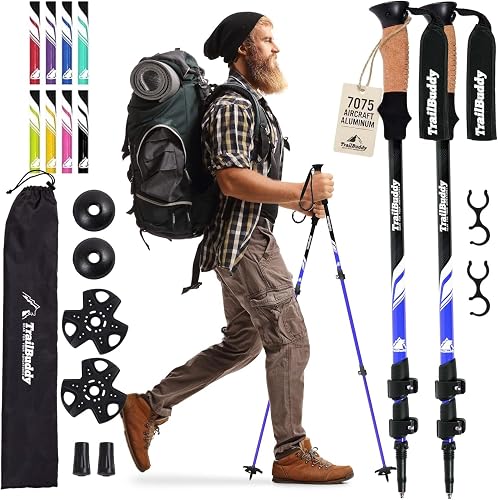
3. TrailBuddy Trekking Poles (Best Budget Pole)
The TrailBuddy pair uses 7075 aluminum shafts, collapses for travel, and lands at $39.90. That is roughly a third of the price of the Black Diamond above, and for casual day-hikers the value is hard to argue with.
What we like: 7075 aluminum is the same alloy family used in premium poles, and the collapsible design fits in a checked bag or daypack. The weight range works for women, men, and older hikers who want extra balance without carrying a heavy shaft.
Trade-offs: Fewer verified reviews than the Black Diamond option, so long-term durability data is thinner. Lower-cost twist and lever mechanisms can loosen on aggressive descents and need occasional retightening. Fine for weekends; not what we would take on a thru-hike.
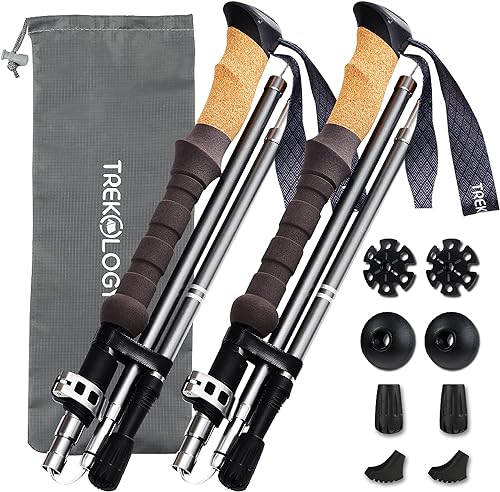
4. TREKOLOGY Trek-Z Cork Grip Folding Poles (Best for Travel)
If your hikes involve airports, the TREKOLOGY Trek-Z is worth a look. It folds down into a compact travel package, uses cork grips, aircraft-grade aluminum, and adjusts for height. Priced at $43.99, it slots into the same budget tier as the TrailBuddy but with a different form factor.
What we like: Z-fold poles pack shorter than telescoping designs, which matters when you are trying to slide poles into carry-on luggage or a small daypack. Cork grips are more comfortable in hot weather than rubber.
Trade-offs: Folding poles have more joints than telescoping poles, and every joint is a potential failure point. Aggressive users on rocky terrain sometimes prefer a two-section telescoping design for peace of mind.
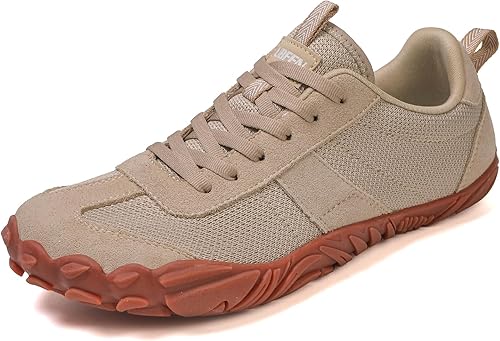
5. UBFEN Barefoot Trail Running Shoes (Best Minimalist Option)
Barefoot and minimalist shoes went from fringe to mainstream over the last decade, and the UBFEN minimalist trail shoe brings the category to a $49.99 price point. It is designed for trail running, hiking, and casual walking, with a low-profile sole and comfortable upper.
What we like: A great entry point for hikers curious about zero-drop footwear without spending $150+ on a premium brand. Light enough to double as a travel shoe.
Trade-offs: Newer to market, so long-term durability on rocky trails is unproven. Minimalist shoes require a real transition period. If you have been in cushioned trainers for years, do not jump to a full-day hike in these on day one.
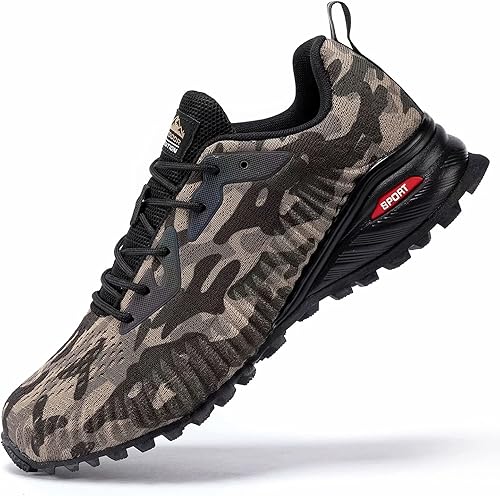
6. Kricely Trail Running Shoes (Best Budget Cushioned Trail Shoe)
For hikers who want a more traditional cushioned trail shoe on a tight budget, the Kricely trail runners hit $46.99. It is a cross-training-style build suitable for walking, light trail running, and general outdoor use.
What we like: Affordable enough to keep a dedicated pair for muddy weekends without ruining nicer shoes. Familiar geometry for anyone coming from a road running background.
Trade-offs: Not a technical trail shoe. On steep, wet, or rooty terrain you will feel the outsole's limits. Fine for gravel paths, buffed singletrack, and forest roads.
What to Look For: A 2026 Buyer's Guide
Trekking Pole Build Quality
The two spec numbers that matter are shaft material and locking mechanism. Aluminum, particularly the 7075 alloy used across the poles in this list, is the workhorse standard because it bends before it breaks. Carbon is lighter but shatters under a hard side load. For all-purpose use, aluminum is the smarter choice.
Locking mechanisms come in three broad styles: lever/FlickLock, twist-lock, and folding Z-pole systems. External lever locks (like Black Diamond's FlickLock) are the most trusted for cold, wet, and gloved use. According to the general reference on hiking poles, external lever mechanisms became the modern standard specifically because internal twist mechanisms would slip when wet.
Running Vest Fit and Capacity
A vest that fits well disappears on your body. A vest that fits poorly will chafe your armpits and bounce with every stride. Two rules: buy the size the manufacturer recommends based on chest measurement, not your t-shirt size; and load-test the vest with full flasks before your first long run, not during it.
For most day-hiking and short trail runs, a 4 to 6 liter vest is enough. Push to 10-12 liters if you plan on longer efforts with layers.
Trail Shoe Geometry: Drop, Cushion, and Width
Shoe "drop" refers to the height difference between the heel and the forefoot. Traditional running shoes are 8-12mm. Zero-drop and barefoot shoes are 0mm. There is no universally correct answer, but transitioning from one to the other takes weeks of gradual adaptation to avoid calf and Achilles injuries.
Wide toe boxes matter more than most beginners realize. Feet swell on long hikes. A shoe that fit fine in the store can crush your toenails at mile 8.
Leave No Trace and Trail Etiquette
Every piece of gear you carry also has an obligation attached. Pack out what you pack in, stay on durable surfaces, and give wildlife space. The 7 Principles of Leave No Trace are the baseline every hiker should read at least once. They are also the reason the viral Reddit thread that inspired this article ended up being more useful than it looked at first glance.
Value vs. Longevity
The cheapest option is not always the best value, and the most expensive option is not always the most durable. A $40 pole set that lasts one season costs the same per year as a $120 pole set that lasts three. When comparing, think in cost-per-season, not sticker price.
What We Don't Recommend
Novelty "Ultralight" Single-Purpose Gadgets
The internet loves a viral gadget. Most of them are heavier, less durable, or less useful than the general-purpose item they replaced. Before adding a gimmick to your pack, ask: does this replace two items, or add one?
Carbon Poles for Rocky Terrain Beginners
Carbon poles are wonderful when they survive and expensive when they do not. If you are new to trekking poles and hike in rocky country, start with aluminum. You will be less precious about planting them and will actually get the balance benefit.
Overpriced "Fashion" Trail Shoes
Some of the trendiest trail-inspired shoes in 2026 are styled for the coffee shop, not the trail. Look at the outsole. If the lugs are shallow decoration, it is not a real trail shoe.
Cheap Hydration Bladders in Vests Designed for Flasks
A running vest built around soft flasks is not the same as a hydration-pack that carries a bladder. Swapping one for the other creates bounce and pinch points. Use the storage the vest was designed for.
Frequently Asked Questions
Do I really need trekking poles for day hikes?
You need them the moment you have a knee complaint on a descent. Studies of hiking biomechanics consistently show that trekking poles reduce load on the knee joint on downhill sections. Even for shorter hikes, most users who try poles keep using them.
Are barefoot shoes actually better for trail running?
They are better for some runners and worse for others. Runners who transition gradually (over 8 to 12 weeks) often report better foot strength and fewer overuse injuries. Runners who switch overnight often report Achilles tendinitis. Ease in.
What size running vest should I buy?
Measure your chest per the manufacturer's chart, not your shirt size. Vests are designed to fit snugly to eliminate bounce; a vest that fits like a hoodie will chafe. If you are between sizes, most vests forgive going down before they forgive going up.
How long should trekking poles last?
An aluminum pair used every weekend should last 3 to 5 seasons before the locking mechanism needs service. Carbon poles can outlive aluminum if you never take a hard side impact and last one hike if you do.
Can I use trail running shoes for backpacking?
Yes, and thousands of thru-hikers do. The tradeoff is ankle support and durability. On smooth trails with lighter packs, trail runners are lighter, faster, and dry quicker than boots. On heavy loads and rugged rock, some hikers still prefer a mid or high boot.
What is the best all-around trekking pole under $50?
Between the two budget picks above, the TrailBuddy 7075 pair is the more conventional telescoping design, while the TREKOLOGY Trek-Z is the better travel option because it folds. Both are honest gear at honest prices, and both are better than no poles.
Is a running vest overkill for hiking?
Not at all. A 4-liter vest is one of the most comfortable ways to carry water and snacks on a short-to-medium hike, especially in hot weather. Many hikers who try one for the first time abandon their small daypack.
Final Thoughts
Viral Reddit threads come and go, and most of the products that fuel them will be forgotten within a year. What sticks around is well-made gear from brands that have iterated on the same design for a decade or more. The Black Diamond FlickLock system, the Salomon Active Skin fit, and the growing minimalist shoe category are all examples of that kind of staying power.
Pick the category you need first, buy the best you can afford in that category, and add gear only when a specific hike demands it. Almost everyone we know who overpacks a beginner kit later regrets it; almost no one we know who focused on shoes, poles, and hydration ever regretted that.
Happy trails, and see you out there.
Key Takeaways
- Choosing the right best hiking trail running gear means matching the key features to your specific needs and budget
- Read real customer reviews and check the return policy before you commit
- Also covers: best trekking poles 2026
- Also covers: trail running vest review
- Also covers: barefoot trail running shoes
- Compare value across models — the priciest option is not always the best fit