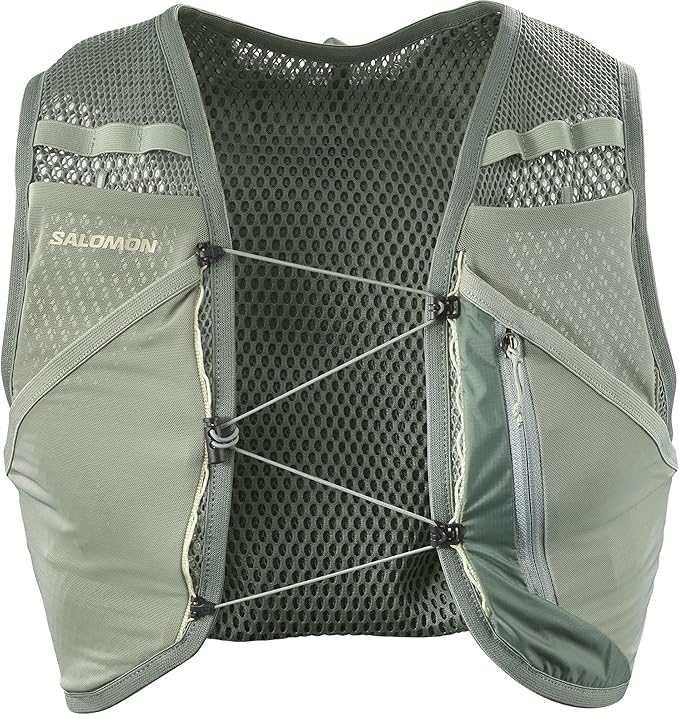
If you're stuck choosing between a hydration pack mountain biking vs trail running, the short version is that they're built for two completely different bodies in motion. Mountain bike packs prioritize a back-mounted 1.5L–3L reservoir, reinforced rear panels, helmet straps, and integrated tool storage, sitting low on the back so they clear a forward riding posture. Trail running vests sit high on the chest and shoulders with soft front flasks (usually two 500ml bottles) plus a small rear bladder, and are engineered to eliminate bounce while you're upright and breathing hard. Pick the wrong category in 2026 and you'll get sloshing, chafing, or a pack that fights every stride or pedal stroke.
The core differences at a glance
Top Picks
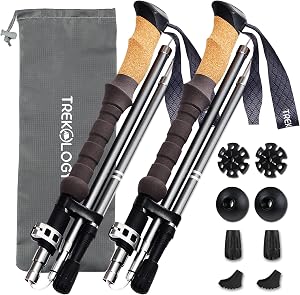
Both categories started life as the same basic idea — a soft reservoir with a bite-valve hose — but a decade of category specialization has pushed them far apart. The table below summarizes how a modern MTB hydration pack stacks up against a modern trail running vest in 2026.
When shopping for hydration pack mountain biking vs trail running, it pays to compare specs, capacity, and real-world runtime before committing.
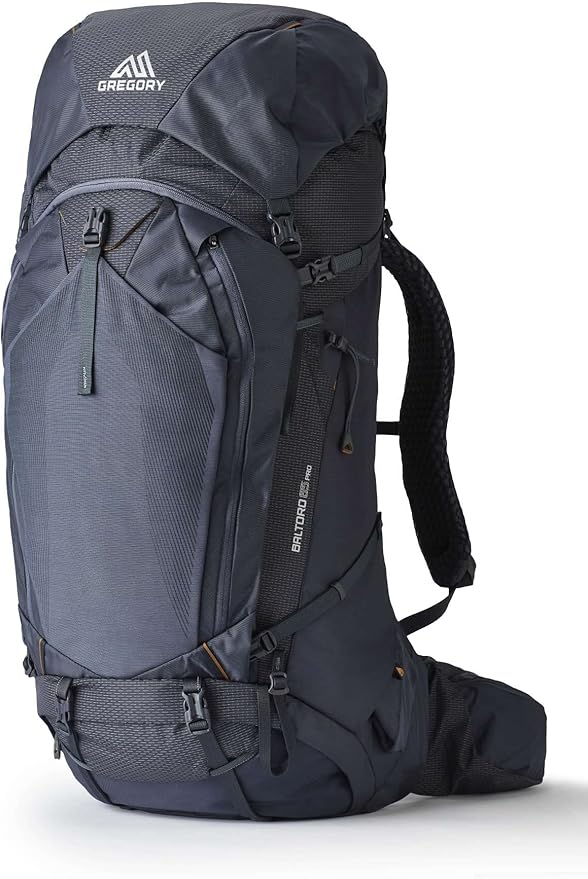
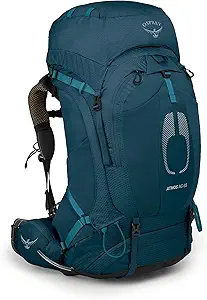
| Feature | MTB Hydration Pack | Trail Running Vest |
|---|---|---|
| Water capacity | 1.5L–3L back bladder | 0.5L–1.5L (front flasks + optional rear bladder) |
| Total cargo volume | 5L–18L | 2L–12L |
| Bottle placement | Back-mounted reservoir only | Front soft flasks within reach while moving |
| Body position designed for | Forward-leaning, hunched riding | Upright, high-cadence running |
| Bounce control | Waist belt + sternum strap | Full vest-style wrap, dual sternum straps |
| Protective features | Back protector pocket, helmet carry | Reflective trim, whistle, emergency blanket pocket |
| Tool storage | Dedicated tool roll, pump strap, tube pocket | Pole quiver, gel loops, phone sleeve |
| Typical weight (empty) | 500g–900g | 150g–400g |
| Ventilation | Suspended mesh back panel with airflow channel | Perforated stretch mesh hugging the torso |
How mountain bike hydration packs are built
A modern MTB hydration pack is essentially a low-profile backpack with a reservoir sleeve and a list of bike-specific affordances. The reservoir lives flat against your spine in an insulated sleeve, with the hose routed over the left or right shoulder and clipped at your sternum for easy bite-valve access while gripping the bars. Sizes typically run from 5L of cargo (cross-country and enduro) up to 18L (all-day backcountry rides). Most have a structured back panel — often with a removable spine pad rated to D3O or EVA protection levels — so a crash doesn't drive your multi-tool into your back.
Beyond water, the design language is all about wrenching and trail repair. Expect a dedicated tool roll pocket, a tube sleeve, an external pump strap, helmet carry straps for hike-a-bike sections, and goggle storage lined with soft tricot. Waist belts are wider and load-bearing because the pack sits low and you're hunched forward — a high-mounted bag would slide up into your helmet on steep descents. Ventilation matters, so the better 2026 packs use a suspended mesh panel that floats the bag 5–10mm off your back to create an airflow channel.
How trail running vests are built
Trail running vests look almost nothing like a backpack. They wrap around your torso like a piece of clothing, distributing load across the entire chest, shoulders, and upper back with stretch mesh that conforms to your body as it moves. Two soft flasks live on the front straps directly under your collarbones, so you can drink without breaking stride or fumbling behind your head. A small reservoir sleeve in the back panel (usually capped at 1.5L) is optional for longer outings.
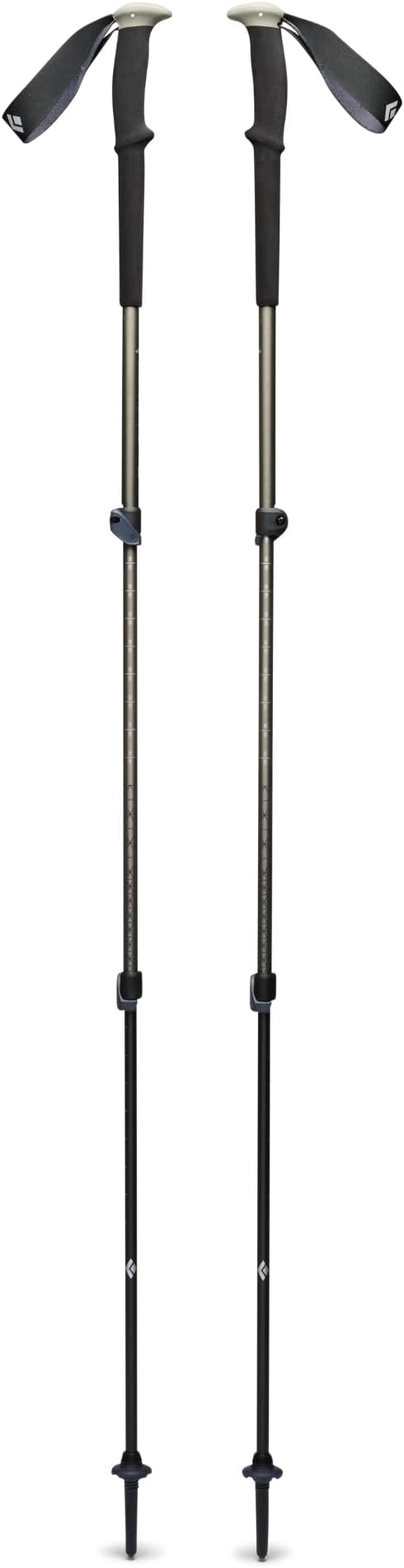
Because runners are upright and bouncing with every stride, bounce elimination is the entire engineering brief. Two adjustable sternum straps — often using bungee or hook-and-loop micro-adjustment — let you cinch the vest tight without restricting breathing. Cargo organization assumes you'll need fuel within seconds: stretch gel loops on the front straps, a soft phone sleeve angled for one-handed access, and a trekking pole quiver on the rear for terrain that demands them. If you run with poles, our trail running pole guide walks through how to size and stow them with a vest.
Capacity: how much water you actually need
This is where the hydration pack mountain biking vs trail running decision often gets made on autopilot — and incorrectly. The instinct is that bikers ride farther so they need more water, and runners are slower so they need less. Reality is messier.
A trail runner working at 75–85% of max heart rate sweats roughly 700ml to 1.2L per hour. A mountain biker on rolling singletrack with gravity assists may only burn through 400–700ml per hour. So a 3-hour run might need 2L of water on the body, while a 3-hour ride might only need 1.5L. The difference is that the runner has to carry every drop because there are rarely refill points on a mountain route, while bikers can stash bottles in cages on the frame and treat the pack as a top-up reserve.
Practical rule of thumb for 2026:
- Sub-90 minute trail run: two 500ml front flasks, no rear bladder needed.
- 2–4 hour trail run: two flasks plus a 1L–1.5L rear reservoir.
- Ultra distance / desert: two flasks plus 2L rear reservoir, or two flasks plus collapsible water bottle stash.
- 1–2 hour MTB ride: 1.5L reservoir, no extra bottle.
- 2–4 hour MTB ride: 2L reservoir plus a frame bottle.
- All-day enduro / shuttle day: 3L reservoir plus tool roll and spare layer.
Fit, bounce, and chafing — the real deal-breaker
Putting a running vest on a bike is uncomfortable but survivable. Putting a bike pack on a runner is genuinely miserable. The reason is that bike packs are tuned for static loads — the bag sits in one position relative to gravity while you pedal — whereas every running stride sends a 1.5G impact spike up your spine. A back-mounted reservoir without front straps will swing on every footfall, throwing your center of mass back and forth and shredding your traps within an hour.
Vests fix bounce by anchoring water on the front of the body and using full-torso compression to lock the rear load in place. Bike packs fix shoulder fatigue by transferring load to a stiff hip belt that sits on your pelvis while you're crouched over the bars — but that same hip belt collides with your stride if you try to run in it, and the high back panel can bump your helmet on a road bike or push your head forward on a hike.
Chafing follows the same logic. Bike packs typically have firmer foam padding at contact points because riding is positionally stable. Running vests use seamless stretch mesh almost everywhere because anything stiff will sand a hot spot in 5 kilometers. If you're picking between options at the same price, look at the contact surface materials — they tell you instantly which sport the pack is really built for. Our lightweight running backpack guide goes deeper on materials science for endurance running gear.
Storage beyond water
The cargo philosophies diverge as sharply as the water systems. Mountain bikers carry tools — multi-tool, tire plugs, spare tube, mini pump, CO2, chain quick-links, possibly a shock pump. They also carry layers because mountain weather changes fast, plus a first aid kit and snacks. A 12L MTB pack will swallow all of that and still leave room for a half-shell helmet on the outside.
Trail runners are minimalists by necessity because every gram costs energy over distance. The mandatory gear list for most 2026 ultras includes: emergency blanket, whistle, headlamp, waterproof shell, gloves, hat, phone, ID, cash, and 500+ calories of food. A 10L vest accommodates all of that without feeling loaded because the cargo distributes across the front and back. For trail repair, runners carry essentially nothing — there's no chain to fix.
Both sports overlap on a few items: phone, snacks, lightweight wind shell, sunglasses storage, and a place for car keys. If you're cross-training and want a single bag for both, that overlap is small enough that you'll still feel the compromise in one direction or the other.
Can one pack do both?
Honestly, not well. The closest you'll get is a hybrid "adventure vest" in the 8L–12L range that uses a vest-style harness with a slightly larger rear cargo compartment. These can handle short XC rides if you're willing to skip the back protection and tool organization, and they handle long runs fine. But you'll lose the helmet carry, the tool roll, and the structured back panel that makes MTB packs worth their weight on technical terrain.
If you only do one of the two sports seriously and dabble in the other, just buy the pack for your primary sport. If you split your time genuinely 50/50, buy both — they're typically $80–$180 each and you'll get vastly more enjoyment than from a single compromise pack. A separate hip-style bottle holster for the off-sport days is another cheap workaround.
What to look for when shopping in 2026
Across both categories, the 2026 generation has converged on a few shared upgrades worth watching for:
- Magnetic bite-valve clips that auto-attach the hose to the sternum strap.
- BPA- and PVC-free TPU reservoirs with wide-mouth fill ports and quick-disconnect hoses.
- Antimicrobial liners that resist the funky-bladder problem after a sweaty summer.
- Insulated hose sleeves for cold-weather rides and runs (water in an exposed hose can freeze in under 30 minutes below 0°C).
- Reflective hits on rear panels for dawn and dusk visibility.
- Recycled bluesign-certified fabrics as sustainability becomes table stakes for the premium tier.
Avoid packs that bury the reservoir behind your cargo — refilling them mid-ride or mid-run is miserable when you have to unload everything to access the bladder. Look for reservoirs that slide out from a top or side sleeve independently of the main compartment.
Frequently Asked Questions
Can I use a running vest for mountain biking?
You can for short XC rides, but the front-mounted flasks will compress against your chest in an aggressive riding position and the vest gives you no back protection in a crash. You'll also lose tool storage, helmet carry, and the wider hip belt that supports load on technical descents. Fine for fire-road spins; not recommended for technical singletrack.
Can I use a mountain biking hydration pack for trail running?
Short answer: no, not comfortably. The back-mounted reservoir will bounce on every stride, the rigid hip belt will chafe at your iliac crest, and you'll have no front-flask access for sipping mid-run. If it's all you own, cinch every strap to maximum compression, half-fill the reservoir, and keep runs under an hour while you save for a proper vest.
How much water capacity do I really need for a 3-hour trail run?
Plan for around 500–700ml per hour of running, so 1.5L to 2L total for a 3-hour effort. Two 500ml front flasks plus a 1L–1.5L rear reservoir covers most runners comfortably, with extra buffer for hot weather. In cool conditions you may finish with water left over — that's better than running dry.
What size hydration pack is best for all-day enduro riding?
For shuttle days and all-day enduro, look at the 10L–14L range with a 3L reservoir. That's enough volume for a full tool kit, spare tube, pump, mid-layer, lunch, and a hydration top-up. Anything smaller and you'll skip critical repair gear; anything larger and you're carrying dead weight that compromises agility on descents.
Do I still need a hydration pack if my mountain bike has bottle cages?
For sub-90 minute rides on smooth trails, a frame bottle alone is fine. For technical terrain where you can't safely reach down for a bottle, or rides over 90 minutes, a pack is still the right call. Many riders combine both: a frame bottle for sipping on climbs and a pack reservoir for sustained hydration on descents and technical sections.
How do I prevent my hydration bladder from tasting like plastic?
Rinse with a mix of warm water, baking soda, and lemon juice on the first three uses. Dry the bladder fully after every ride or run by propping it open with a wire hanger or a dedicated bladder dryer. Store in the freezer between uses to prevent bacterial growth — that's the trick most pros use for keeping bladders fresh year after year.
Are trekking poles compatible with running vests?
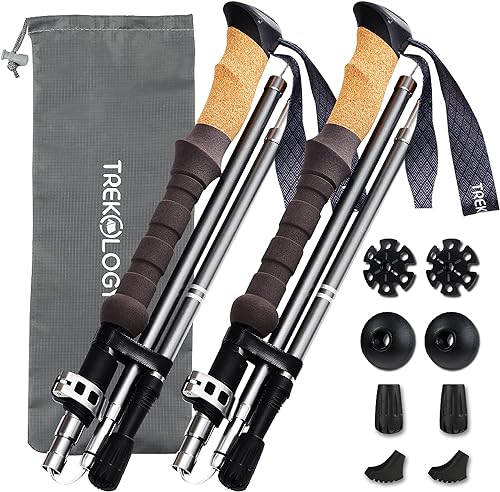
Yes — most modern trail running vests include a dedicated pole quiver on the rear panel or external bungee loops that hold folded Z-style poles. Foldable poles in the 100–125cm range are easiest to stow on the move. For longer alpine outings where poles come on and off frequently, look for vests with front-mounted pole loops so you don't have to remove the vest to deploy them.
What's the lifespan of a hydration reservoir in 2026?
A quality TPU reservoir treated well — rinsed and dried after each use, never left with sugary drinks inside — should last 4–6 years of regular use. Hoses and bite valves typically fail first; both are replaceable for under $15 from the major brands. If your bladder develops a persistent off-taste or visible mold, replace it rather than trying to salvage it.
Key Takeaways
- Choosing the right hydration pack mountain biking vs trail running means matching the key features to your specific needs and budget
- Read real customer reviews and check the return policy before you commit
- Also covers: MTB hydration pack versus run vest
- Also covers: Camelbak MTB or Salomon running vest
- Also covers: bike hydration pack run dual purpose
- Compare value across models — the priciest option is not always the best fit