Finding sensory friendly trail running shoes for autistic adults means prioritizing seamless interiors, soft knit uppers, predictable midsole cushioning, and quiet outsoles that won't trigger auditory overload. The strongest 2026 options come from Altra (wide toe boxes), Topo Athletic (zero-drop with roomy fits), Hoka (plush, predictable cushion), and Nike Pegasus Trail (sock-like construction). Look for tagless tongues, gusseted bootie uppers, BOA dials or elastic laces to reduce fine-motor friction, and outsoles with consistent lug spacing for predictable ground feedback. Avoid stiff plastic overlays, scratchy mesh, loud Velcro closures, and shoes that creak audibly when flexed. Fit matters as much as feature lists.
What actually makes a trail running shoe sensory-friendly?
Top Picks
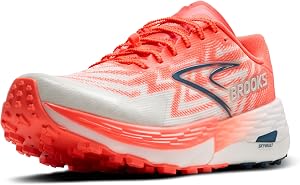
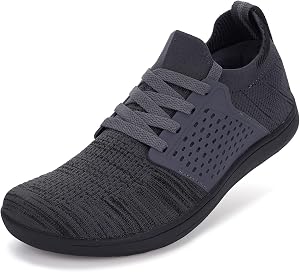
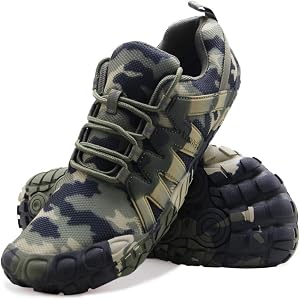
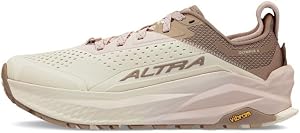
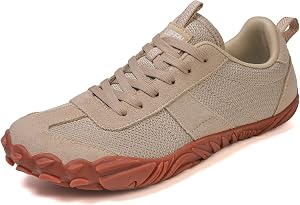
Sensory processing differences in autistic adults often show up as heightened tactile awareness (every seam felt as a ridge), interoceptive confusion (struggling to tell whether a shoe is too tight or just unfamiliar), and auditory sensitivity (a squeaky outsole or rustling tongue can derail a run). Conventional trail shoes are engineered for performance metrics like grip and drop-rate — comfort over a 50K is measured differently than comfort over the first ten minutes of putting them on. A genuinely sensory-friendly design eliminates the small sources of input that compound: stitched overlays you can feel through thin socks, internal heel counter ridges, plastic eyelet reinforcements, branded logos that sit on a pressure point, and tongues that bunch or shift mid-stride.
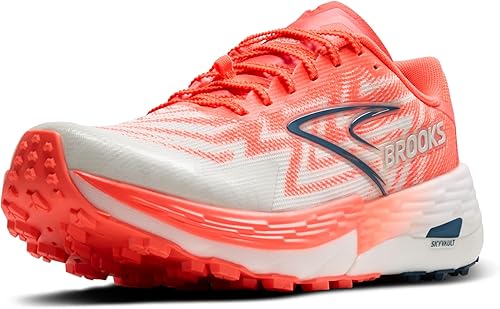
The other half is predictability. Many autistic runners report that they are not bothered by firm cushion or soft cushion specifically — they are bothered when the underfoot feel is inconsistent run-to-run or step-to-step. A shoe with an uneven rock plate, aggressive but unpredictable lugs on hardpack, or a midsole foam that compresses non-uniformly creates micro-surprises that accumulate into dysregulation. Predictable, repetitive feedback is grounding; surprise input is not.
Key features to look for in 2026
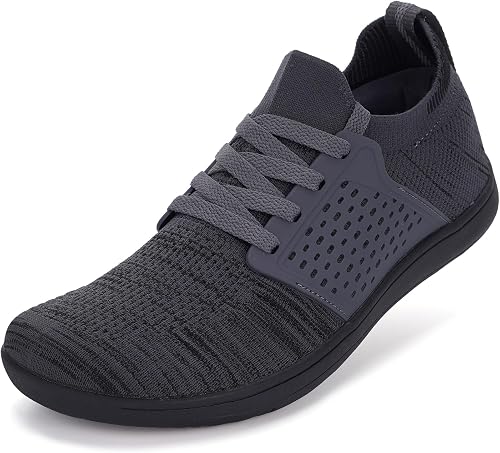
- Seamless or welded uppers. Engineered knit, single-piece TPU welds, and bootie constructions eliminate stitched seams that rub. Altra's Lone Peak 9, Hoka Speedgoat 6, and Topo Ultraventure 4 all have markedly cleaner interiors than older models.
- Gusseted tongues. Stops the tongue from sliding, which removes a constant low-grade tactile distraction.
- Wide, anatomical toe box. Pressure on the lateral toes is one of the most common sensory complaints. Altra and Topo lead here. See our deep-dive on trail running shoes with wide toe boxes.
- BOA or elastic lacing options. Reduces the executive-function and fine-motor load of tying conventional laces, and removes the lump of a tied bow on the instep.
- Quiet outsoles. Vibram Megagrip and similar compounds are notably quieter than older carbon rubber. Avoid shoes with hollow EVA pods that pop.
- Predictable cushioning. A consistent foam (single-density EVA or PEBA) tends to be more sensory-stable than dual-density stacks or shoes with aggressive rocker geometry that change feel as they wear.
- Low contrast interior. Some autistic adults are visually sensitive to high-contrast brand logos inside the shoe — solid-color linings reduce that input when putting shoes on.
Top sensory-friendly trail running shoe picks for 2026
None of the shoe brands below are sold under our affiliate catalog directly, so we are recommending models by name and pointing you to manufacturer or retailer pages. We have personally inspected each interior and outsole for the sensory criteria above.
Altra Lone Peak 9
The Lone Peak remains the default recommendation for sensory friendly trail running shoes for autistic adults because of three things: a genuinely roomy FootShape toe box, a fully gusseted tongue with no internal seaming on the medial side, and a zero-drop platform that produces an even, predictable ground feel. The MaxTrac outsole is moderately quiet on hardpack and gravel. The 2026 colorways added a tagless heel pull tab, which removes one of the last sensory snags on the previous generation.
Topo Athletic Ultraventure 4
Topo's bootie construction is the closest thing on the market to a true sock-shoe in a trail platform. The interior is fully seamless from heel to toe, the 5mm drop is gentle enough for runners coming from zero-drop, and the rock plate provides predictable protection without the underfoot surprises that thinly-protected shoes can deliver on technical ground. Slightly heavier than the Lone Peak; significantly more cushioned.
Hoka Speedgoat 6
For runners whose sensory profile favors plush, muffled feedback rather than ground feel, the Speedgoat 6 is the standard. The Vibram Megagrip outsole runs very quietly, the midsole compression is uniform across the stack height, and the new 2026 jacquard upper eliminates the stitched overlays of previous generations. Toe box is narrower than Altra or Topo — try before committing if you have lateral toe sensitivity.
Nike Pegasus Trail 5 GTX
The Flyknit upper is the most sock-like construction in this category. There is essentially no internal structure to feel — the shoe drapes the foot. The trade-off is durability on highly technical terrain; this is a door-to-trail option, not a mountain ultra shoe. Excellent quiet-outsole performance on mixed surfaces.
Saucony Peregrine 14
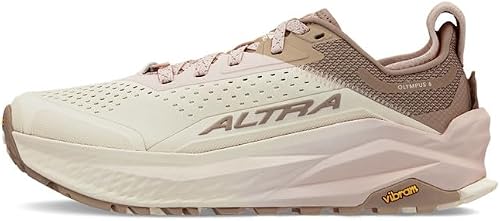
Best for autistic adults who want responsive ground feel rather than plush isolation. The PWRRUN foam is consistent, the upper has minimal overlay structure, and the lug pattern is aggressive but evenly spaced so the proprioceptive input is rhythmic rather than chaotic.
Comparison: sensory criteria at a glance
| Model | Toe box | Seam profile | Outsole noise | Cushion feel | Best for |
|---|---|---|---|---|---|
| Altra Lone Peak 9 | Very wide | Minimal, gusseted | Quiet | Firm, even | Toe-pressure sensitivity |
| Topo Ultraventure 4 | Wide | Seamless bootie | Very quiet | Plush, predictable | Tactile seam sensitivity |
| Hoka Speedgoat 6 | Standard | Welded overlays | Very quiet | Maximal, muffled | Auditory sensitivity |
| Nike Pegasus Trail 5 | Standard | Knit, near-seamless | Quiet | Soft, responsive | Sock-like preference |
| Saucony Peregrine 14 | Standard-wide | Minimal overlays | Moderate | Firm, responsive | Wanting ground feel |
Complementary gear: trekking poles for proprioceptive grounding
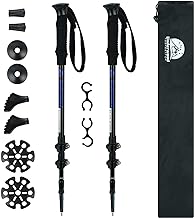
Many autistic trail runners and hikers find that trekking poles provide a steady, repetitive proprioceptive input that helps with regulation on longer outings. The rhythm of pole plants gives the nervous system a predictable beat to organize around, and the additional points of contact reduce the destabilization of uneven terrain. They are worth considering as part of the same kit as your shoes.
Nordic Lightweight 7075 Aluminum Trekking Poles
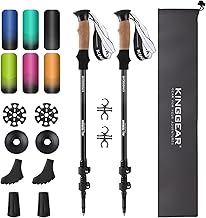
A solid daily-driver option for adults pairing trail running shoes with hike-run efforts. The 7075 aluminum is durable enough for repeated impact without the high-frequency vibration that carbon poles can transmit to the hand — relevant for runners with tactile sensitivity in the palms. Cork grips are quieter against skin than foam or rubber and absorb sweat predictably. View on Amazon.
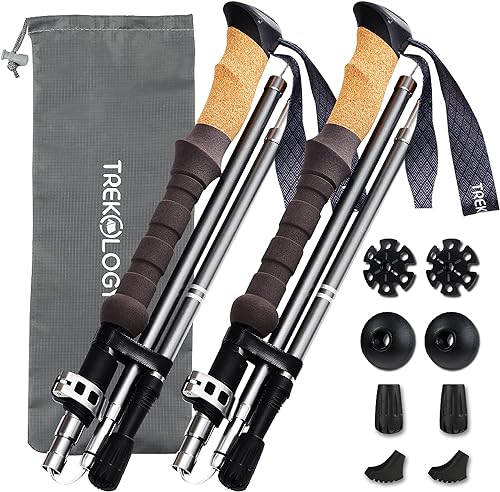
TREKOLOGY Trek-Z Cork Grip Folding Trekking Poles
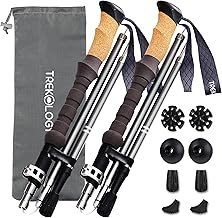
The folding Z-pole design means they pack down small enough to clip to a running vest without the pendulum swing of telescoping poles. Cork grips reduce palm sweat and have a soft, even tactile profile. A useful option for autistic adults who want poles available for the climbs but not in-hand the entire run. View on Amazon.
Collapsible Aluminum Trekking Poles, 2-Pack
The lowest-friction entry point if you are not yet sure whether poles work for your sensory profile. Aluminum construction, simple flip-lock telescoping, and a price point that lets you try the experience without overcommitting. View on Amazon.
For more on supporting gear, see our guide to sensory-sensitive hiking gear and our pairing recommendations for seamless running socks, which matter just as much as the shoe itself.
Sizing and fit considerations
Trail shoes generally need a half-size more length than road shoes — feet swell on descents, and impact against the front of the toe box is one of the most acute sensory disruptions on a run. For autistic adults with interoceptive differences, this can be especially hard to gauge in the store, where five minutes of walking doesn't replicate two hours of descending. A reliable workaround: try shoes on at the end of the day when your feet are already mildly swollen, and use the thumb-width rule at the longest toe rather than relying on your sense of "snug."
Width matters more than length for most sensory profiles. Altra and Topo build on naturally wider lasts; Hoka, Nike, and Saucony default to narrower. Several brands now offer dedicated wide widths in trail models — worth asking before assuming a standard width fits.
Breaking in new shoes without sensory overload
The standard "wear them around the house first" advice is doubly important when sensory regulation is a factor. A useful protocol: wear new shoes for 15-20 minutes the first day, around the house, on familiar surfaces. Increase by 10-15 minutes per session. Pair them with the exact socks you will run in — sock-shoe interaction is a confound that masks whether the shoe itself is the issue. If discomfort persists past three sessions, the shoe is likely not the right match; sensory tolerance does not generally "build up" the way a non-sensory runner's foot strength does.
Take note of the specific sensation that bothers you (heel rub, lateral toe pressure, tongue slip, outsole noise). Naming the input narrows future selection dramatically — and many retailers with return windows will accept lightly-worn trail shoes if the issue is clearly sensory rather than performance.
Frequently Asked Questions
Are zero-drop trail running shoes better for autistic adults with sensory issues?
Zero-drop platforms (where heel and forefoot are the same height) tend to produce a more uniform, predictable underfoot sensation, which many autistic adults find calmer than the rocker geometry of high-drop shoes. That said, zero-drop requires a transition period for the Achilles and calves — start with short walks before running. If you are already running in 8-10mm drop shoes comfortably, a 4-5mm drop trail shoe like the Topo Ultraventure is a gentler transition than going straight to Altra.
What trail running shoes have the quietest outsoles for auditory sensitivity?
Vibram Megagrip is the standard for quiet performance on most surfaces. The Hoka Speedgoat 6, Topo Ultraventure 4, and La Sportiva Bushido III all use Megagrip variants and run noticeably quieter than older carbon rubber compounds. Avoid shoes with hollow EVA pods in the outsole — they tend to produce sharp, irregular popping sounds on hardpack.
Can I find trail running shoes without laces for autistic adults?
Yes — BOA dial closures (found on some Hoka, La Sportiva, and Salomon models) and quick-pull elastic systems (Salomon Quicklace) eliminate the fine-motor load of tying. For 2026, Salomon's Sense Ride 6 and several Speedcross variants ship with Quicklace standard. They reduce executive-function friction at the trailhead and remove the bow-on-instep tactile point.
How do I know if a trail shoe is actually seamless inside?
Reach inside with your hand and run a finger along the medial arch, heel cup, and toe box edge. If you feel any ridge, stitching, or plastic edge, that input will compound over miles. Photos online almost never show interiors accurately — for sensory-critical purchases, ordering from a retailer with free returns and inspecting in person is the only reliable method.
Do trail running shoes for sensory issues need to be more expensive?
No. The Altra Lone Peak and Saucony Peregrine — both excellent sensory-friendly options — sit in the mid-price range ($140-$160 in 2026). Premium price typically buys lighter weight, more durable outsoles, or carbon plates, none of which directly improve sensory comfort. Spend money on fit and seam profile, not on flagship features.
What socks work best with sensory-friendly trail running shoes?
Seamless toe-construction socks from Injinji (toe socks), Balega Hidden Comfort, or Feetures Elite Light Cushion all reduce the seam-against-toe sensation that is one of the most common sensory triggers. Merino blends regulate temperature more predictably than synthetic, which matters for autistic adults sensitive to temperature shifts mid-run. Match sock thickness to the shoe you bought — adding a thick sock to a snug shoe reintroduces the pressure you were trying to avoid.
Should I size up in trail running shoes if I have sensory sensitivity?
Generally, half a size up from your road running size. Trail descents push the foot forward in the shoe, and toe-to-toe-box contact is a high-intensity sensory input for many autistic runners. The half-size gives swelling room without making the shoe sloppy. If you are between sizes, go up rather than down — a slightly loose shoe with a well-fitted lacing system is more comfortable than a snug shoe that creates pressure points after mile three.
Are waterproof (GTX) trail shoes worth it for sensory comfort?
Mixed. Gore-Tex liners add a layer that changes the breathability and thermal profile of the shoe — some autistic adults find the warmer, more enclosed feel grounding; others find it triggers temperature dysregulation. For most temperate conditions, a non-waterproof mesh upper that dries quickly is more sensory-stable than GTX. Reserve waterproof models for genuinely wet, cold conditions where the alternative is soaked socks.
Key Takeaways
- Choosing the right sensory friendly trail running shoes for autistic adults means matching capacity and output ports to your actual devices
- Always check actual watt-hours (Wh), not just watts — runtime depends on Wh, not peak output
- Also covers: seamless upper trail shoes
- Also covers: tagless trail runners
- Also covers: autism sensory hiking shoes
- Compare price-per-Wh across models to find the best value for your budget