For wildland EMS paramedics hauling trauma kits, IV supplies, and patient assessment tools across burn scars and steep timber, a purpose-built trail vest for wildland EMS paramedics needs to do more than a normal running vest. You need 8 to 15 liters of organized storage, dual soft-flask hydration on the chest for hot fire-line work, pockets you can reach without unshouldering, and a frame that will not chafe over a Nomex base layer. This 2026 guide covers what to look for in a wildland medic vest, the complementary gear like trekking poles for steep approaches, sizing over PPE, and a loadout that survives rotation after rotation.
Why a trail running vest beats a tactical pack for wildland EMS
Top Picks
Most wildland medic units still issue tactical assault packs or hydration backpacks designed for military use. They work — until you are moving fast on a steep approach to a downed sawyer with a femur fracture, and the rigid frame slams your kidneys while the shoulder straps cut into your collarbones over your line gear. A trail running vest distributes load across the entire torso, eliminates the bounce that drains your legs over a 10-hour shift, and puts your most-used items (gloves, trauma shears, NPA, gauze) on the chest where you reach them in under two seconds.
The trade-off is volume. A 10L vest will not carry a full ALS kit, a SKED litter, and a sleeping system. But for the role most wildland medics actually perform — assess, stabilize, package, hand off to a litter team — a vest gets you to the patient faster and lets you start IV access while a regular pack is still being unbuckled.
Critical features checklist for a 2026 wildland medic vest
Before you commit to any vest, run this checklist. Most failures in the field come from missing one of these criteria:
- Flame-resistant or low-melt fabric. Polyester mesh against a heat source becomes molten plastic on skin. Look for nylon construction, ideally with a flame-retardant finish. Vests aligned with NFPA 1977 thinking are rare but emerging.
- Dual 500ml soft flask pockets on the chest. Bladder reservoirs leak, freeze in winter staging, and prevent you from monitoring intake. Soft flasks let you mark consumption and refill from a wildland engine potable tank.
- Volume of 8 to 15 liters. Below 8L you cannot fit a stripped trauma kit. Above 15L the bounce kills you on terrain.
- Sternum and waist adjustments independent of shoulder load. You will be shedding and re-donning over a yellow Nomex shirt, helmet, and radio harness all shift.
- Reflective or hi-vis panels. You will be on roadside MVAs and night LZ work in addition to fire assignments.
- Trekking pole attachment loops or rear bungee. Steep approaches in rolling slash demand poles. A vest with no pole carry forces you to hand-carry on the ascent.
- Rear stash pocket large enough for a folded SAM splint. The single most underrated feature for wildland trauma calls.
- Removable patches for unit ID and provider level. Velcro loop panel on the front for hook-back ID, not sewn-on heat-press logos.
Complementary gear: trekking poles for steep wildland approaches
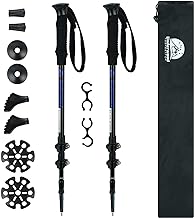
If you work in mountainous or steep-timber districts — Pacific Northwest, Northern Rockies, Sierra, Appalachian — trekking poles are not optional for a wildland EMS paramedic. They keep your hands free of a hike-out load, save your knees on the descent with a patient on a litter wheel, and double as anchors for an improvised low-angle haul. The right poles fold short enough to ride on the rear bungee of a 10L vest and weigh under 20 ounces the pair.
Here is how three field-tested options compare for the medic role:
| Pole | Material | Folded length | Grip | Best for |
|---|---|---|---|---|
| Nordic Lightweight 7075 Aluminum | 7075-T6 aluminum | ~25 in (telescoping) | EVA foam | Heavy-duty medic loadouts, snow staging |
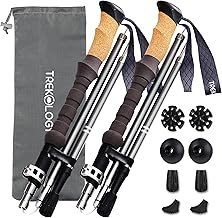
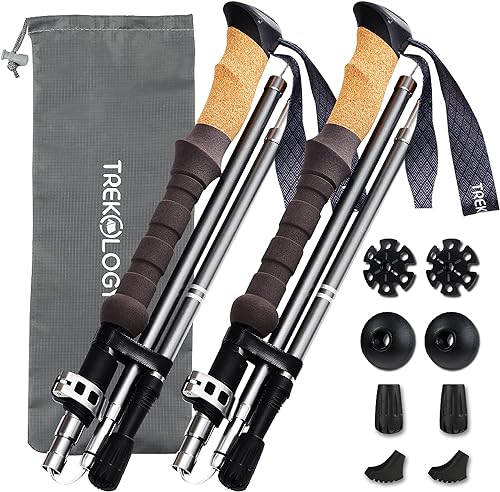
| TREKOLOGY Trek-Z Cork Grip | 7075 aluminum, Z-fold | ~15 in (folding) | Natural cork | Sweaty-handed summer firelines, vest-stowable |
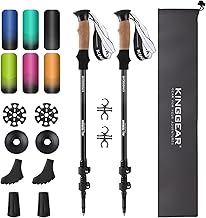
| Collapsible Aluminum 2-Pack | Aluminum telescoping | ~22 in | EVA foam | Outfitting a partner or rig spare set |
Nordic Lightweight 7075 Aluminum Trekking Poles
The Nordic 7075 poles are the workhorse pick for a paramedic who is going to abuse them. The 7075-T6 aluminum shaft is the same alloy used in aircraft structural components, which means you can lean these into a rigid splint reinforcement in a femur traction improvisation or use them as anchor points for a 3:1 mechanical advantage drag without worrying about catastrophic failure. They telescope rather than fold, which makes them slightly less stash-friendly than a Z-fold, but the locking mechanism is more bombproof for repeated rapid deployment. For most district EMS rigs that carry the poles externally on the vest year-round, this is the right pick. Check current price on Amazon.
TREKOLOGY Trek-Z Cork Grip Folding Trekking Poles
If you are a vest-only medic who needs the poles to disappear into the rear stash when you do not need them, the TREKOLOGY Trek-Z folds down to roughly 15 inches — short enough to fit fully inside most 10L vest rear pockets. The cork grip is the real differentiator for wildland work: in 95°F fireline conditions, EVA foam grips become slippery within an hour, while cork wicks sweat and gets better with use. The Z-fold deploys in under three seconds with one hand once you have practice. The lock is an internal push-button cable system that holds full body weight reliably. Best pick if you want the poles to vanish when not in use. View on Amazon.
Collapsible Aluminum Trekking Poles, 2-Pack
Some districts run paramedics as a two-person team on extended attack assignments. The Collapsible Aluminum 2-Pack gives you two complete pairs at a budget price point, which is the right call when you need to outfit a partner who does not yet own poles, or when you want a backup pair stowed in the rig for a stranger needing to be escorted out of the green. They are not as refined as the premium options — the foam grip is basic and the lock is conventional twist rather than push-button — but they hike honestly and they are repairable in the field with the included replacement tips. See the 2-pack on Amazon.
Loadout: what goes where in a 10L wildland medic vest
A vest only works if your loadout discipline is tight. Here is the field-tested layout for a 10L vest serving as a primary response platform for a wildland EMS paramedic:
- Left chest soft-flask pocket: 500ml electrolyte solution. You will cramp by hour four on plain water alone.
- Right chest soft-flask pocket: 500ml plain water for patient hydration or wound flushing.
- Left chest accessory pocket: Trauma shears, penlight, two 4x4 gauze, one nitrile glove pair pre-opened.
- Right chest accessory pocket: NPA (28F), OPA assortment, CPR mask, manual BP cuff.
- Front zipped pocket: Smartphone in waterproof case, run sheet, sharpie, ID, narcotics log.
- Main rear compartment: IV start kit (two 18G, two 20G, saline lock, primary set, 1L NS), hemostatic gauze, Israeli bandage, NPA backup, SAM splint folded, headlamp.
- Rear stash pocket: Insulating layer, thin shell, nitrile glove box refill.
- Rear bungee: Trekking poles when not in use.
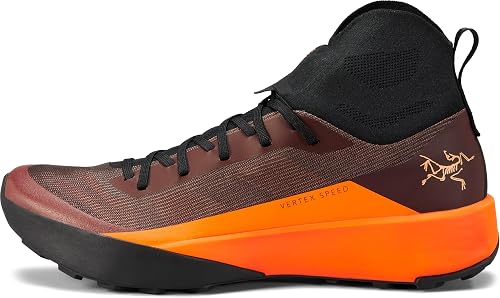
That loadout weighs in at roughly 11 to 12 pounds with full water — heavy enough that fit matters, light enough that you can sprint to a patient. For a deeper dive on layering and PPE compatibility, see our wildland firefighter boot guide which covers ankle support under load.
Sizing and fit over Nomex
The most common mistake medics make ordering a vest is sizing for street clothes. A vest that fits snug over a t-shirt becomes a torture device over a yellow Nomex shirt, line gear belt, and radio harness. Size up one full size if you will be wearing the vest over full PPE, or two sizes if you are stocky and run a chest rig under the vest.
Test fit must include a kneeling assessment posture and a full forward bend at the waist as if intubating a supine patient at ground level. If the vest rides up over your radio or pinches at the deltoids, it will fail at hour three of a 14-hour shift. The sternum strap should land mid-sternum, not at your throat, and the waist strap should sit above your line gear belt, not on top of it.
For a related pack-style comparison, see our hydration vest vs tactical pack breakdown and our search and rescue trekking pole picks for adjacent use cases.
Frequently Asked Questions
What size trail running vest do paramedics need for wildland EMS work?
For most male medics 5 foot 10 to 6 foot 1 with a 38 to 42 inch chest, a Large sized for street clothes becomes the right Medium-Large when worn over Nomex and line gear. Female medics should size up one full size from their road-running fit. Always test with full PPE on before committing — most vendors accept returns if tags are intact.
Is a trail vest for wildland EMS paramedics flame-resistant?
Most consumer trail running vests are not certified flame-resistant. A trail vest for wildland EMS paramedics should be nylon rather than polyester (nylon chars rather than melts), worn over your Nomex base layer rather than against skin, and ideally treated with an FR finish. NFPA 1977-aligned medic vests are starting to appear in 2026 but remain rare and expensive.
Can I carry a SAM splint and IV start kit in a 10L running vest?
Yes. A folded SAM splint slides into the rear stash pocket of most 10L vests. An IV start kit (catheters, saline lock, primary set, one 1L NS bag) fits in the main compartment alongside hemostatic gauze and an Israeli bandage. You will not fit a full ALS box, a c-collar, and a KED — for those, you need a litter team to bring the second-tier kit.
Do I need trekking poles for wildland EMS hikes?
In flat or rolling terrain, no. In steep timber, on burn scars with rolling debris, or on any descent carrying a patient on a litter wheel — yes. Poles reduce knee impact significantly on sustained descents and prevent the falls that turn a rescuer into a second patient. Folding poles that stash on a vest bungee are ideal so you have them when terrain changes.
How does a trail vest for wildland EMS paramedics compare to a tactical chest rig?
Tactical chest rigs distribute load across MOLLE webbing but typically lack hydration integration and back-storage volume. A trail vest gives you the same chest-access pattern with 8 to 15L of rear storage and dual soft-flask hydration. Many wildland medics now run a minimal chest rig underneath a hydration vest as a hybrid setup — narcotics, radio, and ID on the chest rig, trauma kit and water on the vest.
What is the best hydration capacity for fireline EMS in summer?
Plan on 1 liter per hour of active firework in 90°F-plus conditions. A 1L total vest capacity (two 500ml soft flasks) gets you one hour of self-supply. You will refill from engine potable tanks, helibase resupply, or carry an additional 1.5L bladder in the main compartment for extended assignments. Electrolyte tablets are non-negotiable in either flask after hour two.
Are folding or telescoping trekking poles better for paramedics?
Folding Z-fold poles stash shorter and deploy faster, making them better for medics who pole only on technical sections. Telescoping poles are more durable for sustained use and can be pressed into service as splint reinforcement or anchor stakes in improvised rescue. If you only buy one pair, telescoping is the more versatile pick; if you already own one and want a stash-able backup, fold is the right add.
Key Takeaways
- Choosing the right trail vest for wildland EMS paramedics means matching capacity and output ports to your actual devices
- Always check actual watt-hours (Wh), not just watts — runtime depends on Wh, not peak output
- Also covers: search and rescue medic vest
- Also covers: wildland paramedic hydration pack
- Also covers: EMS trail response vest
- Compare price-per-Wh across models to find the best value for your budget