If you're a forester or timber cruiser plotting variable-radius cruises through dense second-growth, scrambling down draws to hit a plot center, or punching cross-slope through devil's club and slash, you need trekking poles built for abuse — not weekend ultralight sticks. The best trekking poles for timber cruisers in 2026 are 7075-series aluminum (not carbon, which shatters when it catches a stob), have aggressive carbide tips that bite into duff and rotten wood, lock with external flick-locks rather than twist-locks that seize with grit, and either telescope or fold compactly enough to stow on a cruiser vest while you swing a relaskop or run a Haglof. Below, three real, field-proven options at three price points, plus a buyer's guide written specifically for off-trail forestry work — not casual day hikes.
Cruising timber is hard on gear in ways that don't show up in REI reviews. You're rarely on a trail. You drag poles through blackberry, jam them into root wads to test for hollow stems, lever yourself up greasy clay banks after a rain, and occasionally use them to whack a hornet nest off your hard hat brim. A pole that bends on a tourist in Yosemite will fold in half on a 60% slope in a Doug-fir replant. So this guide weights durability, repairability, and grip ergonomics far above weight savings.
Quick Comparison: Trekking Poles for Off-Trail Forestry Work
Top Picks
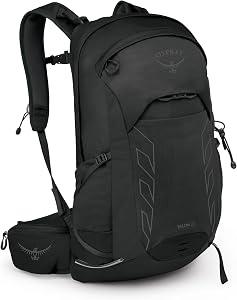
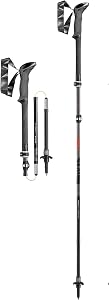
| Pole | Material | Lock Type | Pack Length | Weight (pair) | Best For |
|---|---|---|---|---|---|
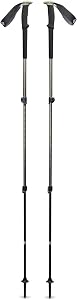
| Nordic Lightweight 7075 Aluminum | 7075-T6 aluminum | External flick-lock | ~25 in (telescoping) | ~1.0 lb | Daily cruising, heavy abuse |
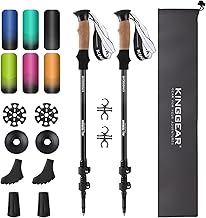
| TREKOLOGY Trek-Z Cork Grip Folding | 7075 aluminum, 3-section fold | Z-fold + push button | ~15 in (folded) | ~1.1 lb | Tight pack stow, hot-humid grip comfort |
| Collapsible Aluminum 2-Pack | Aluminum alloy | External flick-lock | ~26 in | ~1.3 lb | Budget crews, beater/loaner pairs |
Top Picks for Timber Cruising and Off-Trail Forestry Work
1. Nordic Lightweight 7075 Aluminum Trekking Poles — Best Overall for Cruisers
The Nordic Lightweight 7075 set is the closest thing to a purpose-built cruiser pole on the consumer market in 2026. The shafts are 7075-T6 aircraft-grade aluminum — the same alloy class used in mountaineering ice tools and high-end frame packs — which means they bend before they snap. That's a critical distinction for forestry work. A carbon pole catches a buried alder stob, you hear a crack, and now you have a 4-foot splintered shiv. A 7075 pole catches the same stob, you bend it 5 degrees, you straighten it across your knee at the truck, and you keep cruising the rest of the day. Field repairability matters when your nearest replacement is 90 miles of logging road away.
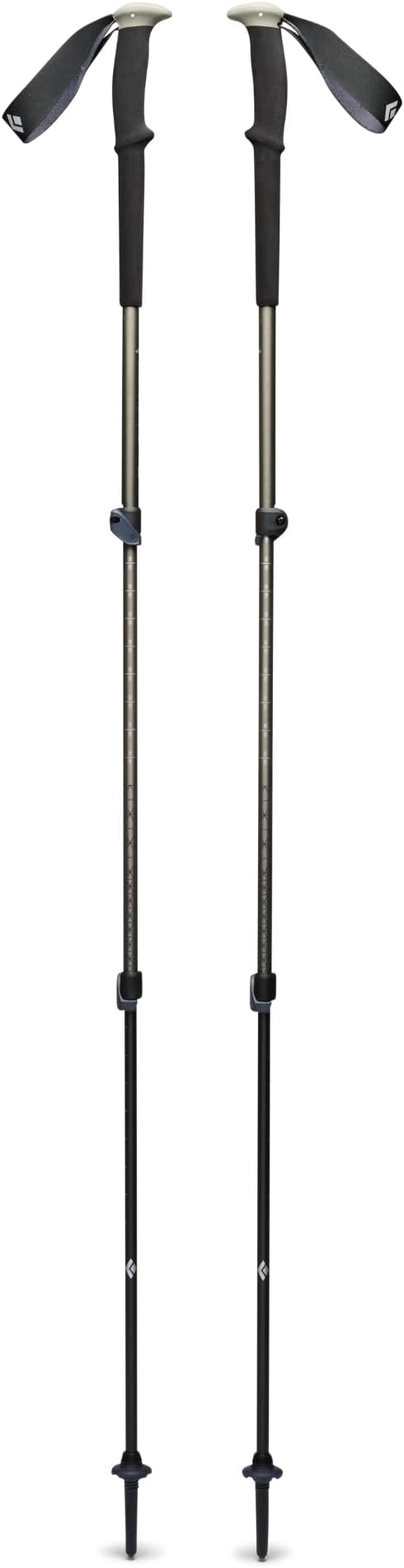
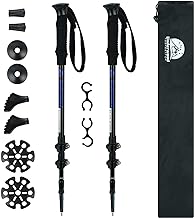
The external flick-locks are the other reason these win. Twist-locks pack mud, sap, and Douglas-fir needles into the threads and seize within a season. External cam locks shed contamination, are adjustable for tension with a single Phillips driver, and can be re-tightened in the field when the cam wears. The tungsten-carbide tips are replaceable, and the rubber tip protectors actually stay on — important when you're crossing a paved haul road and don't want to skate.
Check current price: Nordic Lightweight 7075 Aluminum Trekking Poles on Amazon
2. TREKOLOGY Trek-Z Cork Grip Folding Trekking Poles — Best for Cruiser Vest Stow
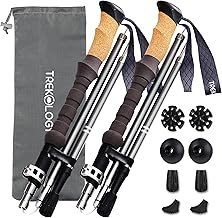
If you run a Forester's vest or a small cruiser pack and need poles that disappear when you're sighting through a relaskop, the Trek-Z fold down to roughly 15 inches — short enough to slip into a side pocket or strap diagonally across a vest back. The Z-fold design uses an internal Kevlar cord under tension, similar to a tent pole, that snaps the three sections into alignment with one motion. You can deploy them one-handed while holding a clinometer, which sounds trivial until you've tried to wrestle a telescoping pole open while balancing on a downed log.
The natural cork grips are the standout feature for Pacific Northwest and Southeast cruisers who work in high humidity. EVA foam grips get slick when your hands sweat; cork wicks moisture and actually improves grip over time as it conforms to your hand. The cork also doesn't cold-soak like aluminum or plastic, which matters for winter cruises in the Lake States or Maine when bare-hand grip on a frozen aluminum pole will give you a contact burn.
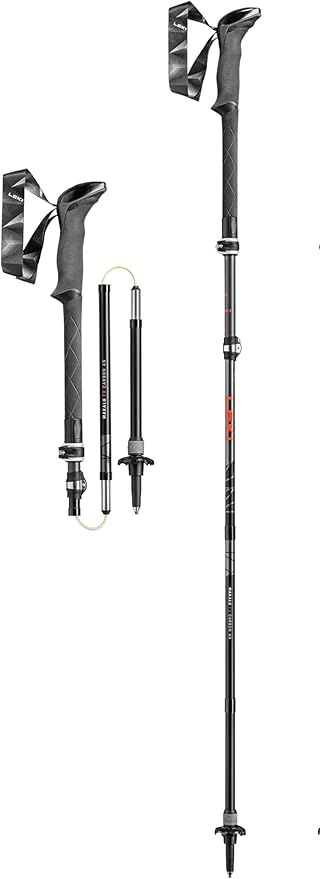
The trade-off versus the Nordic: the Z-fold joints are slightly more fragile under heavy lateral leverage than a straight telescoping pole. If you routinely use your pole as a third leg on 70% slopes or to vault small streams, the Nordic is the safer call. If you mostly use poles for balance and occasional brush parting, the Trek-Z is more comfortable across an 8-hour day.
Check current price: TREKOLOGY Trek-Z Cork Grip Folding Trekking Poles on Amazon
3. Collapsible Aluminum Trekking Poles, 2-Pack — Best Budget / Crew Loaner Pair
If you're outfitting a seasonal crew, running a state forestry intern program, or just want a beater pair to keep behind the truck seat for the days you forget your good ones, the 2-pack collapsible aluminum set is hard to beat on dollars-per-pole. You get two complete pole pairs for less than the price of a single mid-tier set, with external flick-locks (not twist-locks — important), foam grips, and standard tungsten-carbide tips with rubber boots and snow baskets included.
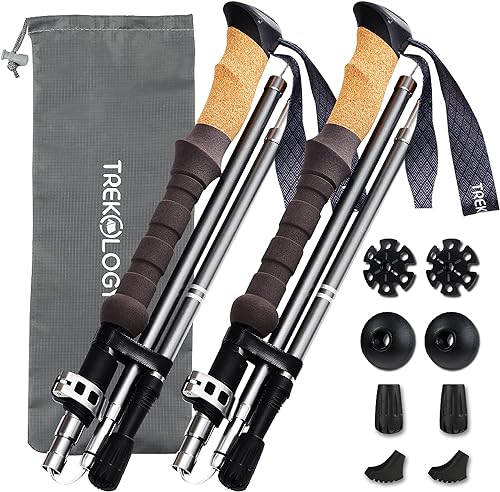
These are not as light as the Nordic set and the grip foam will degrade faster than cork, but for crew use where poles get loaned out, left in the rain, dropped from truck beds, and occasionally lost in slash piles, the math works. Buy three sets, hand them out at the start of cruising season, and the survivors carry over to next year. Forestry consultants running multi-person field teams in 2026 are increasingly going this route rather than asking each cruiser to bring their own.
Check current price: Collapsible Aluminum Trekking Poles 2-Pack on Amazon
What to Look For in Trekking Poles for Timber Cruisers
Material: Aluminum Over Carbon, Every Time
This is the single most important decision and the one most carbon-converted ultralight hikers get wrong when they start cruising. Carbon fiber is stiffer, lighter, and absorbs vibration better — for the trail. Off-trail, where lateral impacts and point-loaded catches are constant, carbon fails catastrophically. A 7075 or 6061 aluminum pole bends and keeps working. A carbon pole snaps and ends your day. For working trekking poles for timber cruisers, aluminum is the only correct answer.
Lock Mechanism: External Flick-Locks
Twist-locks (the older internal expander style) fail in three ways that matter to foresters: they pack with debris, they slip when grip strength fluctuates with temperature, and they require both hands to adjust. External cam locks (sometimes called flick-locks or lever-locks) flip open with a thumb, hold under heavy load, are field-adjustable with a screwdriver, and shed mud. Every pole on this list uses external locks. If you see a pole described as "twist to lock" or "internal expansion" in the marketing copy, skip it for forestry use.
Tips and Baskets
Tungsten-carbide tips are non-negotiable for off-trail work — steel tips dull within a season on rocky soil. Make sure tips are replaceable; you will eventually break or wear one out. Include the small mud/dirt baskets for soft-ground work and the snow baskets if you cruise in winter. Skip the trekking-specific large baskets unless you also do scree.
Grip Material
Cork is best for humid climates and long days — it absorbs sweat and shapes to your hand. EVA foam is a reasonable second choice and stays warmer than aluminum or rubber in winter. Avoid hard plastic or rubber grips for any pole you'll hold for 6+ hours; they cause hot spots and blisters.
Length and Adjustment Range
For mixed-terrain cruising — uphill, downhill, sidehill, and on-trail walk-ins — you want adjustable poles with at least a 15-inch range. Set them shorter for climbs (elbow at 90 degrees with pole tip near your boot) and longer for descents (extra 4-6 inches). Fixed-length poles or fold-only-no-adjust poles will frustrate you within a week.
How Cruisers Actually Use Poles in the Field
A cruiser's pole does more than balance. It's a probe for soft ground around plot centers, a brush parter when you're moving azimuth through 8-foot-tall salmonberry, a brace when you're reading a clinometer on a 50% slope, a poker for checking if that "log" is actually a yellow jacket nest, and occasionally a measuring stick when you've marked it with electrical tape at known intervals. For all of these, the Nordic 7075 set is the right balance of weight, durability, and price.
For more gear specifically tuned to working in the woods, see our guide to the best cruiser vests for timber cruising in 2026 and the best waterproof field notebooks for foresters. If you also run trail-running shoes between plots on long cruises, check our breakdown of the best trail runners for off-trail bushwhacking.
Frequently Asked Questions
Are carbon fiber trekking poles ever appropriate for timber cruising?
Only as a backup pair for established-trail walk-ins or short reconnaissance cruises with minimal brush. For production cruising in 2026 where you're billing per acre and can't afford a pole failure mid-plot, aluminum 7075 is the standard. Carbon's catastrophic failure mode — splintering rather than bending — is the wrong failure mode for off-trail work.
What length trekking poles should a 6-foot-tall forester buy?
Adjustable poles with a range covering roughly 115 to 135 cm will handle a 6-foot user across the full uphill/sidehill/downhill range. Avoid fixed-length poles. Set climbing length so your elbow is at 90 degrees with the tip at your boot, and extend 5-10 cm for sustained descents to keep your back upright on steep ground.
Do I need shock-absorbing trekking poles for cruising?
No, and arguably avoid them. Internal anti-shock springs add weight, add a failure point, and reduce the tactile feedback that helps you read the ground when probing for root wads, holes, or soft duff over buried debris. Rigid poles transmit information; cushioned poles damp it.
How do I keep flick-lock cams from slipping under heavy load?
The cam tension is adjustable on all three poles in this guide via a small Phillips screw on the locking lever. If a pole starts slipping mid-cruise, tighten the screw a quarter turn at a time until it holds without requiring excessive force to close. Replace the cam unit if it slips even at max tension — most manufacturers sell replacements for a few dollars.
Can I use trekking poles to set plot center pins?
Don't drive them like stakes — the carbide tip will mushroom and the shaft can buckle under axial impact loads. Use them to mark and steady the pin while you drive it with a small hammer or rock. For variable-radius plots, marking your pole with electrical tape at your BAF horizontal distance gives you a quick reference for borderline trees without breaking out a tape on every questionable stem.
What's the difference between Z-fold and telescoping trekking poles for forestry use?
Z-fold poles like the Trek-Z collapse to a much shorter pack length (around 15 inches versus 25+ inches telescoping) by breaking into three sections held together by an internal cord. They're better for stowing on a cruiser vest or in a small pack but slightly less robust under heavy side loads. Telescoping poles slide sections inside each other and are more durable for hard lateral abuse but bulkier when stowed. For most cruisers who keep poles deployed all day, telescoping wins on durability.
How long should a quality set of trekking poles last for a full-time cruiser?
A well-cared-for set of 7075 aluminum poles with replaceable carbide tips and external locks should last 3-5 cruising seasons of full-time use, with periodic tip replacements (every 1-2 seasons) and occasional cam-lock adjustments. Carbon poles in the same use case typically fail within a single season. Budget two-packs like the collapsible aluminum set above are realistically 1-2 season tools, which is why they make more sense as crew loaners than as a primary cruiser's daily pole.
Are women-specific trekking poles worth it for female foresters?
The main difference is grip diameter and overall length range. Smaller-handed cruisers of any gender will be more comfortable with the slimmer cork grips on the Trek-Z than with the standard-diameter foam grips on the budget 2-pack. Length-wise, all three poles in this guide adjust short enough for users down to about 5'2".
Bottom Line
For a working timber cruiser in 2026, the Nordic Lightweight 7075 Aluminum set is the right primary pole — durable, field-repairable, and built around the external cam locks and carbide tips that off-trail work demands. The TREKOLOGY Trek-Z is the better choice if you prioritize cork grip comfort and minimum pack length. The 2-pack collapsible aluminum set is the right answer for outfitting a crew or keeping a beater pair behind the seat. All three are honest tools at honest prices, and any of them will outlast the carbon ultralight poles your hiking buddies keep recommending.
Key Takeaways
- Choosing the right trekking poles for timber cruisers means matching capacity and output ports to your actual devices
- Always check actual watt-hours (Wh), not just watts — runtime depends on Wh, not peak output
- Also covers: forester trekking poles
- Also covers: off-trail bushwhacking poles
- Also covers: timber cruising walking sticks
- Compare price-per-Wh across models to find the best value for your budget