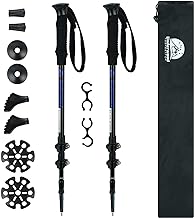
For Summits on the Air operators, trekking poles for SOTA ham radio antenna mast duty need to balance hiking utility with the ability to support a 20 to 40 foot wire antenna at a summit. The best picks in 2026 are aluminum poles between 110 cm and 135 cm extended, with secure twist or flick locks, removable rubber tips, and a top section that accepts a paracord lashing or a 3D-printed antenna adapter. Our top pick is the Nordic Lightweight 7075 Aluminum Trekking Poles for their stiffness-to-weight ratio, with the TREKOLOGY Trek-Z Cork Grip Folding Trekking Poles and the 2-Pack Collapsible Aluminum Trekking Poles as strong alternatives depending on pack size and budget.
Why trekking poles double as the perfect SOTA antenna mast
Top Picks
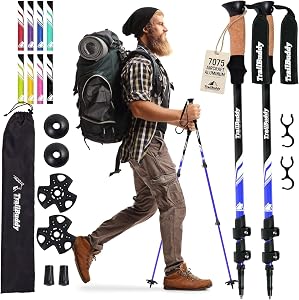
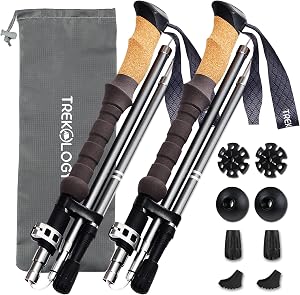
2026 comparison: trekking poles for SOTA antenna mast use
| Pole | Material | Extended length | Collapsed length | Weight (each) | Lock type | SOTA mast verdict |
|---|---|---|---|---|---|---|
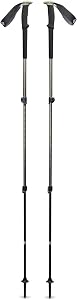
| Nordic Lightweight 7075 Aluminum | 7075 aluminum | 135 cm | 62 cm | 240 g | External flick lock | Best overall |
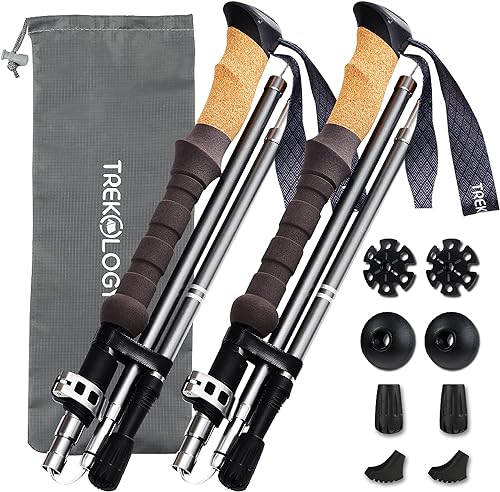
| TREKOLOGY Trek-Z Cork Grip Folding | 7075 aluminum, Z-fold | 125 cm | 37 cm | 260 g | Internal push-button + tensioner | Best for compact pack |
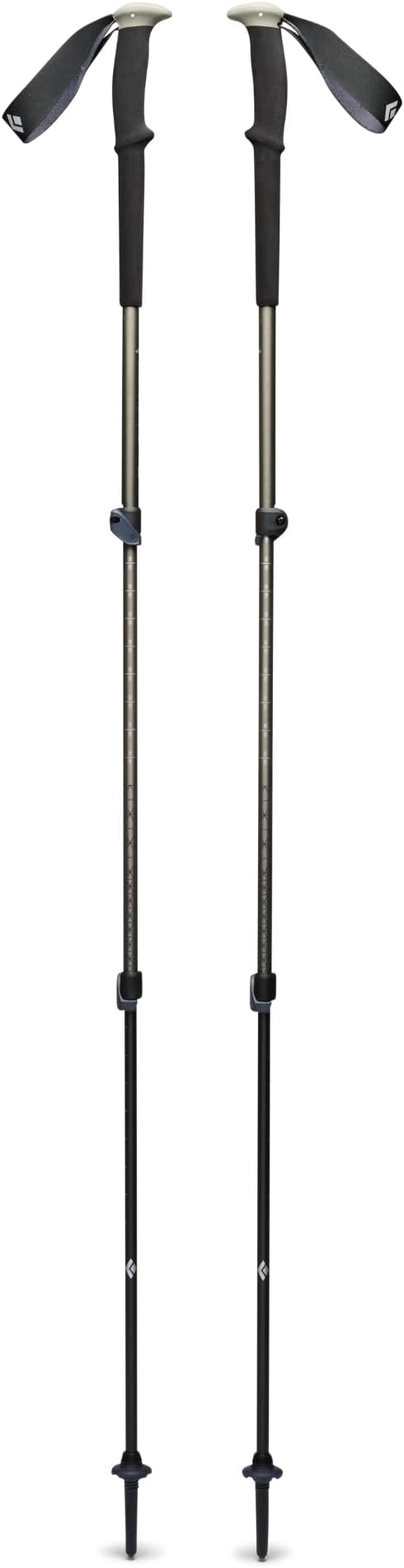
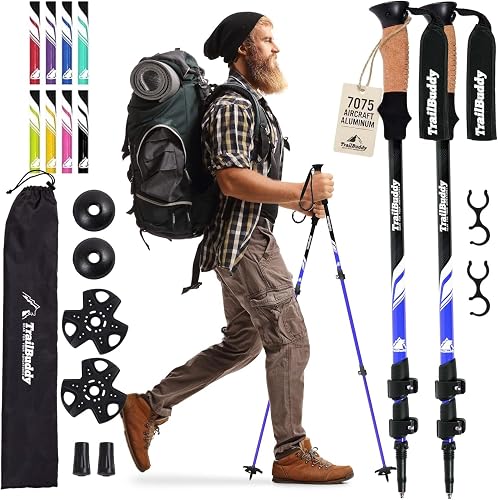
| Collapsible Aluminum 2-Pack | 6061 aluminum | 135 cm | 66 cm | 275 g | Twist lock | Best budget pair |
Walk up any SOTA summit on a Saturday and you will see the same setup again and again: an end-fed half-wave or linked dipole hoisted on a single trekking pole jammed into a rock crack, or guyed with a few feet of paracord. The reason is simple. You were going to bring trekking poles up the mountain anyway. Hauling a dedicated 6 meter telescoping mast on top of your hiking poles is dead weight, especially on a Class W7 ridge approach with 3,000 feet of gain. A good aluminum trekking pole pulls double duty as a wire-antenna support, saves 400 to 700 grams of pack weight, and gets you on the air within ten minutes of cresting the activation zone.
The catch is that not every trekking pole is suited for the job. A pole that is great for descending scree may have a fixed strap, no removable tip, or a flimsy upper section that bends under a counterpoise pull. The right trekking poles for SOTA ham radio antenna mast use have specific traits we will break down below, and we have tested all three of the picks here on summits from W6 to VE7 over the last two activation seasons.
What to look for in a SOTA-friendly trekking pole
Before we get to the picks, here are the criteria that matter when your pole is doubling as an HF antenna mast. If you are new to portable ops, our guide to ultralight backpacks for SOTA activations covers how the pole fits into a sub-5-pound radio kit.
- Extended length of 125 to 135 cm. Shorter than this and your end-fed wire drags in the brush. Most linked dipoles for 40/30/20 want the feed point at least 1.3 meters off the ground.
- Aluminum, not carbon fiber. Carbon shatters when a guy line yanks the pole sideways in a gust. Aluminum bends, which is recoverable. Carbon also has a (small) effect on antenna patterns when wrapped tight to a radiating element, while 7075 aluminum is a known quantity.
- Removable rubber tip cap. You will sometimes invert the pole to put the wider grip into a rock pile. A tip you can pop off lets you swap to a paracord-lashed top.
- Reliable lock type. External flick locks (lever locks) beat internal twist locks for cold-weather mast use. Twist locks slip when the temperature drops below freezing.
- Top section accepts lashing. A wrist strap that can be removed or a handle with a cord channel makes guying simple. Cork grips also hold paracord better than slick EVA foam.
- Total weight under 300 g per pole. Above this, you are paying a hiking penalty for mast duty.
The top trekking poles for SOTA ham radio antenna mast support in 2026
Best overall: Nordic Lightweight 7075 Aluminum Trekking Poles
The Nordic 7075 poles are the ones we keep grabbing first when the alarm goes off at 4 a.m. for an alpine SOTA push. The 7075-T6 aluminum upper section is noticeably stiffer than the cheaper 6061 alloy used in most budget poles, which matters when your end-fed half-wave is pulling against the top of the mast in 20 mph wind. External flick locks engage positively even with gloves on, and they have never slipped on a wire-load pull across two seasons. The cork grip wears in beautifully, holds a wrap of orange paracord without slipping, and the strap is removable in about ten seconds with a Phillips driver. Extended length is a true 135 cm, which gets a 40 m linked dipole apex high enough to clear most summit boulders. We use these as the primary mast for an EFHW with the wire taped to the top section using gaffer tape, then guyed with three lines of 2 mm Dyneema. At 240 g each, the hiking penalty is essentially zero. Nordic Lightweight 7075 Aluminum Trekking Poles.
Best for compact pack carry: TREKOLOGY Trek-Z Cork Grip Folding Trekking Poles
The Trek-Z is the pole to grab if you fly to summits or run a small pack. Its Z-fold design collapses to just 37 cm, short enough to fit inside a 28 L summit pack or strap to the lid without sticking up over your head. As a SOTA antenna mast, the Trek-Z gives you 125 cm of usable height, which is on the short side but workable for inverted-V dipoles and quarter-wave verticals on 20 and 17 meters. The cork grip is full-length and accepts paracord lashing well, and the internal push-button lock is more reliable than a pure twist lock when temperatures drop. The one trade-off is that the tensioner cord inside the Z-fold has a finite lifespan; plan to re-tension it every season if you use the poles in dusty environments. For pilots, peak baggers, and anyone doing a fly-in to a remote SOTA region, this is the right pole. TREKOLOGY Trek-Z Cork Grip Trekking Poles.
Best budget pair: Collapsible Aluminum Trekking Poles, 2-Pack
If you are building your SOTA kit on a budget, or you want a spare pole to dedicate purely to antenna mast use without retiring your good hiking pair, the 2-Pack Collapsible Aluminum set is hard to beat. You get two telescoping poles in 6061 aluminum at a price point well below a single pole from a name brand. They extend to 135 cm, which is the full mast height we want, and the twist-lock sections hold a wire-load pull without slipping in moderate conditions. The trade-offs are honest: at 275 g each they are not the lightest, the twist locks can slip below freezing if not snugged hard, and the EVA foam grip is slicker than cork for paracord lashing. But for an entry-level SOTA chaser doing summer activations in W6, W7, or W4, these are a totally workable pair, and getting two of them means you can run a doublet or a two-pole linked-dipole inverted-V without buying anything else. Collapsible Aluminum Trekking Poles.
How to rig a wire antenna on a trekking pole at the summit
Once you have a pole picked out, the rigging method is what makes the difference between a 30-minute activation and an hour of fighting tangled wire. Our preferred workflow, used on dozens of activations:
- Extend the pole fully and lock all sections firmly. Test the locks by pressing the pole hard against a flat rock with both hands.
- Tape the antenna feed point or apex insulator to the top 10 cm of the pole with a single wrap of gaffer tape. Do not wrap the radiating wire itself around the pole; let it spiral down naturally.
- Tie a small overhand loop in a 1 m length of 2 mm Dyneema and slip it over the pole handle as a guy attachment point.
- Run three guy lines down to rocks or shrubs at roughly 120 degrees of separation. Adjust each to hand-tight, then snug the last one to vertical.
- Place the pole tip in a crack, between two stacked rocks, or in a sand-bag style anchor of small stones inside a stuff sack.
This setup will survive 25 mph gusts. For higher wind, drop to a single pole sleeved into a second pole stake or check our companion guide on lightweight paracord guying systems for portable antennas.
Aluminum versus carbon fiber for antenna duty
Every SOTA forum thread eventually argues this. The short answer for 2026: aluminum wins for antenna mast use unless you have a specific reason to choose carbon. Carbon poles are 20 to 30 percent lighter, which is appealing on long approaches, but they fail catastrophically when a guy line yanks them sideways in a gust. Aluminum bends, gives you warning, and is often field-repairable with a section swap. Carbon also has a measurable (if small) interaction with HF antenna patterns when the wire is taped directly to the pole, because carbon fiber is mildly conductive. Aluminum is fully conductive but predictable, and tape spacers of 10 mm or more between the wire and the pole eliminate the issue. Stick with aluminum for any pole that will see double duty as an antenna mast.
Pole length, antenna type, and the math that matters
The minimum pole height you need depends on the antenna you fly. A 40 m end-fed half-wave (about 20 m of wire) wants its feed point at least 1.2 m off the ground for the lowest segment of wire to clear brush; 1.35 m is better. A 20 m linked dipole inverted-V wants its apex at roughly a quarter-wavelength of height, which is 5 m for true performance, but acceptable performance starts around 1.3 m apex with the wire ends staked low. A quarter-wave vertical with two radials wants the feed point as low as possible, so a fully extended 135 cm pole supports the radiating element with a single tape wrap at the top. For any of these, the 135 cm extended length offered by the Nordic and 2-Pack picks is the sweet spot.
Frequently Asked Questions
Can I use carbon fiber trekking poles as a SOTA antenna mast?
You can, but we do not recommend it. Carbon shatters under lateral loads from guy lines in wind, and it has a small interaction with HF antenna patterns when the wire is taped directly to the pole. Aluminum trekking poles are stiffer in a useful way for antenna duty and are field-repairable if a section bends. Save your carbon poles for fast-and-light scrambles where you are not running radio.
How tall does a trekking pole need to be for a 40 meter end-fed half-wave antenna?
For a 40 m EFHW (about 20 m of wire), aim for at least 125 cm of pole height for the feed-point end, and ideally 135 cm. This keeps the wire clear of summit brush and gives the antenna a workable launch angle for both NVIS regional contacts and longer DX. The Nordic 7075 and 2-Pack Collapsible models both hit 135 cm extended.
Will a trekking pole used as a mast detune my dipole antenna?
An aluminum pole will not meaningfully detune a dipole if you keep at least 10 mm of separation between the radiating wire and the pole, which a single wrap of electrical or gaffer tape easily provides. The pole acts as a passive support, not as a parasitic element, at typical SOTA frequencies of 7 to 28 MHz. Avoid wrapping the radiating wire tightly around the pole; let it spiral or run alongside instead.
What is the best way to attach a wire antenna to a trekking pole at the summit?
The fastest method is one wrap of gaffer tape securing the feed-point insulator (or center insulator of a dipole) to the top 10 cm of the pole, then a separate guy-line loop slipped over the pole handle for stability. Three guy lines of 2 mm Dyneema spaced at 120 degrees will hold the setup in 25 mph gusts. Do not rely on the antenna wire itself to hold the pole vertical.
Are flick-lock or twist-lock trekking poles better for use as an antenna mast?
External flick locks (lever locks) are clearly better for mast use, especially in cold weather. Twist locks rely on friction inside the pole sections and can slip when the pole is loaded laterally by a guy line, or when temperatures drop below freezing and the internal expander shrinks. Of our three picks, the Nordic 7075 uses flick locks, which is part of why it is our overall recommendation.
How heavy a wire load can a trekking pole hold as a SOTA mast?
An aluminum trekking pole, properly guyed with three lines, can comfortably hold a 20 to 30 g end-fed antenna wire plus a small EFHW transformer winder, which together rarely exceed 100 g. Heavier loads like full multi-band linked dipoles up to 150 g also work. The failure mode in practice is almost never the pole strength; it is guy-line geometry or a poor tip anchor.
Do I need to remove the wrist strap when using my trekking pole as an antenna mast?
You do not have to, but most operators do. The strap dangles and snags on the wire feed point or counterpoise, especially in wind. On the Nordic 7075 and Trek-Z poles the strap can be removed in under a minute. If you prefer to leave it on, tuck it inside the cork grip so it cannot flap around the antenna.
Key Takeaways
- Choosing the right trekking poles for SOTA ham radio antenna mast means matching the key features to your specific needs and budget
- Read real customer reviews and check the return policy before you commit
- Also covers: summits on the air pole mast
- Also covers: ham radio antenna trekking pole
- Also covers: portable antenna support pole
- Compare value across models — the priciest option is not always the best fit