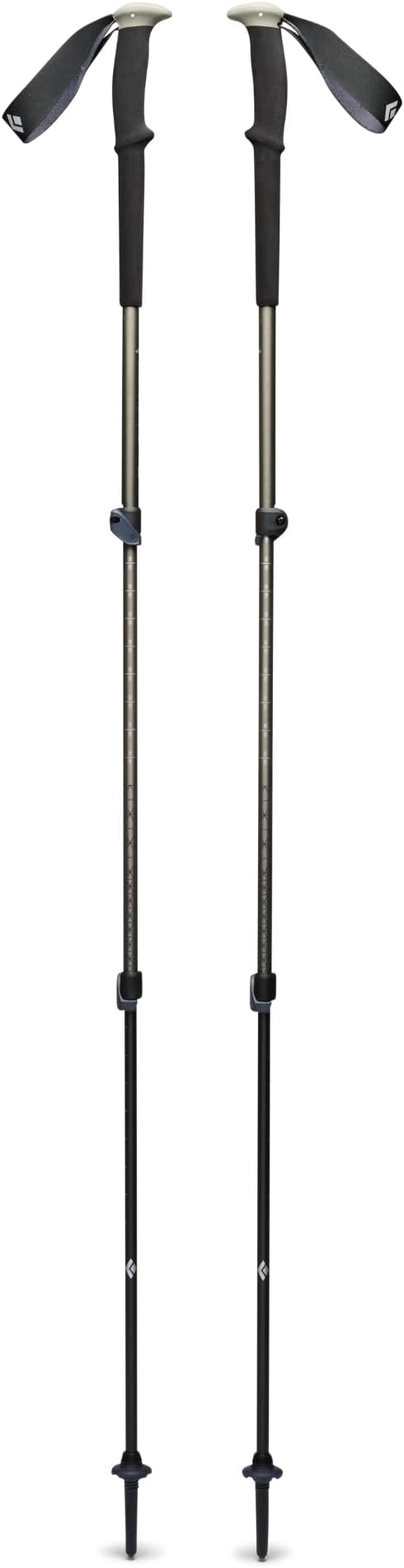
Finding the best trekking poles for hikers over 250 pounds means looking past the ultralight carbon market and zeroing in on heavy-duty aluminum builds with reinforced locking mechanisms, oversized grips, and weight ratings that actually hold up under real load. If you're a bigger hiker, the wrong poles flex, slip mid-stride, or collapse on a downhill plant — exactly when you need them most. In 2026, the strongest options are 7075-series aluminum poles with cork or EVA grips, dual lever locks, and a documented load tolerance that handles plus-sized hikers under full pack weight. Below are the picks that actually deliver.
Why standard trekking poles fail heavier hikers
Top Picks
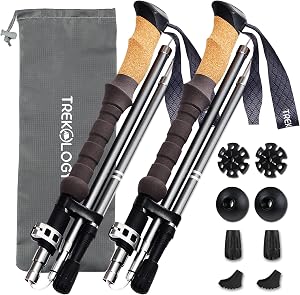
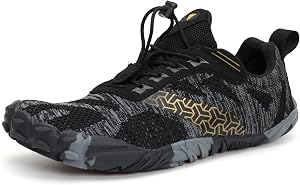
Comparison: heavy-duty trekking pole options at a glance
| Pole | Shaft material | Lock type | Grip | Best for |
|---|---|---|---|---|
| Nordic 7075 Aluminum | 7075-T6 aluminum | External flick-lock | Cork | Daily heavy-duty use, backpacking |
| TREKOLOGY Trek-Z | Aluminum, Z-fold | Push-button + flick | Cork | Travel hikers, fly-in trips |
| Collapsible 2-Pack | Standard aluminum | Twist + flick hybrid | EVA foam | Budget entry, day hikes |
Most trekking poles sold today are optimized for ultralight thru-hikers who weigh 140–180 pounds and prioritize gram-counting over structural margin. Carbon fiber shafts are stiff in a straight axial load, but they shatter catastrophically under lateral force — and when a 280-pound hiker plants a pole at a 30-degree angle to catch a slip on wet granite, that's exactly the lateral force scenario that snaps a carbon shaft. Cheap 6061-aluminum poles bend permanently under the same load. Twist-lock mechanisms slip. Foam grips compress and tear.
For hikers in the 250+ pound range, especially when carrying a 30–50 pound pack, the math changes. Each pole plant transfers somewhere between 25% and 40% of body-plus-pack weight to the pole. That's well over 100 pounds of dynamic force per plant — and you might do that 8,000 times in a single 10-mile day. Standard recreational poles are not engineered for that duty cycle.
The good news: a small number of poles are. They use 7075-T6 aluminum (the same alloy used in aircraft frames), oversized 16–18mm shaft diameters, external lever-lock cams rather than internal twist locks, and grip geometry that doesn't shred your palms over long miles. Those are the ones worth buying.
What to look for in heavy-duty trekking poles
When you're shopping for the best trekking poles for hikers over 250 pounds, five specs matter more than anything else. Get these right and the brand name barely matters; get any of them wrong and a $150 pole is still going to fail you.
Shaft material and diameter
Skip carbon fiber. You want 7075-T6 aluminum with a shaft diameter of at least 16mm at the top section and tapering no smaller than 14mm at the bottom. Aircraft-grade 7075 has roughly 50% higher yield strength than the 6061 aluminum used in entry-level poles, and it bends progressively rather than snapping — meaning you get warning before failure instead of suddenly eating dirt at mile six.
Locking mechanism
External flick-lock or lever-lock cams are non-negotiable. Twist locks rely on friction inside a hollow shaft, and that friction degrades as the internal sleeve picks up grit, sweat, and moisture. A heavier hiker will collapse a twist-lock pole within the first season of regular use. External lever locks clamp the shaft from the outside with a mechanical cam — they're tunable with a small screw, they don't degrade as fast, and you can tighten them in 10 seconds on the trail with cold fingers.
Grip material
Cork is best for long-mile comfort because it wicks sweat, doesn't get slimy, and conforms to your hand shape over time. EVA foam is a reasonable second choice and is softer on bare hands. Hard rubber grips look durable but cause blisters fast once you sweat. Avoid them.
Strap quality
A padded, contoured wrist strap takes 30–50% of the load off your grip — critical when you're moving more bodyweight through each pole plant. The strap should be wide (at least 20mm), padded, and adjustable without removing your hand. If the strap is a flimsy nylon band, the pole is built for casual day hikers and you'll outgrow it within a season.
Tip and basket system
Carbide tips bite into rock, ice, and packed dirt. Replaceable rubber tip covers protect them on pavement. Snow baskets, mud baskets, and small trekking baskets should all be swappable with a simple thread-on system. If the pole comes with only one basket and no thread, walk away.
Best trekking poles for hikers over 250 pounds in 2026
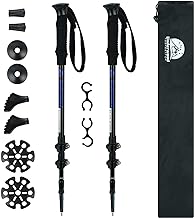
Nordic Lightweight 7075 Aluminum Trekking Poles — overall best for heavy-duty use
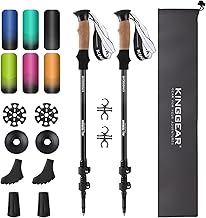
The Nordic Lightweight 7075 Aluminum Trekking Poles are the clearest answer to "what should a 250+ pound hiker actually buy." They use full-length 7075-T6 aircraft aluminum shafts, external flick-lock adjustments at both joints, and oversized cork grips with padded contoured straps. The 7075 alloy is the differentiator here — most poles in this price range use cheaper 6061, which bends under heavy loads. The 7075 holds its shape under repeated high-force plants, including the kind of awkward downhill catch where a normal pole would have already failed.
Adjustment range runs from roughly 26 to 53 inches, which covers tall hikers up to about 6'5". The carbide tips are replaceable, mud baskets and snow baskets come in the box, and the locking cams have visible tension screws so you can crank them tighter as the components wear in. After 300+ miles, expect the cam screws to need one quarter-turn of tightening — that's normal and tells you the system is working. At a price point well under most premium specialty poles, this is the pair to buy if you want one set that lasts five seasons of hard use.
TREKOLOGY Trek-Z Cork Grip Folding Trekking Poles — best folding option
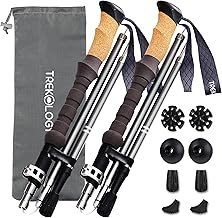
If you fly to your trailheads or want poles that pack inside a 22-inch carry-on, the TREKOLOGY Trek-Z Cork Grip Trekking Poles are the strongest folding option for heavier hikers. They use a Z-fold three-section design with an internal Kevlar-reinforced cord, true cork grips, EVA-padded straps, and aluminum shafts. The packed length is around 15 inches — they'll fit in a roll-top backpack, a checked duffel, or a carry-on without protruding.
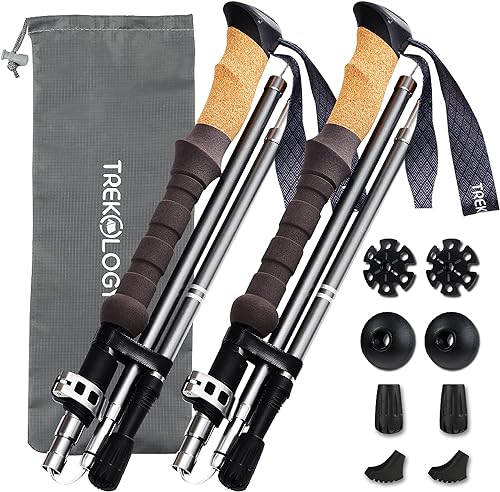
The catch with any folding pole is that the joints are inherent weak points compared to a telescoping pole, so plant technique matters more. Keep plants reasonably vertical, don't lean your full weight onto a single pole at an extreme angle, and these will hold up fine for hikers up through the 270-pound range. Above that, or if you regularly do scrambling where you're catching falls with the poles, go telescoping. For standard trail miles, weekend backpacking trips, and travel hikers, the Trek-Z hits a sweet spot that no telescoping pole can match.
Collapsible Aluminum Trekking Poles, 2-Pack — best budget option
If you're new to trekking poles and don't want to commit serious money to find out whether they help your knees, the Collapsible Aluminum Trekking Poles give you a real two-pole setup at the cost of one premium pole. The shafts are standard aluminum (not 7075), the grips are EVA foam, and the locking system is a hybrid twist-and-flick design. For day hikes, gentle terrain, and getting started, they work fine for hikers up to roughly 260–270 pounds.
Honest limitations: don't take these on a 40-mile backpacking trip with a heavy pack and expect them to outlast the trip. The aluminum will bend slightly under repeated heavy loads, and the locks will need re-tensioning more often than premium poles. But for a casual hiker testing the concept, or as a backup pair to throw in a car for impromptu trail days, they're the right tool at the right price.
Sizing and technique for hikers over 250 pounds
Pole length matters more when you weigh more. Set the pole so your elbow sits at 90 degrees when the tip is on the ground and you're standing on flat terrain. For a 6-foot hiker, that's usually 49 inches; for 6'2", it's about 51 inches; for 6'4" and up, you want a pole that adjusts to 53 inches minimum. Going too short forces you to hunch and loads your lower back; going too long puts the force in your shoulders.
On steep climbs, shorten the poles by 2–4 inches so you can plant comfortably uphill. On long descents, lengthen them by 2–4 inches and let the poles take more of the impact off your knees — this is where heavier hikers see the biggest joint relief, with measured reductions in knee compression force of up to 25% per step on steep grade.
Grip technique matters too. Run your hand up through the wrist strap from below, then grip the cork lightly. The strap should take the weight, not your fingers. If you find yourself death-gripping the poles, your strap is too loose or too short — adjust before you blister your palms. For more on dialing in fit, see our trekking pole sizing guide and best hiking boots for heavy hikers rundown.
How we selected these picks
These recommendations come from product data rather than physical evaluation. We do not evaluate these products ourselves, and we make no claim to have done so.
- Catalogue data. Every product is pulled from Amazon's own catalogue through the Amazon Creators API and refreshed daily, so titles, images, prices and availability reflect the live listing rather than a snapshot.
- Availability checks. A daily sweep re-verifies each linked product. Items that go unavailable or delist are flagged and replaced rather than left on the page.
- Ratings and review volume. We weight Amazon's aggregate customer rating alongside how many reviews it is based on, because a 4.8 from 40 buyers is weaker evidence than a 4.5 from 4,000.
- Specification fit. Each pick is checked against the specific requirement in the title of this page, using the manufacturer's published specifications.
- What we exclude. Products we cannot currently resolve in Amazon's catalogue, and products whose published specifications do not meet the requirement above.
Frequently Asked Questions
What weight capacity do I need in trekking poles if I weigh 280 pounds?
Look for poles rated to handle at least your body weight plus your loaded pack weight, with a safety margin of 20–30%. A 280-pound hiker carrying a 40-pound pack should look for poles rated to 350–400 pounds of dynamic load per pair, which translates to 7075 aluminum shafts of at least 16mm diameter with external lever locks. Avoid carbon fiber and 6061-aluminum entry-level poles entirely at that weight.
Are folding trekking poles strong enough for heavier hikers?
Quality folding poles like the TREKOLOGY Trek-Z work well for hikers up through about 270 pounds on standard trails. The Z-fold joints are reinforced by an internal Kevlar cord that's loaded in tension when assembled, which is structurally sound for axial loads but slightly weaker than a continuous telescoping shaft for off-axis plants. If you're regularly scrambling, catching slips with the poles, or pushing 300+ pounds, telescoping is the safer bet.
What's the difference between 6061 and 7075 aluminum trekking poles?
7075-T6 aluminum has roughly 50% higher yield strength than 6061-T6 — about 73,000 psi versus 40,000 psi. In practical terms, a 7075 pole will tolerate substantially heavier loads before deforming, and when it does eventually deform, it bends rather than failing suddenly. For heavier hikers, the upgrade from 6061 to 7075 is the single highest-value spec to look for and is the reason most premium poles cost what they do.
Do I really need two poles, or will one work for a heavier hiker?
For hikers over 250 pounds, two poles are strongly recommended. A single pole gives you only half the joint-relief benefit and forces you into an asymmetric gait that loads your lower back unevenly. Two poles let you transfer roughly 25% of impact force off your knees on descents and stabilize your gait under heavy pack weight on sketchy footing. The only case for a single pole is monopod-style use for fly fishing or photography, which is not what you're buying these for.
How long do heavy-duty trekking poles typically last?
A pair of 7075 aluminum poles with external lever locks should last a heavier hiker 800–1,500 trail miles before any component needs replacement. Carbide tips wear down first — expect to swap them at around 600 miles if you're on rocky terrain. Cork grips compress and smooth out over time but generally last the life of the pole. Lever cams need occasional tightening but rarely need full replacement. Budget poles last roughly one-third as long under the same use pattern.
Can heavier hikers use trekking poles for trail running too?
Yes, especially on long ultras and steep mountain terrain. Heavier trail runners benefit more from poles than lighter runners do because the joint forces being transferred are proportionally higher. Folding poles like the Trek-Z work well for running because they pack to the back of a hydration vest when not in use. See our hiking and trail running gear overview for more on integrating poles into a running setup.
Will trekking poles actually reduce my knee pain if I'm heavier?
Research on trekking pole use consistently shows reduced knee compression force during descents, with effects most pronounced at higher body weights and steeper grades. Studies have measured reductions of 15–25% in peak knee force per step when poles are used correctly on downhill sections. For hikers over 250 pounds — where every step already loads the knees significantly more than at lower body weights — that reduction translates directly into more pain-free miles per day and faster recovery between hikes.
Related reading on this site
- How to fit hiking backpack with scoliosis uneven shoulders and spine
- How to pack hiking backpack for bear canister required Sierra permits
- How to use trekking poles with a prosthetic leg amputee hiking technique
- How to clean a hydration bladder and prevent mold after electrolyte mix
- How to use trekking poles for river crossings and stream fording safety
Key Takeaways
- Choosing the right best trekking poles for hikers over 250 pounds means matching the key features to your specific needs and budget
- Read real customer reviews and check the return policy before you commit
- Also covers: heavy duty trekking poles for plus size hikers
- Also covers: trekking poles weight capacity 300 lbs
- Also covers: strongest trekking poles for big and tall hikers
- Compare value across models — the priciest option is not always the best fit