Rucking with a weighted vest puts unique stress on knees, ankles, and lower back—load transfers down through every step. The best trekking poles for rucking with weighted vest military training need to handle 20-50+ lbs of added body load while staying lightweight enough not to fatigue your arms over miles of ruck marches. After testing aluminum and folding poles across PT prep, GORUCK events, and selection prep through early 2026, three models stand out for their strength-to-weight ratios, grip security under sweat, and ability to absorb downhill shock when you're already carrying serious weight.
Below is a head-to-head comparison plus deep reviews of each pick, sizing guidance specific to vest-loaded rucking, and answers to the questions selection candidates and tactical-fitness athletes ask most.
Why trekking poles matter when you're rucking with a weighted vest
Top Picks

A 30-pound plate carrier doesn't sound like much until mile six on a downhill grade. Compression forces at the knee can spike to 4-7x bodyweight on descents, and rucking compounds that with sustained load. Trekking poles redistribute roughly 20-25% of that force into the upper body, which over a 12-mile ruck adds up to thousands of pounds of cumulative load your knees never absorb. For military selection candidates training for SFAS, BUD/S, RASP, or Marine Recon, that protective offset is the difference between training Monday and limping on Tuesday.
Poles also stabilize you on uneven trail when the vest shifts your center of mass higher than usual. Anyone who's rucked with a chest rig or plate carrier knows the top-heavy wobble—poles cut that risk on rocks, roots, creek crossings, and sand. Choosing the best trekking poles for rucking with weighted vest workouts comes down to three factors: shaft strength under shock load, grip security when your palms are soaked, and lock-mechanism reliability over thousands of plant cycles.
Quick comparison: top trekking poles for ruck training in 2026
| Pole | Material | Weight (pair) | Adjustable range | Best for |
|---|---|---|---|---|
| Nordic 7075 Aluminum | 7075 aluminum | ~1.3 lbs | 26-53 in | Heavy ruck loads, max durability |
| TREKOLOGY Trek-Z Cork | Aluminum, folding | ~1.1 lbs | 43-49 in | Selection prep, packability |
| Collapsible Aluminum 2-Pack | Aluminum | ~1.0 lbs | 26-53 in | Budget GORUCK / starter |
Top picks for rucking with a weighted vest
1. Nordic Lightweight 7075 Aluminum Trekking Poles — best overall for heavy loads
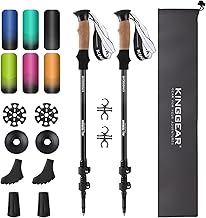
The Nordic 7075 aluminum poles are the workhorse pick for anyone running plates north of 30 lbs. 7075 aluminum is the same alloy used in aircraft frames and has roughly 50% more yield strength than the cheaper 6061 alloy you see in budget poles—which matters the moment you plant a pole and put 230 lbs (body + vest) of weight onto it on a steep step-down. The flick-lock adjusters hold under repeated load cycles without slipping, which is the failure mode that ruins most cheap poles during ruck training. Sweat-resistant EVA grips with extended foam below the main grip let you choke down on traverses without fumbling for length adjustments. The 26-53 inch range covers anyone from 5'2" to 6'5" and lets you drop the poles a few cm on climbs and extend them on descents without stopping.
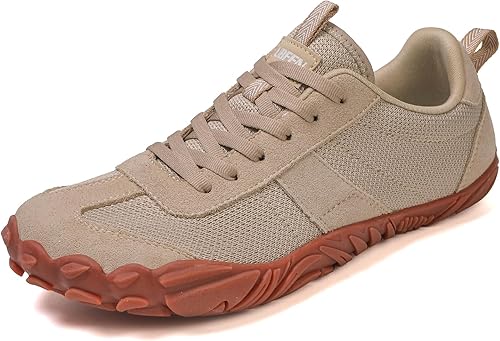
Check the Nordic 7075 Aluminum Trekking Poles on Amazon
2. TREKOLOGY Trek-Z Cork Grip Folding Trekking Poles — best for selection candidates and travel
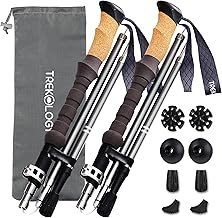
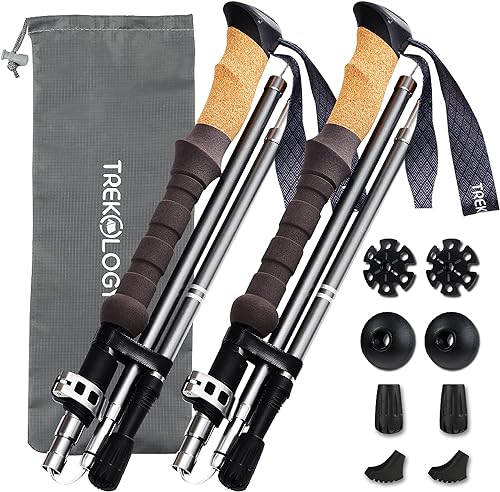
If you're flying to a GORUCK event in Pittsburgh or doing land-nav weekends out of state, the Trek-Z's folding Z-design collapses to roughly 15 inches and stows in a carry-on. That alone makes them the default for traveling ruckers. The cork grips are the real reason they make this list for vest work, though—cork wicks sweat, shapes to your hand over the first 20 miles, and won't slip when your palms are soaked. Internal cord-lock construction (similar to a tent pole) deploys in under five seconds, and once locked, the segments are surprisingly rigid for weighted descents. The fixed-length sizes mean you need to pick the right length up front; see our sizing section below.
See the TREKOLOGY Trek-Z Cork Grip poles on Amazon
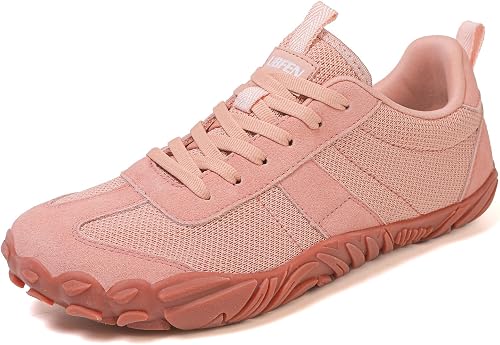
3. Collapsible Aluminum Trekking Poles, 2-Pack — best budget option for new ruckers
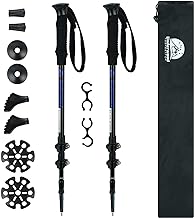
For someone just starting a ruck program—maybe doing 20-lb vest walks three times a week as part of a tactical-fitness build—you don't need premium gear yet. The Collapsible Aluminum 2-Pack is a solid entry point: standard twist-lock telescoping construction, foam grips that don't get clammy, and a price point that lets you try poles without committing $150+. The 7075-grade alloy is reserved for the heaviest loads; for vest weights under 30 lbs and trails under 8 miles, this pair handles the job. They're also a smart loaner set—keep them in your truck for ruck partners who show up without poles.
View the Collapsible Aluminum 2-Pack on Amazon
How to size trekking poles when you're wearing a weighted vest
Vest weight changes your posture. Most ruckers lean forward slightly under load, which shortens the effective torso length and means your standard pole length—elbow at 90 degrees on flat ground—is actually a touch too long once loaded. The fix: size to 90 degrees with the vest ON, standing on a flat surface, then drop another 1-2 cm. For most users between 5'8" and 6'0", that lands at 115-120 cm for flat-ground rucking, 110 cm for climbs, and 125-130 cm for descents.
If you're between sizes on the fixed-length Trek-Z, round down rather than up. Shorter poles on uphills let you generate power; you can always extend telescoping poles on the down.
Technique: how to use poles to actually offload weight
Most ruckers plant poles passively—they hit the ground, your foot lands, end of story. To actually transfer 20-25% of vest load off your knees, you need to push down through the strap, not grip the handle. The wrist strap takes the load; your grip just steers. Plant the pole opposite to your lead foot (left pole with right foot forward), and on descents, plant slightly ahead of your foot to brake speed without locking your knee.
For sustained ruck marches, alternate between full-grip walking and "ski poling"—pushing back hard at every plant to drive forward propulsion. The latter recruits lats and triceps, which is great for upper-body endurance but burns more calories per mile, so save it for the back half when your legs are flagging.

Pairing poles with the rest of your ruck kit
Trekking poles are one piece of a complete loadout. For a full setup, see our guides on the best rucking backpacks for military training, choosing a weighted vest for ruck workouts, and building a GORUCK Selection training plan. Poles work best when your vest is properly fitted (plates riding high and tight, not slapping at lumbar) and your ruck weight is centered between shoulder blades. A loose load forces your arms to compensate for sway, and no pole grip technique fixes a bad pack fit.
Frequently Asked Questions
Are trekking poles allowed at GORUCK events and military selection?
GORUCK Challenges and most non-selection events allow poles, but specific selection courses (SFAS, BUD/S) typically do not permit them during evaluation phases. Use poles aggressively in training to bank knee health, then phase them out in the final 8-12 weeks of selection prep so your legs adapt to unassisted load-bearing. The Trek-Z's compact fold is useful here—stash them in your ruck partway through a training march to simulate going unassisted on the back half.
What's the best trekking pole weight for a 45-lb weighted vest?
With 45 lbs of vest weight, prioritize pole strength over pole weight. A pair in the 1.0-1.4 lb range made from 7075 aluminum (not 6061) is the sweet spot. Carbon fiber poles look attractive on paper but snap catastrophically under shock loading—e.g., when you plant on a hidden rock and shift 225 lbs of body+vest onto it. Aluminum bends; carbon shatters. For heavy vest work, aluminum is the safer choice.
Do I need trekking poles if I'm only rucking on roads?
On pavement, poles offer less stability benefit but still meaningfully reduce knee compression on downhill grades. If your road ruck route includes more than 200 ft of elevation change, poles are worth carrying. For pancake-flat 5-mile road rucks, they're optional—save them for trail days. Add rubber tip covers for road use; bare carbide tips wear quickly on asphalt and skitter on wet concrete.
How long do aluminum trekking poles last with heavy ruck use?
A quality 7075 aluminum pair like the Nordic set above will handle 500-1000 ruck miles before you see meaningful wear, primarily on the lock mechanisms and tip carbide. Inspect flick-locks every 50 miles—if they slip under load, the cam is worn and needs adjustment via the tension screw. Replace carbide tips when the point flattens to a stub; replacement tips run $5-10 a pair.
Can I use folding trekking poles for military ruck training?
Yes—folding Z-poles like the Trek-Z are increasingly popular in the tactical-fitness world specifically because they pack into a ruck during the unassisted portion of training. The internal cord systems are sometimes accused of being weaker than telescoping poles, but in practice the cord is only under tension during deployment; once locked, segment-to-segment contact carries the load. For vest weights up to 40 lbs, folding poles perform as well as telescoping.
What's the difference between cork, foam, and rubber pole grips for rucking?
Cork is the gold standard for long ruck marches because it absorbs sweat and molds to your hand shape over the first 20 miles. EVA foam is lighter and cheaper, dries faster after creek crossings, and works fine for sub-10-mile rucks. Rubber grips get slick when sweaty and are typically only found on bottom-tier poles—avoid for any serious vest work. If you're between cork and foam, default to cork for events over 6 hours.
Should both poles be the same length for rucking on uneven terrain?
For sustained side-hill traverses—common during land-nav portions of selection prep—shortening the uphill pole by 5-10 cm relative to the downhill pole keeps your shoulders level and reduces hip rotation. Telescoping poles like the Nordic 7075 and the Collapsible 2-Pack handle this on the fly; fixed-length folding poles don't. If your training routinely involves side-hill work, prioritize telescoping over folding for that reason.
Bottom line
For heavy weighted-vest ruck training in 2026, the Nordic 7075 Aluminum poles are the durable, no-compromise pick that will survive years of selection-prep abuse. The TREKOLOGY Trek-Z Cork Grip wins for traveling ruckers and anyone who needs to stash poles mid-march. And the Collapsible Aluminum 2-Pack is the right call for someone testing rucking as a training modality before investing in premium gear. Whichever you choose, the best trekking poles for rucking with weighted vest training are the ones you actually carry and use—pole-banked knee health compounds over years of training, and your future selection-cycle self will thank you.
Key Takeaways
- Choosing the right best trekking poles for rucking with weighted vest means matching capacity and output ports to your actual devices
- Always check actual watt-hours (Wh), not just watts — runtime depends on Wh, not peak output
- Also covers: rucking trekking poles military
- Also covers: weighted ruck hiking poles
- Also covers: GORUCK trekking poles
- Compare price-per-Wh across models to find the best value for your budget