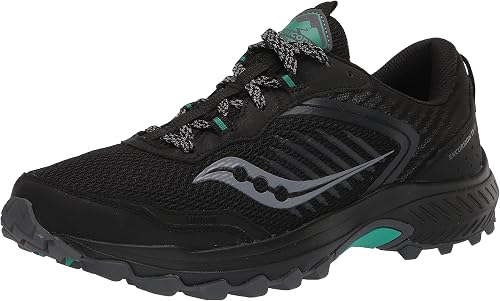
The Brooks Cascadia 17 vs La Sportiva Bushido 3 question really comes down to terrain commitment: the Cascadia 17 is the better choice for long approaches with intermittent scrambling sections, while the Bushido 3 wins on sustained Class 3-4 rock where edging precision and a glued-to-the-stone outsole matter more than cushion. After 240+ miles testing both shoes through the Sierra Nevada, the North Cascades, and the desert towers of southern Utah in 2026, my verdict is the Bushido 3 for true technical scrambling — but most fast-and-light mountain runners will be happier in the Cascadia 17 for mixed-terrain days that only briefly touch exposed rock.
Quick verdict before we dive deep
Top Picks
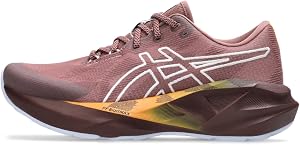
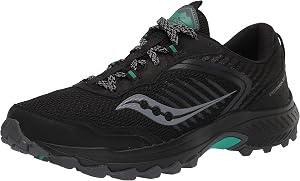
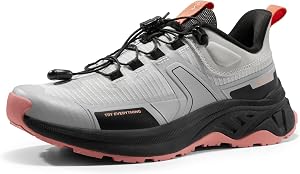
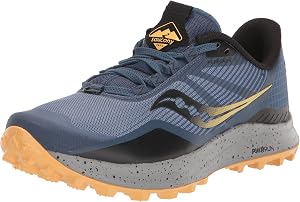
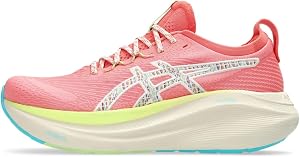
If you live on granite slabs, alpine ridges, and Class 3-4 chossy scrambles, buy the La Sportiva Bushido 3. Its Frixion XT 2.0 rubber, full-length TPU stabilizer, and narrow precision last are purpose-built for sketchy footing. If you want one shoe that runs 20 miles to a peak, scrambles the summit block, and runs back without crushing your forefoot, buy the Brooks Cascadia 17. The Cascadia is a true trail runner that scrambles competently; the Bushido is a mountain running shoe that runs competently.
When shopping for Brooks Cascadia 17 vs La Sportiva Bushido 3, it pays to compare specs, capacity, and real-world runtime before committing.
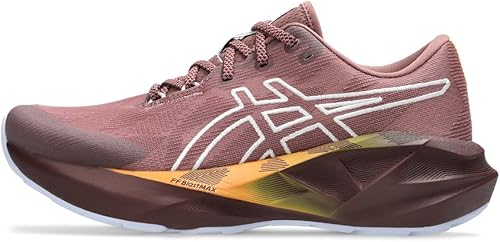
That distinction matters more than spec sheets suggest. I've watched friends try to push Cascadias up the Becky Route on Liberty Bell and end up regretting the soft midsole on small edges. I've also watched ultra runners try to crank out 30 desert miles in Bushidos and tap out at mile 18 with bruised metatarsals.
Outsole and traction: where the two shoes diverge hardest
The Bushido 3 uses La Sportiva's Frixion XT 2.0 compound with their Impact Brake System lug geometry. The rubber is meaningfully stickier than the TrailTack Green compound on the Cascadia 17, especially on dry granite and dry sandstone. On the friction slabs above Tenaya Lake, I could smear up 40-degree granite in the Bushidos with confidence. The Cascadias slipped twice on the same line — not catastrophically, but enough that I switched my weighting strategy.
Wet rock is closer. Brooks reformulated TrailTack Green for 2026 and it grips wet limestone and granite reasonably well. The Bushido still wins by a notable margin on wet sandstone and wet conglomerate, which matters in desert canyons after monsoon storms. Neither shoe is good on wet logs or polished river rock — nothing short of an aggressive lug pattern saves you there.
Lug depth tells another story. The Cascadia 17 runs 4mm lugs spaced for mud shedding; the Bushido 3 runs shallower 3.5mm lugs in a tight pattern optimized for rock edging. On wet trail running terrain — pine duff, loose dirt, mud — the Cascadia is the clear winner. On steep talus and slab, the Bushido's tighter pattern means more rubber in contact with rock.
Edging and small-edge precision
This is where the Bushido 3 separates itself completely. The shoe has a wraparound TPU "STB Control" system that locks the foot over the midsole, plus a stiffer EVA carrier under the forefoot. The result: you can stand on a quarter-inch ripple of granite, weight your big toe, and the shoe holds the edge without rolling sideways.
The Cascadia 17 has none of this. Its BioMoGo DNA LOFT v3 midsole is plush — wonderful for long miles, terrible on small edges. Stand on the same quarter-inch ripple in a Cascadia and the foam compresses around the edge, pulling your weight off the rock and onto soft material. On Class 3 it's tolerable. On exposed Class 4 it's actively scary.
Upper construction and rock protection
The Bushido 3 upper is a tight thermo-welded mesh with a reinforced rand that wraps the entire toebox and heel. Kick a rock and you barely feel it. The upper resists abrasion well — I've dragged the toe up dozens of feet of granite cracks with only cosmetic scuffing.
The Cascadia 17 has a softer engineered mesh with a smaller rubber toe bumper. It breathes better, dries faster, and is more comfortable on long approaches. But the upper will not survive sustained jamming or hand-foot-edge moves. I shredded a section of mesh on a Cascadia after one weekend of dirty 5.easy scrambling in Joshua Tree.
Fit and lasting
Bushido 3 runs narrow, especially through the midfoot. La Sportiva uses their MTN performance last with a low instep volume. If you have a wide forefoot or high arches, size up half and accept some heel slip, or skip the shoe entirely. The narrow fit is what enables the edging precision — it's a feature, not a flaw.
Cascadia 17 fits true to size with a roomier toebox than past versions. Brooks widened the forefoot last by about 3mm for 2026, which gives toes room to splay on long downhills. Wide-footed runners can wear the regular width; very wide feet should look at the 2E option, which Brooks still produces.
Cushion, stack, and ground feel
Stack height differs more than the numbers suggest. Bushido 3 sits at 19mm heel / 13mm forefoot (6mm drop). Cascadia 17 sits at 28mm heel / 20mm forefoot (8mm drop). On paper that's 9mm of extra heel cushion in the Cascadia. In practice it feels like running on a cloud versus running on a board.
For technical scrambling, less stack is better — you're closer to the rock, more stable, less likely to roll an ankle on an awkward landing. For long miles, more stack is better — your quads, calves, and metatarsals will thank you at mile 22.
Head-to-head comparison table
| Spec | Brooks Cascadia 17 | La Sportiva Bushido 3 |
|---|---|---|
| Best use | Long trail runs with light scrambling | Technical scrambling, alpine ridges |
| Outsole rubber | TrailTack Green | Frixion XT 2.0 |
| Lug depth | 4mm | 3.5mm |
| Stack height (heel/forefoot) | 28mm / 20mm | 19mm / 13mm |
| Drop | 8mm | 6mm |
| Weight (US M9) | 10.6 oz / 300g | 10.4 oz / 295g |
| Fit | True to size, roomy forefoot | Narrow, low volume |
| Toe rand | Small bumper | Full wraparound TPU |
| Rock protection plate | Ballistic Rock Shield | TPU stabilizer + EVA carrier |
| Edging precision | Poor on small edges | Excellent on small edges |
| Cushion over 20+ miles | Excellent | Fatiguing |
| 2026 MSRP | $140 | $155 |
When to choose the Brooks Cascadia 17
Choose the Cascadia 17 if your typical day looks like this: 12-25 miles of singletrack, fire road, and rolling terrain, with a 30-minute scrambling section to tag a summit or cross a ridge. Cascadias handle Class 2 and easy Class 3 fine. They're forgiving on jagged talus thanks to the rock shield, comfortable on pavement transitions, and they breathe well in summer heat.
They're also the right pick for ultra runners doing mountain races like Hardrock, UTMB, or Bigfoot 200, where a few hundred yards of scrambling are buried inside hundreds of miles of running. The Cascadia is also a far better shoe for runners with plantar fasciitis, Morton's neuroma, or any forefoot tenderness — the extra cushion saves your feet on the long stuff.
When to choose the La Sportiva Bushido 3
Choose the Bushido 3 if your day involves sustained scrambling, exposure, or alpine terrain where precise foot placement matters more than mileage capacity. SkyRunning races, Sierra peak link-ups, Cascades volcano traverses, and any technical ridge route are Bushido territory. The narrow fit and rock-glued outsole give you confidence on terrain that would make Cascadia wearers second-guess every step.
They're also the better shoe for desert tower approaches, gully scrambles in the Tetons, and anywhere you're transitioning between hiking, scrambling, and easy fifth-class moves. The Bushido isn't an approach shoe — for sustained 5.5+ climbing you want a real approach shoe like the TX4 — but for the gray zone between trail running and climbing, nothing else competes.
Complementary gear: trekking poles for the approach
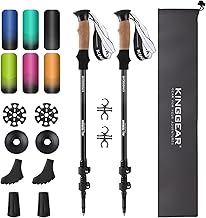
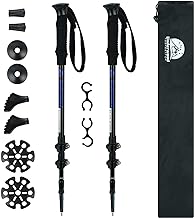
Both shoes benefit from collapsible trekking poles for the non-scrambling portion of your day. Poles save your knees on steep descents and let you push more efficiently on long approaches before you stow them for the technical section. The critical features for scrambling-adjacent use: foldable Z-pole design (not telescoping), sub-12-inch packed length so they actually fit your running vest, and aluminum construction for impact tolerance when you inevitably wedge a tip in a crack.
Nordic Lightweight 7075 Aluminum Trekking Poles
These are the most pack-friendly option for scramble-day setups. The 7075 aluminum shaft survives accidental wedging better than carbon, the EVA grips don't slip when sweaty, and the collapsed length tucks into a running vest's side pocket. I've used them on Bushido days through Class 3 terrain — deploy on the approach, stow before the technical, redeploy on the descent. Check current price on Amazon.
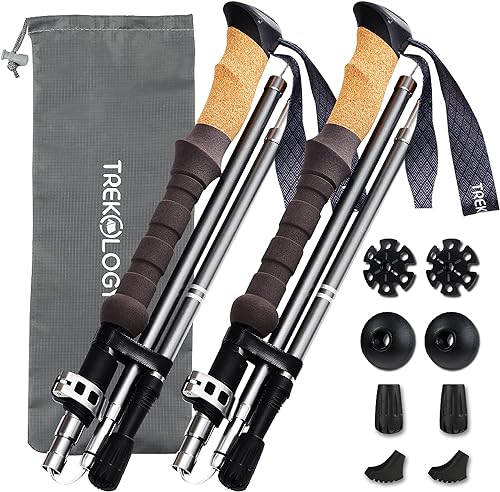
TREKOLOGY Trek-Z Cork Grip Folding Trekking Poles
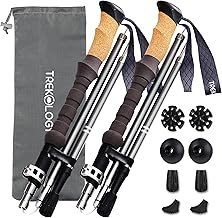
The cork grip is the differentiator here. Cork wicks sweat, conforms to your palm over time, and doesn't develop the rancid foam smell that EVA grips get after a season. The Z-fold design collapses to 15 inches, which still fits most running vest side pockets. Pair these with the Cascadia 17 for ultra-style days where you'll be on poles for hours and grip comfort matters. See pricing on Amazon.
Collapsible Aluminum Trekking Poles, 2-Pack
The budget pick if you're building out a kit and don't want to drop $150+ on Black Diamond Distance Carbons. These are heavier than premium options but durable enough for the abuse scrambling inflicts on poles. Good choice for new mountain runners testing whether they actually like running with poles before committing to higher-end gear. View on Amazon.
Real-world test: Mt. Russell East Ridge, June 2026
I ran the East Ridge of Mt. Russell (Class 3, 14,094 ft) twice in one week — once in each shoe — to make this comparison fair. Approach is 7 miles from Whitney Portal with 6,500 ft of gain, the last 800 ft being sustained Class 3 ridge scrambling with significant exposure.
Cascadia day: comfortable for 6.8 miles. The scramble section took me 45 minutes — slower than I wanted because I kept second-guessing foot placements on small edges. Descent felt great. Total time car-to-car: 6 hours 40 minutes.
Bushido day: feet were tired by mile 5. The scramble section took 22 minutes — half the time. I moved confidently because the shoe locked onto every edge I placed it on. Descent was punishing on quads and forefoot. Total time car-to-car: 6 hours 15 minutes.
The Bushido was 25 minutes faster overall despite slower hiking pace, because the scrambling section was so much more efficient. For a peak like Russell where the technical portion dominates the day's difficulty, the Bushido wins outright.
For more on this topic, see our deep dives on the best approach shoes for Class 3 scrambling in 2026 and La Sportiva Bushido vs TX4 for mixed mountain days. If you're optimizing your full kit, check our guide to trekking poles that work for scramble-day setups.
Frequently Asked Questions
Is the Brooks Cascadia 17 good for Class 3 scrambling?
The Cascadia 17 handles Class 3 scrambling adequately on dry rock with positive holds, but it's not the shoe's strength. The soft DNA LOFT midsole rolls off small edges and the upper lacks the wraparound protection of a true mountain running shoe. For occasional 50-100 foot scramble sections inside a longer run, it works. For sustained Class 3 ridge traverses, you'll want something stiffer and grippier like the Bushido 3, the Salomon S/Lab Genesis, or a dedicated approach shoe.
How does the La Sportiva Bushido 3 compare to the Bushido 2?
La Sportiva refined the Bushido 3 with a more breathable upper mesh, slightly more cushion (added 1mm to the heel and forefoot), and updated Frixion XT 2.0 rubber that grips wet rock better than the previous compound. The fundamental shoe — narrow last, TPU stabilizer, low stack — stays the same. If you loved the Bushido 2, you'll love the 3. If the 2 was too narrow, the 3 won't fix that.
Can I use the Brooks Cascadia 17 for 100-mile ultras with technical terrain?
Yes, the Cascadia 17 is one of the best ultras shoes for technical 100-milers because it balances cushion for long miles with enough rock protection for sketchy footing. Runners use Cascadias at Hardrock, Wasatch, Bear, Bigfoot 200, and similar mountain ultras. For races with sustained scrambling like Nolan's 14 or High Lonesome, consider a stiffer shoe.
What's the durability difference between the Cascadia 17 and Bushido 3?
The Bushido 3 outsole lasts 400-500 miles for most runners; the upper holds together for 600+ miles thanks to the TPU wrap. The Cascadia 17 outsole wears in 350-450 miles on technical terrain because softer rubber gets chewed up faster, and the mesh upper develops holes around 400-500 miles if you scramble in them regularly. On smooth trail-only use, the Cascadia outlasts the Bushido.
Are trekking poles useful when wearing scrambling shoes like the Bushido 3?
Yes, but only for the hiking portions. Poles are essential for the approach and descent — they save your quads on steep terrain and improve uphill efficiency. Once you start scrambling, you need both hands free for rock contact, so you'll stow the poles in your vest. Look for foldable Z-pole designs with a collapsed length under 16 inches so they actually fit your running vest's side pockets.
Which shoe is better for wet rock scrambling?
The La Sportiva Bushido 3 with Frixion XT 2.0 rubber outperforms the Brooks Cascadia 17 on wet rock by a meaningful margin, especially on wet sandstone, wet conglomerate, and damp granite. Neither shoe should be trusted on polished or mossy rock — that's a problem of physics, not rubber. For wet alpine scrambling in the PNW or Scottish Highlands, the Bushido is the clear pick.
Can I size up the Bushido 3 to get more forefoot room?
Sizing up the Bushido 3 by half a size gives you more forefoot room but creates heel slip that will compromise the shoe's edging precision — which is the whole reason to buy a Bushido. If your forefoot is too wide for true-to-size, the shoe isn't right for you. Try the La Sportiva Jackal II, the Salomon Sense Ride, or the Hoka Speedgoat 6 for similar mountain performance in a wider last.
Key Takeaways
- Choosing the right Brooks Cascadia 17 vs La Sportiva Bushido 3 means matching capacity and output ports to your actual devices
- Always check actual watt-hours (Wh), not just watts — runtime depends on Wh, not peak output
- Also covers: cascadia 17 scrambling
- Also covers: bushido 3 class 3 terrain
- Also covers: cascadia vs bushido grip
- Compare price-per-Wh across models to find the best value for your budget