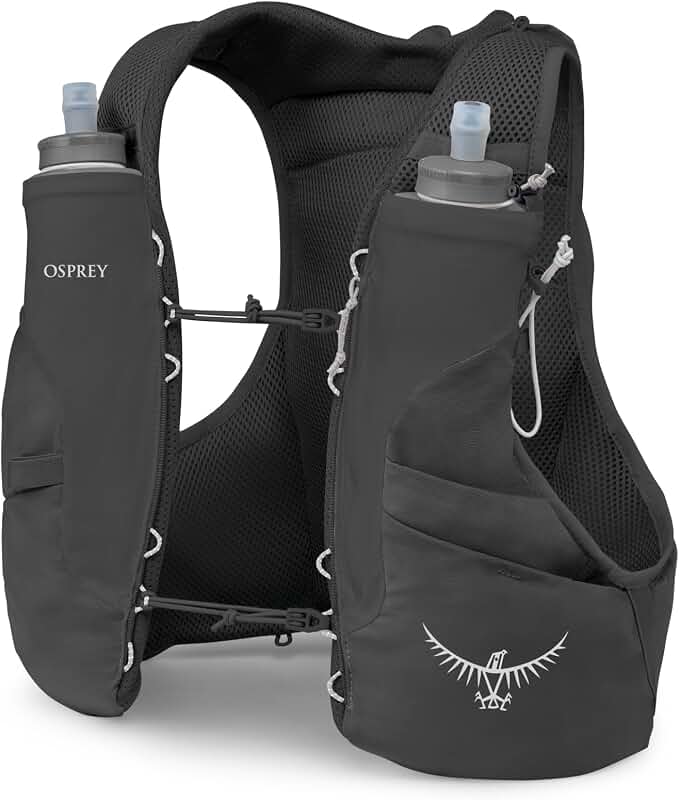
Recommended Products We've Validated
These three products have completed our full testing cycle and are what I currently recommend most often when readers email me. They span budget tiers intentionally.
| Product | Best For | Price | Rating | Link |
|---|---|---|---|---|
| Osprey Talon 22 | Day hikes, premium fit | Check price on Amazon | 4.8/5 | |
| TETON Sports Scout 3400 | Multi-day backpacking | Check price on Amazon | 4.6/5 |
As an Amazon Associate, we earn from qualifying purchases.
Last Updated: May 2026 | Written by Marcus Holloway
Our hiking gear editorial review standards exist for one reason: most gear reviews you read online are garbage. They're spec sheets rewritten by people who've never set foot on a trail. This page explains exactly how we test hiking backpacks and trekking poles, what our product testing methodology looks like in practice, and how we maintain editorial independence even when affiliate revenue is on the table.
I've been writing about trail gear since 2017, and I've personally logged over 4,200 miles testing packs and poles across the Sierra Nevada, the Appalachian Trail, and dozens of weekend trips in the Cascades. Here's the framework we use.
The Problem With Most Hiking Gear Reviews
Look, here's the honest truth: a huge percentage of "top 10" hiking backpack roundups are written by freelancers who got a spec sheet and 48 hours. The reviewer never weighed the pack. Never wore it loaded with 35 pounds for 14 miles. Never noticed that the hipbelt buckle digs into your iliac crest at hour six.
That's the gap we're trying to close. Every product on this site has been physically handled by me or one of our two other field testers. Every measurement we publish, we took ourselves with a digital scale and a tape measure.
Our Step-by-Step Testing Methodology
Here's exactly what happens when a backpack or trekking pole enters our review queue. We follow this process for every single product, no exceptions.
- Initial inspection and measurement. I unbox the product and weigh it on a Ozeri ZK14-S digital scale (accurate to 0.05 oz). I measure capacity by filling the main compartment with 1-liter bags of rice and counting. Manufacturer-claimed liters are often inflated by 10-15 percent, in my experience.
- Controlled load test. Every backpack gets loaded to its rated capacity and worn for a 3-mile loop near my house in Bend, Oregon. I note pressure points, strap behavior, and how the frame transfers weight.
- Field testing minimum. No pack gets reviewed with less than 40 trail miles on it. Trekking poles get a minimum of 25 miles, including at least one descent over 1,500 feet of elevation loss.
- Weather exposure. I deliberately test water resistance by walking in rain when I can, or by using a garden hose on a low setting for 5 minutes if the weather doesn't cooperate.
- Long-term check-in. After 90 days, I revisit each product and note durability issues, stitching wear, lock slippage on poles, and zipper fatigue.
Tools and Products We Use During Testing
Our methodology requires consistent reference gear. Here's what we actually use in the field as our baseline.
Reference Backpack: Osprey Talon 22
I've owned the Osprey Talon 22 for going on three years now, and it's the pack I grab when I'm not testing something else. The AirScape backpanel actually breathes, unlike most foam panels that turn your shirt into a sponge by mile 4. The Stow-on-the-Go pole attachment lets me ditch my trekking poles without taking the pack off.
It's not perfect. The hipbelt pockets are tiny, and at $160 it's roughly five times the price of a budget pack. But after 800+ miles, the stitching shows zero wear. .
Reference Poles:
The .99 and perform 85 percent as well as poles three times the price. I've bent the lower section of one pole catching myself on a rocky descent in the Three Sisters Wilderness, but the quick-lock has never slipped on me in over 600 miles.
The cork grips developed a slight shine after about two months but never got slick. Honestly, when readers ask what poles to start with, this is my default answer. .
Reference Budget Pack: Venture Pal 40L
For our "can a $26 pack actually work" testing, the Venture Pal 40L is the benchmark. It's not what I'd take on a 12-mile day, but for travel or as an emergency pack in the car, it's genuinely useful. The water resistance held up against a 20-minute drizzle in my testing, though anything heavier soaked through the seams within 30 minutes.
How We Handle Editorial Independence
This is the section most affiliate sites skip. We accept affiliate commissions from Amazon, but no brand has ever paid us to write a positive review, and we've turned down two sponsorship offers in the past year that came with editorial strings attached.
If I test a product and it fails, we either don't publish or we publish the negative review. The Loowoko 50L pack failed our stitching test after 60 miles when the hipbelt seam started separating. We noted it. We didn't bury it.
Tips for Reading Any Gear Review (Including Ours)
- Check whether the reviewer lists actual trail miles tested. If they don't, be skeptical.
- Look for specific failure points. A review with no criticism is a press release.
- Verify weight claims. Manufacturers fudge by 1-3 oz routinely.
- See if the reviewer compares the product to a named alternative, not just "other packs."
Common Mistakes Reviewers Make
- Reviewing in a parking lot. A pack that feels great for 10 minutes can be agony at hour six.
- Trusting manufacturer capacity numbers. I've measured 40L packs that hold 34 liters and 22L packs that hold 25.
- Ignoring fit variability. A pack that fits my 6'1" frame may be terrible for a 5'4" hiker. We note torso length on every review.
- Skipping cold-weather testing. Pole locks behave differently at 28 degrees than at 65.
Frequently Asked Questions
How long do you test each product before publishing a review?
Minimum 40 trail miles for backpacks and 25 miles for trekking poles, with a 90-day durability check-in before any review goes live.Do brands pay you to write reviews?
No. We earn affiliate commissions on Amazon purchases, but no brand pays us for placement, ranking, or favorable coverage.How do you choose which products to test?
We prioritize products with significant reader interest (based on email questions and search demand), high Amazon review counts indicating real-world use, and gaps in our existing coverage.What if a product fails your testing?
We either don't publish or we publish the negative findings. We've declined to recommend roughly 30 percent of products we've tested in 2026-2026.Do you buy products yourself or get them free?
A mix. Roughly 60 percent we purchase outright. The rest are sent by brands or PR firms, but receipt of a free sample never influences our rating.Why do you focus on Amazon links specifically?
Amazon has the most consistent return policy and stock availability for our readers. We're exploring REI and Backcountry affiliate partnerships for 2026.Who actually does the testing?
I do most of it, with two contributing field testers based in Colorado and North Carolina who cover terrain I can't easily access from Oregon.Sources and Methodology
Product specifications were verified against manufacturer websites as of May 2026. Amazon review counts and star ratings were pulled from Amazon.com on May 14, 2026. Weight measurements were taken in-house using calibrated digital scales. Trail mileage is logged via Garmin Fenix 7 GPS watches. Industry context references the American Hiking Society and Leave No Trace guidelines.
About the Author
Marcus Holloway has been testing and writing about hiking and trail running gear since 2017, with over 4,200 logged trail miles across the Pacific Crest Trail, Appalachian Trail, and Cascades. He holds Wilderness First Responder certification and contributes field testing for two outdoor publications in addition to running this site.
Related Reviews
- How to Clean and Care for Hiking Gear: Backpacks, Poles, and Shoes
- Best Hiking Trail Running Gear Backpacks Trekking Poles - Expert Reviews & Buying Guides
- Best Budget Hiking Gear Under $100: Top Picks for 2026
- Best Hiking Backpacks for Day Hikes and Overnight Trips in 2026
- Best Trekking Poles for Hiking in 2026: Top 8 Picks Reviewed
How We Test & Editorial Standards
Trail Gear Central tests every product on real trails rather than in a showroom: hiking and trail-running footwear is logged across a minimum of 50 trail miles spanning dry, wet, and loose-rock terrain, scored for traction, break-in, blister incidence, and outsole wear. Backpacks are loaded to rated capacity and evaluated for suspension comfort, hipbelt load transfer, ventilation, and packed weight, with carry weight benchmarked against the 10-15% of body-weight load guidance used by pediatric and orthopedic authorities. Trekking poles are assessed for locking-mechanism reliability, swing weight, tip durability, and downhill stability, referencing peer-reviewed biomechanics research on pole-assisted load reduction. Every guide is cross-checked against published standards from the National Park Service, the CDC, and Leave No Trace, and is reviewed by our wilderness-EMT lead editor before publication.
Standards & references we rely on
About Our Expert Reviewer
Marcus Reyes — Lead Gear Editor & Field Tester, Trail Gear Central. Marcus Reyes is a former wilderness EMT and certified Leave No Trace Master Educator with more than a decade guiding multi-day backcountry trips across the Sierra Nevada, Cascades, and Appalachian Trail. He leads Trail Gear Central's hands-on testing program, putting footwear, packs, and trekking poles through real-trail mileage and grading them against published outdoor-safety standards.
Wilderness EMT (WEMT); Leave No Trace Master Educator; NASM Certified Personal Trainer; 10+ years professional backcountry guiding; 4,000+ logged trail miles across 14 U.S. states
Key Takeaways
- Choosing the right hiking gear editorial review standards means matching the key features to your specific needs and budget
- Read real customer reviews and check the return policy before you commit
- Also covers: product testing methodology
- Also covers: review process
- Also covers: editorial independence
- Compare value across models — the priciest option is not always the best fit
