Specification comparison
| Model | Brand | Price | Waterproofing | Upper | Cut / height | Outsole | Notable |
|---|---|---|---|---|---|---|---|
| Columbia Newton Ridge Plus II | Columbia | Check price on Amazon | Waterproof full-grain leather and mesh bootie construction | Full-grain leather + mesh, durable mesh tongue | Not stated | Advanced traction rubber sole | Lightweight durable midsole; lace-up closure; listed Cordovan/Squash, size 11 |
| Foxelli Women's Hiking Boots | Foxelli | Check price on Amazon | KingTex waterproof membrane | Suede leather + breathable mesh, gusseted tongue | High-cut | Not stated | Removable insoles; roomy toe box; wide sizes available; no break-in claimed |
| Foxelli Men's Hiking Boots | Foxelli | Check price on Amazon | Waterproof (membrane not specified) | Premium suede leather, gusseted tongue, mesh collar | Not stated | Non-slip rubber | Shock-absorbent midsoles; grey/brown/blue; ships with extra laces and hiking socks |
| NORTIV 8 Waterproof Hiking Boots | NORTIV 8 | Check price on Amazon | Waterproof membrane construction | Soft suede leather, rubber toe cap, reinforced heel | Not stated | Rubber, multi-directional traction (MDT) | MD midsole; flexible removable insole; listed Coyote, 10.5W |
| VRANFISH Mid-Top Barefoot Five-Toe Boots | VRANFISH | Check price on Amazon | Not stated | Not stated | Mid-cut | Non-slip rubber, deep multi-directional lugs | Zero-drop, individual toe pockets, wide toe box; listed Green, men's 10.5 wide |
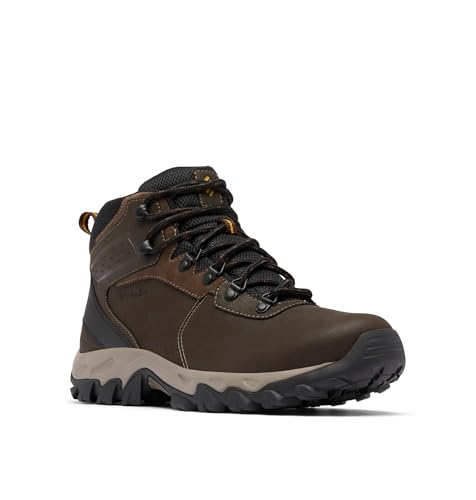
- ADVANCED TECHNOLOGY: Columbia Men's Newton Ridge Plus II Waterproof Hiking Boot features our lightweight, durable midsole for long lasting comfort, superior cushioning, and high
- HANDY FEATURES: Treacherous days out on the trail are comfortable and worry-free with this boot's waterproof full-grain leather and mesh bootie construction and its durable mesh
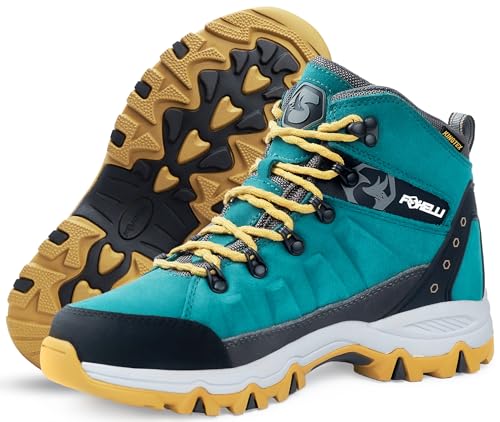
- ALL-DAY COMFORT. Lightweight design, cushioned collar, and tongue to support your ankles. Removable soft insoles reduce fatigue, while shock-absorbing midsoles protect your
- PERFECT FIT, RIGHT OUT OF THE BOX. Designed with a roomy toe box and available in wide sizes for a customized fit. No break-in time needed, offering immediate comfort and support
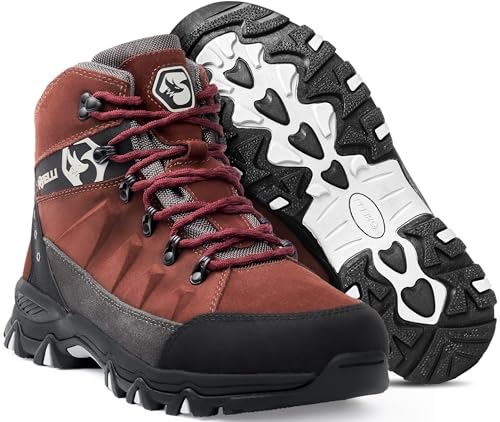
- Comfort & Protection: Our hiking boots for men offer ultimate comfort and protection for your adventures. Padded insoles cushion every step, while the breathable mesh collar keeps
- Exceptional Support for Every Step: Our waterproof hiking boots for men offer superior ankle and arch support with shock-absorbent midsoles and non-slip rubber soles. Designed for
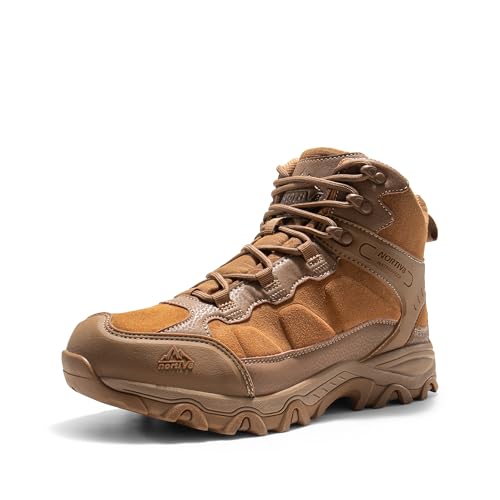
- Waterproof Build: These men’s hiking boots feature a waterproof membrane construction that keeps your feet dry when trudging through any mud or water
- Protection & Support: Designed with a rubber toe cap that prevents injuries to toes from collisions. Plus, the reinforced heel keeps you walking with stability and strong support
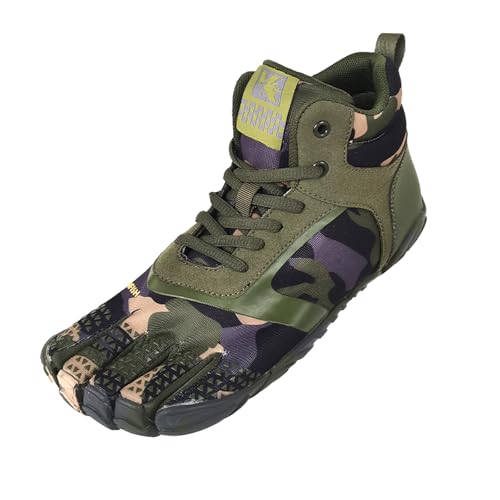
- Wide Fit Design – Toe box is intentionally roomy to allow for natural toe extension. Customers with narrow feet may prefer sizing down. Stand on a ruler or tape measure and note
- Natural Barefoot Experience: Designed with individual toe pockets to promote natural foot movement, enhance balance, and strengthen foot muscles. The zero-drop sole provides
Hiking Boots or Trail Runners for the Dolomites (2026 Guide)
Quick answer: For most people doing Alta Via sections, via ferrata, or rifugio-to-rifugio days in the Dolomites, a waterproof boot with real ankle coverage is the safer default — the limestone scree, wet slabs, and cable routes punish soft, low-cut shoes. Trail runners make sense only if you're moving fast on maintained paths, carrying under about 6 kg, and already have strong ankles and a low-drop running background. The five products below are all boot-style options, so if you're set on a true running shoe, treat this as the boot half of your decision.
The honest terrain reality
The Dolomites are not the Appalachians. Trails are frequently loose limestone gravel over hard rock, there are permanent snow patches in couloirs into July, and afternoon thunderstorms are routine. Two things follow from that.
First, water gets in from the top as often as the side. A waterproof membrane helps in wet grass and shallow puddles, but nothing keeps you dry in a two-hour downpour without gaiters or a high cuff.
Finding the right hiking boots or trail runners for dolomites comes down to matching the features to how you will actually use it.
Second, via ferrata rewards stiffness. You stand on 2 cm metal rungs and small footholds. A flexible zero-drop sole transmits every edge into your arch. If ferrata is on your itinerary, prioritize a supportive boot over ground feel.
Who a supportive waterproof boot is for
- You're hiking the Alta Via 1 or 2, or any multi-day hut traverse with a 30–40 L pack. Load plus loose rock plus fatigue equals rolled ankles, and cuff height genuinely helps.
- You have via ferrata days planned. You want a stiffer platform and a protected toe.
- You expect snow patches, mud, or shoulder-season weather. Four of the five options here explicitly list waterproof construction — the Columbia, both Foxelli models, and the NORTIV 8.
- You want to hike in one pair of shoes for the whole trip, including cobbled village streets and wet rifugio terraces.
Who should skip boots and look at trail runners
- You're doing day hikes on well-graded paths — Tre Cime loop, Seceda ridgeline, Lago di Braies circuit — in settled summer weather with a light daypack.
- You already run trails and your ankles and calves are conditioned to low-drop shoes. Switching to a zero-drop platform for a big alpine week is not the time to start.
- You overheat badly in membranes. Non-waterproof mesh runners drain and dry faster after a stream crossing than any waterproof boot will.
- You're hut-hopping ultralight with under about 6 kg on your back.
The trade-offs nobody puts on the box
Waterproof means slower drying. A KingTex or full-grain-leather bootie keeps rain out, but once water goes over the cuff, it stays. Pack a spare pair of socks and change at the hut.
Ankle support is partly a myth, partly real. A high cuff won't stop a violent roll, but it does reduce the small twists that accumulate over a 20 km day on scree. The Foxelli women's model is explicitly described as high-cut for ankle support; the men's version is described as offering ankle and arch support without a stated cuff height.
Cheap is not automatically wrong. The NORTIV 8 at $56.99 lists the same core features you'd expect at twice the price: waterproof membrane, suede upper, rubber toe cap, multi-directional rubber outsole. What the listing doesn't state is anything about outsole rubber compound or sole stiffness, which is exactly what separates boots on wet limestone. Buy it as a value option, not a technical-terrain guarantee.
"No break-in needed" is a fit claim, not a durability claim. Foxelli says its women's boot is comfortable out of the box. Believe it or not, still walk 20 km at home before flying.
Sizing is the biggest failure point. Both Foxelli listings and the VRANFISH explicitly tell you to check the size chart or measure your foot; VRANFISH suggests sizing up if you're between sizes and sizing down if you have narrow feet. Descending 1,000 m into Cortina with a half-size-too-small boot will cost you toenails.
What to check on the listing before you buy
Listings change constantly, so verify all of this yourself at the moment of purchase:
- Current price — the figures above are the prices given at the time of writing and drift with promotions.
- Variant — several of these are listed at a specific size and color (Columbia at size 11 Cordovan/Squash, NORTIV 8 at 10.5W Coyote, VRANFISH at men's 10.5 wide, green). Confirm that the size, width, and color you're adding to the cart is the one you want; features and price can differ between variants.
- Width options — Foxelli lists wide sizes for its women's boot; the NORTIV 8 variant above is a W. If you have wide feet, filter for that before anything else.
- Warranty and return window — check what the seller states, and whether the return period covers you until after a home test hike.
- Reviews — read the recent ones yourself, filtered to your size, and look specifically for comments about fit, sole wear, and how the waterproofing holds up.
Consider instead if…
- You want a known-quantity brand with full-grain leather: the Columbia Newton Ridge Plus II, which pairs a waterproof leather-and-mesh bootie with an advanced traction rubber sole.
- You're a woman with wide feet who hates break-in: the Foxelli women's boot, with a roomy toe box, wide sizes, and a KingTex membrane.
- You want the lowest price that still lists a waterproof membrane and a toe cap: the NORTIV 8.
- You want extras bundled in: the Foxelli men's boot is listed as shipping with extra laces and a pair of hiking socks.
- You're a committed minimalist runner who mostly wants ground feel: the VRANFISH mid-top five-toe boot, accepting that waterproofing isn't stated.
FAQ
Can I do via ferrata in trail runners? Physically yes, and plenty of fast-and-light climbers do. But a soft, flexible sole on metal rungs is genuinely unpleasant after a few hours, and rockfall protection is minimal. If ferrata is more than an incidental part of your trip, wear a boot.
Do I need waterproof footwear in July and August? Summer in the Dolomites is thunderstorm season, and high routes hold snow patches well into the summer. Waterproof is the safer default. The exception is if you're a fast day-hiker who'd rather have a shoe that drains and dries quickly.
Are zero-drop boots a bad idea for a big alpine trip? Only if you're new to them. Zero-drop loads the calf and Achilles differently from a cushioned heel-raised boot. If you haven't put several hundred kilometers into that platform already, a hut traverse is a poor place to find out.
What matters more, the boot or the poles? On Dolomite descents, honestly, the poles. Trekking poles take a meaningful share of load off your knees on long, steep, loose descents, and they help far more than an extra 20 mm of cuff height.
Related guides
- Best Trekking Poles 2026: Top Picks Compared
- Best hydration vest for hyperhidrosis runners in hot humid weather
- Osprey Mutant 38 vs Black Diamond Speed 40 for weekend alpine climbing
Key Takeaways
- Choosing the right hiking boots or trail runners for dolomites means matching the key features to your specific needs and budget
- Read real customer reviews and check the return policy before you commit
- Compare value across models — the priciest option is not always the best fit