The best hiking backpack for pregnant women in the second trimester is one that shifts weight off your growing belly and onto your hips and shoulders without pressing on your abdomen. Look for a pack with a padded, adjustable hip belt that rides above the pelvis (not across the bump), a tall, ventilated back panel, a sternum strap that doesn't compress the chest, and a total carry weight under 15-20% of your pre-pregnancy body weight. For most expecting hikers between weeks 14 and 27, that means a 20-35L daypack with a women-specific torso fit, plus a pair of supportive trekking poles for balance. This guide walks through exactly what to look for, how to fit a pack around a second-trimester body, and the supportive accessories—especially trekking poles—that make the biggest difference on uneven trail.
Below we cover the fit checklist, comfort features that matter most when you're pregnant, a comparison of pole options that pair well with any pack, and answers to the questions most second-trimester hikers ask before heading out.
Why backpack fit changes during the second trimester
Top Picks
The second trimester (weeks 13-27) is often the most comfortable window for hiking. Morning sickness has usually eased, energy returns, and the bump is large enough to throw off your balance but not yet so large that long walks become exhausting. That balance shift is exactly why your pack choice matters more now than it did pre-pregnancy.
As your uterus expands, your center of gravity moves forward and up. The relaxin hormone loosens ligaments—especially in your pelvis, hips, and lower back—which is great for delivery but makes you more prone to ankle rolls, knee strain, and lower-back fatigue on uneven terrain. A poorly fitted pack amplifies all three problems. The wrong hip belt rides across your belly. A too-narrow back panel digs into shoulder blades that are already rolled forward. A heavy load swings unpredictably as you compensate for a new walking gait.
So when shoppers ask for the best hiking backpack for pregnant women, the real answer isn't a single SKU—it's a fit philosophy. You want a pack that can be re-tuned as your body changes week to week.
The second-trimester pack fit checklist
Use this checklist whether you're shopping new or adapting a pack you already own:
- Hip belt sits above the iliac crest, not on the belly. By weeks 20-24, many traditional hip belts hit the bump. A belt with extension webbing or a high-rising design that wraps the upper hips works better.
- Adjustable torso length. Posture changes as the bump grows. A pack with a sliding yoke or ladder-lock back panel lets you re-tune week by week.
- Wide, soft shoulder straps with no pressure on the breasts. S-curved women-specific straps clear sensitive chest tissue.
- Sternum strap with vertical adjustment range. You'll want to slide it higher than usual to avoid chest compression.
- Ventilated back panel. Pregnancy raises core temperature; a suspended mesh or channeled foam back keeps sweat down.
- Total loaded weight under 15-20% of pre-pregnancy body weight. For a 140 lb hiker, that's roughly 21-28 lbs maximum—and lighter is better.
- Hydration sleeve. You'll drink more than you think. A 2L bladder is non-negotiable.
- Easy-access hip belt pockets. Snacks, electrolyte tabs, and your phone need to be reachable without unshouldering.
Daypacks in the 20-35L range from women-specific lines (Osprey Sirrus/Tempest, Gregory Jade/Maya, Deuter Futura SL, Granite Gear Crown) tend to hit most of these marks. The key is trying the pack on loaded with at least 10 lbs at the store, and—if you're already in the second trimester—simulating the bump with a small pillow under your shirt so you can feel where the belt actually lands.
Why trekking poles matter more than the pack itself
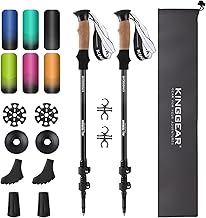
Here's the thing most pregnancy hiking guides bury: the single biggest comfort upgrade for a second-trimester hiker isn't the backpack at all. It's a pair of well-fitted trekking poles. Poles offload an estimated 15-25% of the impact force from your knees and lower back on descents, dramatically reduce ankle-roll risk on loose terrain, and give you a stable third and fourth point of contact when your balance is shifting daily.
For pregnant hikers specifically, poles do four things that no pack feature can replicate:
- Compensate for the forward shift in your center of gravity. Two poles planted ahead of you let you lean into the climb without straining your lower back.
- Stabilize stream crossings and root steps. Relaxin-loosened ankles roll easily; a pole catches the wobble before it becomes an injury.
- Reduce knee load on descent. Your knees are already managing extra weight and a less stable joint capsule. Poles cut the impact.
- Give you something to push up against when you need to sit and rest. Getting up off a log at 24 weeks pregnant is much easier with two anchors.
Trekking pole comparison: which pair pairs best with a pregnancy daypack
| Pole | Material | Grip | Pack-down style | Best for |
|---|---|---|---|---|
| Nordic Lightweight 7075 Aluminum | 7075 aircraft-grade aluminum | EVA foam | Telescoping (3-section) | Day hikes with light loads, durability priority |
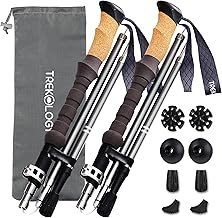
| TREKOLOGY Trek-Z Cork Grip | Aluminum | Natural cork | Z-fold (collapsible) | Travel, longer hikes, sweat management |
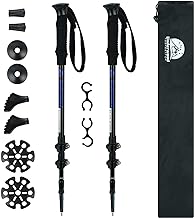
| Collapsible Aluminum 2-Pack | Aluminum | EVA foam | Telescoping (3-section) | Budget-friendly first pair, casual trails |
Nordic Lightweight 7075 Aluminum Trekking Poles
These poles use 7075 aircraft-grade aluminum, which is the same alloy used in airplane structural parts. For a pregnant hiker, the value of that strength isn't just durability—it's confidence. When you plant a pole hard on a rocky step-down to take the load off your knees, you do not want a flex or a sudden collapse. The 7075 shafts are noticeably stiffer than the 6061 aluminum used in budget poles, while still keeping the pair under a pound. The telescoping three-section design adjusts from roughly 25 inches collapsed to 53 inches extended, so you can shorten them for steep climbs (when you want more leverage) and lengthen them for descents (when you want to plant farther ahead and offload more knee force). EVA foam grips stay comfortable in cool morning temps and don't get slippery if your hands sweat. Check the Nordic 7075 Aluminum Trekking Poles on Amazon.
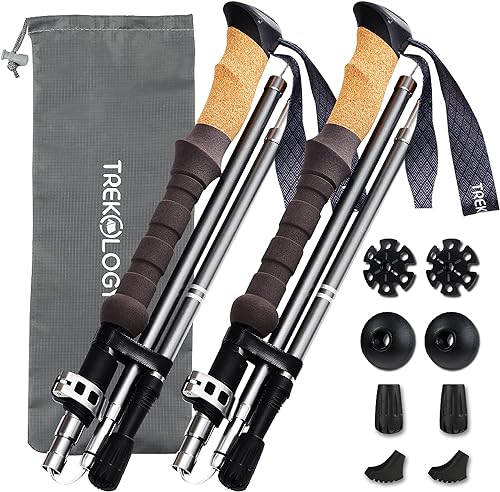
TREKOLOGY Trek-Z Cork Grip Folding Trekking Poles
If you're flying to a hiking destination or stuffing poles into the side pocket of a 30L daypack, the Trek-Z's Z-fold design is the right answer. Instead of a telescoping tube, the pole breaks into four shorter sections held together by an internal cord, packing down to about 15 inches—short enough to clear most carry-on bag dimensions. The natural cork grips are the real second-trimester win, though: cork wicks sweat better than EVA foam, conforms to your hand shape over time, and stays warmer than aluminum in cold weather, which matters when pregnancy-related circulation changes leave your hands chilly. Each pole weighs around 9-10 oz, and the quick deploy is genuinely fast—pull the sections apart, lock the push-button connector, and you're walking in 10 seconds. For most second-trimester hikers doing day trips up to 8 miles, this is the most versatile pick. Check the TREKOLOGY Trek-Z Cork Grip Poles on Amazon.
Collapsible Aluminum Trekking Poles, 2-Pack
If you're new to trekking poles and not sure whether you'll keep using them after pregnancy, this 2-pack is the sensible starter option. You get a complete pair of telescoping aluminum poles with EVA foam grips, adjustable wrist straps, and swappable tips (rubber for pavement, carbide for trail) for well below the price of the premium pairs above. They won't have the stiffness of 7075 aluminum or the moisture management of cork grips, but for casual, lower-mileage trails—nature center loops, paved greenways, gentle state-park paths—they do everything a pregnant hiker actually needs. A good "try the concept" purchase that you can later hand down to a hiking partner once you upgrade. Check the Collapsible Aluminum 2-Pack on Amazon.
How to pack your bag for a second-trimester day hike
Pack weight is more important than pack model. A perfectly fitted 28L daypack loaded with 22 pounds will still wreck your lower back; a slightly imperfect pack loaded with 12 pounds probably won't. Aim to hit the trail with no more than:
- 2L of water in a hydration bladder (4.4 lbs) plus a small backup bottle (1 lb)
- Calorie-dense snacks: trail mix, a sandwich, electrolyte tabs (1-2 lbs total)
- A light rain shell and an insulating mid-layer (1-2 lbs)
- A small first-aid kit with electrolyte mix and any pregnancy-specific meds
- Phone, ID, and a small power bank
- Compact sit pad—a low-cost item that pays off every break
- Sunscreen, lip balm, and a buff or sun hat
That packs out to roughly 10-13 lbs total, well under the 15-20% threshold. Keep heavier items (water, food) close to your back and centered between your shoulder blades; lighter items go to the bottom and outer pockets. If you're not sure whether a route is too ambitious, see our guide to choosing a safe day-hike distance during pregnancy and our comparison of hydration packs sized for expecting hikers.
Trail and weather considerations
Even with the right pack and poles, route selection makes or breaks a second-trimester hike. Avoid:
- Elevation above 8,000 feet if you haven't been acclimated—oxygen delivery to the placenta drops at altitude.
- Trails with significant scrambling, exposure, or hand-over-hand sections.
- Hot, humid afternoons. Pregnancy elevates baseline body temperature; aim for early-morning starts.
- Remote terrain without cell coverage if you're hiking solo.
- Rocky, root-laden descents where a fall risk is concentrated. Save these for after baby.
Stick to well-graded, well-trafficked trails with sub-1,500-foot elevation gains, and turn around if your heart rate climbs above your obstetrician's recommended ceiling (commonly around 140 bpm sustained, but get a personalized number from your provider). For more on pacing, see our pregnancy trail pacing guide.
Frequently Asked Questions
What size hiking backpack should I get for second-trimester day hikes?
A 20-35L daypack is the sweet spot. Smaller than 20L and you won't fit a 2L hydration bladder plus layers plus snacks. Larger than 35L tempts you to overpack, and the longer back panel often forces the hip belt onto your belly. For most second-trimester hikers doing 3-8 mile day trips, a women-specific 24-30L pack with an adjustable torso is ideal.
Can I keep using my old hip belt or should I buy a maternity-specific pack?
You usually don't need a maternity-specific pack. By weeks 20-26, however, you may need to add a hip belt extender (most major brands sell them for $15-25) so the buckle can close above your bump rather than across it. If your current pack has a non-extendable belt and rides low, that's the moment to upgrade. True maternity hiking packs do exist but are expensive and useful for a short window; a regular adjustable women-specific pack plus an extender is usually the better buy.
Are trekking poles safe to use during pregnancy?
Yes—and they're actively recommended by many prenatal physical therapists. Poles reduce fall risk (the biggest hiking-related concern in pregnancy), offload knee and lower-back impact, and help compensate for the balance shift caused by the growing bump. The only caution is to keep wrist straps loose enough to slip out of quickly in case of a fall, so the pole doesn't pull your wrist down with you.
How heavy can my pack be during the second trimester?
The conservative rule is no more than 15-20% of your pre-pregnancy body weight, and lower is better. For most hikers that works out to a loaded pack between 10 and 15 pounds. Heavier loads strain ligaments already loosened by relaxin and accelerate fatigue. If you need to carry more (a partner's kid, extra water in the desert, gear for a friend), split the load.
What's the best way to stay hydrated on a pregnancy hike?
Drink before you're thirsty—pregnant hikers should aim for roughly 8-12 oz every 20 minutes in moderate conditions, more in heat. A 2L hydration bladder with a bite valve makes consistent sipping much easier than reaching for a bottle. Add an electrolyte tab or pinch of salt to one of your bottles to replace what you sweat out; plain water alone in heat can dilute sodium and cause headaches and cramping.
Should I hike alone in the second trimester?
Short, well-trafficked, in-cell-coverage trails are generally fine solo if your provider has cleared you for activity. For anything more remote, hike with a partner or in a group. Pregnancy doesn't make you fragile, but it does mean you may need to turn around quickly, you're more prone to dizziness, and a fall has higher consequences. Always share your route and expected return time with someone before heading out.
When should I stop hiking with a backpack during pregnancy?
Most uncomplicated pregnancies can hike with a light pack through the third trimester, gradually reducing distance and load. Stop and consult your provider if you experience contractions, vaginal bleeding, dizziness, severe shortness of breath, or pelvic pain during or after a hike. Many hikers transition from a backpack to a small hip pack or a partner-carried pack in the final 4-6 weeks; see our third-trimester hiking gear checklist for the late-pregnancy transition.
Key Takeaways
- Choosing the right best hiking backpack for pregnant women means matching capacity and output ports to your actual devices
- Always check actual watt-hours (Wh), not just watts — runtime depends on Wh, not peak output
- Also covers: pregnancy daypack hip belt under bump
- Also covers: pregnant hiker comfortable backpack
- Also covers: backpack avoid pressure on growing belly
- Compare price-per-Wh across models to find the best value for your budget