Diabetic neuropathy turns trail running into a minefield. When your feet can't feel rocks, roots, or hot spots, the wrong shoe causes blisters you never notice forming, sprains from missed terrain cues, or pressure wounds that take months to close. The best trail running shoes for diabetic neuropathy share four traits: maximal cushioning to absorb impact your nerves no longer report, a wide forefoot to eliminate compression on numb toes, a smooth rocker geometry to reduce push-off strain on insensate metatarsals, and a stable, low-drop platform that compensates for impaired proprioception. In 2026, max-cushion brands like Hoka, Altra, Topo Athletic, and New Balance dominate this category, and pairing the right shoe with trekking poles dramatically lowers the fall risk that makes neuropathic hikes dangerous.
Why diabetic neuropathy changes the trail shoe equation
Top Picks
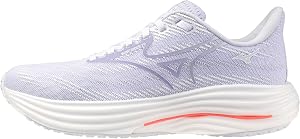
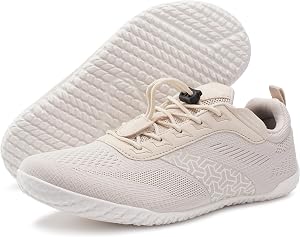
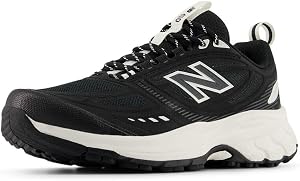
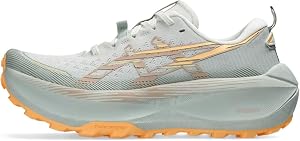
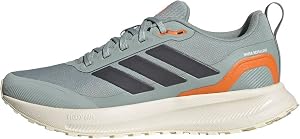
Peripheral neuropathy from diabetes affects roughly half of long-term patients and fundamentally changes what your feet need from a shoe. Loss of protective sensation means you cannot feel a small pebble pressing into the ball of your foot, a seam rubbing your fifth toe, or a developing hot spot that signals a future ulcer. Combined with reduced blood flow, those small irritants can become full-thickness wounds in days. Impaired position sense also robs you of the micro-corrections that keep an able-bodied runner upright on uneven trail, which is why falls among neuropathic hikers happen up to four times more often than in age-matched controls.
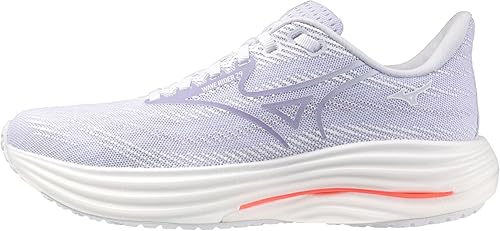
Translating this physiology into shoe criteria gives you a checklist: a seamless or near-seamless interior, a toe box wide enough that your toes splay naturally with zero side pressure, midsole foam thick enough to mute sharp rock strikes (typically 30 mm or more under the heel), a moderate-to-zero heel-to-toe drop that distributes pressure evenly across the foot, an outsole with multi-directional lugs for traction on loose surfaces, and a removable insole so you can fit a custom diabetic orthotic if your podiatrist prescribes one. Any shoe missing two or more of these features is the wrong tool for neuropathic feet.
Top trail running shoe recommendations for 2026
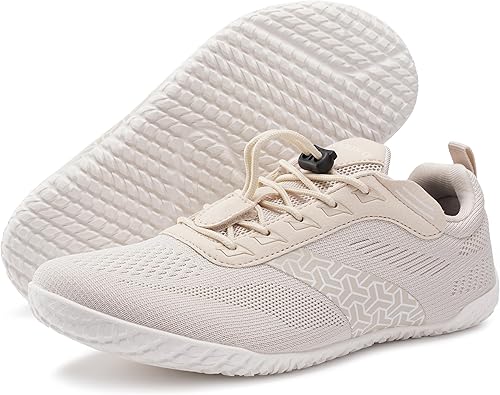
The shoes below were chosen for their combination of maximal cushioning, accommodating last shape, and proven track record on rough trail. None of them are diabetic-specific medical devices, but each pairs well with a custom orthotic and meets the criteria above. Always confirm fit with your podiatrist before logging long miles.
| Shoe | Stack Height (heel) | Drop | Toe Box Width | Best For |
|---|---|---|---|---|
| Hoka Speedgoat 6 | 33 mm | 5 mm | Standard (Wide available) | Technical rocky trail, max cushion |
| Altra Lone Peak 9 | 25 mm | 0 mm | Extra wide (foot-shaped) | Long-distance hiking, toe splay |
| Topo Athletic Ultraventure 4 | 30 mm | 5 mm | Wide (anatomic) | Balance of cushion and ground feel |
| New Balance Fresh Foam X Hierro v8 | 34 mm | 8 mm | 2E and 4E available | Heel strikers needing widest sizing |
Hoka Speedgoat 6 - maximum cushion for rocky terrain
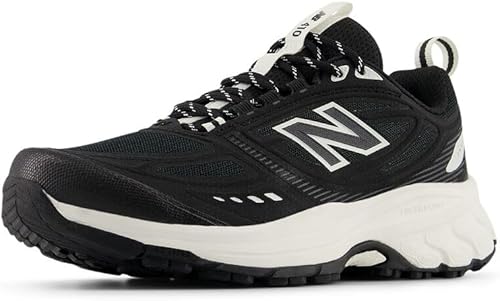
The Speedgoat 6 is the default recommendation when a podiatrist asks what trail shoe to consider for a neuropathic runner. Its 33 mm of compressed EVA under the heel turns sharp granite into a muted thud your feet can't object to, and the Vibram Megagrip outsole holds on wet rock so well that you can trust the shoe even when you can't feel where your forefoot is landing. Order the Wide version unless you already know your standard-width foot is narrow - the regular last is comfortable but the Wide gives the 5-10 mm of additional forefoot room that prevents toe compression bruising on long descents.
Altra Lone Peak 9 - foot-shaped fit and zero drop
Altra's foot-shaped toe box is the widest available from a mainstream trail brand, and the Lone Peak 9 is the model most often prescribed to thru-hikers with neuropathy or Morton's neuroma. The zero-drop platform distributes pressure evenly across the whole foot rather than concentrating it on the heel or forefoot, which matters enormously when one or both zones are numb. The trade-off is reduced cushioning compared with the Speedgoat - 25 mm rather than 33 mm - so very heavy runners or those with severe heel pain should compare directly before committing.
Topo Athletic Ultraventure 4 - the middle path
Topo splits the difference between Hoka's mountain of foam and Altra's minimalist geometry. The Ultraventure 4 has an anatomical toe box that lets your toes splay without the Altra's pronounced flare, a moderate 5 mm drop that's gentler on Achilles tendons than zero-drop, and 30 mm of ZipFoam cushion that's plenty for ultra distances. It's the shoe to try second if the Speedgoat feels too tall and the Lone Peak feels too flat.
New Balance Fresh Foam X Hierro v8 - true 4E width availability
If your foot measures wider than a 2E, New Balance is one of the few brands offering 4E (extra-wide) widths in a trail shoe. The Hierro v8 has 34 mm of Fresh Foam X under the heel, an 8 mm drop favored by heel-striking runners, and a Vibram outsole. Pair it with a custom orthotic and you get a wide, plush, stable platform that accommodates the foot deformities (claw toes, Charcot changes) that sometimes accompany long-standing diabetes.
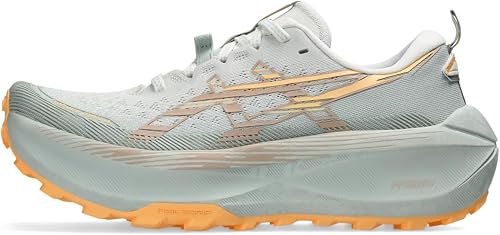
For a deeper comparison of the two leading max-cushion brands, see our Hoka vs Altra trail shoe breakdown, and if your feet measure on the wider side, our wide toe-box trail runner guide covers every 2E and 4E option available in 2026.
Trekking poles - the essential companion for neuropathic trails
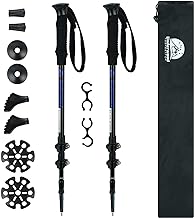
Even the best trail running shoes for diabetic neuropathy cannot fully compensate for lost proprioception on technical terrain. Trekking poles do what shoes cannot: they extend your base of support outward, give you two extra contact points to catch a fall the instant balance tips, and offload 15-25 percent of bodyweight from feet that should not be taking maximum impact. For neuropathic runners and hikers, poles are not optional accessories - they are fall-prevention medical equipment. The three options below cover the main use cases at every price point.
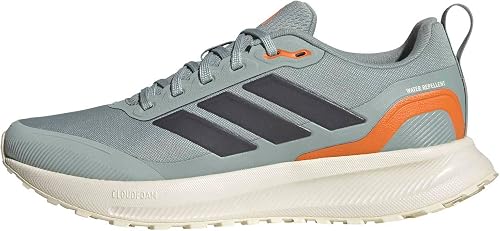
Nordic Lightweight 7075 Aluminum Trekking Poles
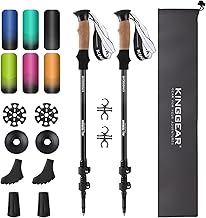
These telescoping aluminum poles use 7075 aircraft-grade aluminum, the strongest commonly-used pole alloy, and adjust from 26 to 53 inches via twist-lock collars. The strength matters when you're catching real bodyweight on a slip - cheaper 6061 aluminum can bend under emergency loads. EVA foam grips wick sweat better than rubber for long summer hikes, and the included carbide tips bite into hardpack and ice. At this weight-to-strength ratio they're a reasonable do-everything pole for a runner who hikes their long days and runs their short ones. Check current price on Amazon.
TREKOLOGY Trek-Z Cork Grip Folding Trekking Poles
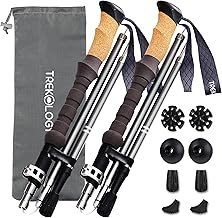
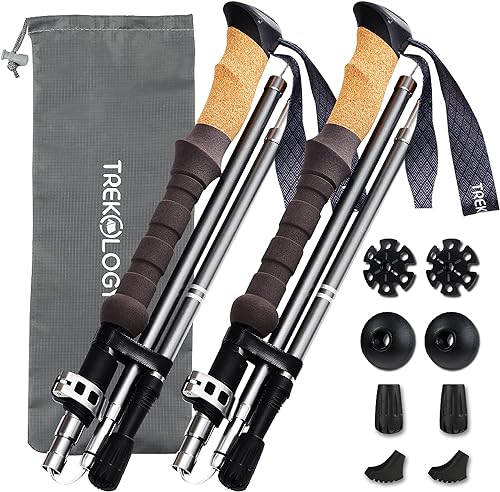
Folding (Z-pole) construction is the right choice for trail runners who want poles in a pack on the climbs and stowed on the descents. The Trek-Z collapses to about 15 inches - small enough to clip to a running vest - and deploys in under three seconds via a tensioned internal cord. The cork grip is the feature that matters most for neuropathic users: cork molds to your hand over time, wicks sweat, and gives tactile feedback even when forearm and hand neuropathy reduces grip sensation. The flick-lock system is more reliable in cold weather than twist locks. Check current price on Amazon.
Collapsible Aluminum Trekking Poles, 2-Pack
The budget option, this 2-pack covers a spouse, a hiking partner, or a backup set kept in the car. They telescope rather than fold, weigh slightly more than the premium options above, but include the basics that matter: aluminum shafts that won't snap, EVA grips, padded wrist straps, and interchangeable rubber and carbide tips. For someone testing whether poles help their balance before committing to a pricier set, or for replacement poles after a backcountry breakage, the value is hard to beat. Check current price on Amazon.
How to use trekking poles with neuropathy specifically
Set your pole length so your elbow forms a 90-degree angle when the tip is on flat ground beside your foot. Shorten by 5-10 cm on steep climbs and lengthen by the same amount on long descents. Use the wrist straps correctly - thread your hand up through the strap from below so the strap supports the weight of your push and you don't have to death-grip the cork (important when hand neuropathy weakens grip). Plant the poles deliberately on every step over rough terrain rather than only when you feel unsteady, because the feeling of unsteadiness arrives too late for a neuropathic user to react. Read more in our guide to trekking poles for balance issues.
Pre-run and post-run foot checks - non-negotiable
Even with perfect shoes and poles, a neuropathic foot needs visual inspection before and after every trail outing. Look between the toes, under the metatarsal heads, and around the heel for any redness, blister, or skin break. A small red spot you cannot feel today becomes a deep ulcer in a week. Carry a hand mirror in your pack if you cannot easily see the soles of your feet. Pair this with our diabetic-friendly hiking sock recommendations - the right socks reduce blister risk as much as the right shoes.
Frequently Asked Questions
What is the most cushioned trail running shoe for diabetic neuropathy?
The Hoka Speedgoat 6 in Wide width currently offers the best balance of maximum cushion (33 mm heel stack) and wide forefoot fit for neuropathic feet. The Hoka Mafate Speed 4 has even more cushioning (39 mm) but a narrower last, making it a second choice for those who fit standard-width shoes.
Are zero-drop shoes like Altra Lone Peak safe with diabetic neuropathy?
Zero-drop shoes distribute pressure evenly across the foot, which is generally favorable for neuropathy because it avoids concentrating force on any single insensate zone. However, the transition from a traditional 8-12 mm drop shoe to zero drop should happen over 4-8 weeks to let the Achilles and calf adapt. Discuss with your podiatrist if you have any Achilles or plantar fascia history.
Do I need custom orthotics with trail running shoes if I have neuropathy?
Custom diabetic orthotics are recommended when you have foot deformities, a history of ulceration, or biomechanical issues your podiatrist identifies. Many neuropathic runners do well in over-the-counter cushioned insoles paired with a wide max-cushion shoe. The shoes recommended above all have removable insoles to accommodate either option.
How often should I replace trail running shoes if I have neuropathy?
Replace neuropathy-appropriate trail shoes at 300-400 miles rather than the 400-600 miles typical for non-neuropathic runners. Compressed midsole foam loses its impact-attenuation properties before it looks worn, and your numb feet will not tell you when the protection has degraded. Keep a written mileage log.
Are trekking poles really necessary for trail running with neuropathy?
For technical trail (loose rock, roots, off-camber surfaces), yes - poles cut fall risk roughly in half in balance-impaired users. For smooth, groomed paths or fire roads, poles are optional but still useful for offloading impact on long descents. A folding Z-pole carried in a running vest gives you the choice on the fly.
Can I trail run with severe diabetic neuropathy or only hike?
This is a question for your endocrinologist and podiatrist together. Many people with mild-to-moderate neuropathy run trail safely with the right shoes, poles, and foot-inspection routine. Severe neuropathy with foot deformity or prior ulceration usually means switching from running to fast hiking, which still gives excellent cardiovascular benefit at far lower foot risk.
What socks should I wear with trail running shoes for neuropathy?
Choose seamless merino-wool blend socks with a snug (not tight) fit, no toe seams, and moderate cushioning at the heel and ball. Avoid 100% cotton (holds moisture and causes blisters) and avoid compression socks unless prescribed - some neuropathy patients also have peripheral arterial disease where compression is contraindicated.
How do I know if a trail shoe is wide enough for my neuropathic feet?
Stand in the shoe on a piece of paper with your full weight, trace your foot through the upper, then step out and look at the tracing relative to the shoe outline. Your foot tracing should sit fully inside the shoe outline with at least 3-5 mm of room on each side of the forefoot. If your tracing meets or exceeds the shoe outline anywhere, size up width (not length) - that compression point will become a wound.
Key Takeaways
- Choosing the right best trail running shoes for diabetic neuropathy means matching capacity and output ports to your actual devices
- Always check actual watt-hours (Wh), not just watts — runtime depends on Wh, not peak output
- Also covers: trail shoes diabetic feet
- Also covers: cushioned trail runners neuropathy
- Also covers: trail running shoes numb feet
- Compare price-per-Wh across models to find the best value for your budget