For weekend alpine climbing, the osprey mutant 38 vs black diamond speed 40 debate comes down to one trade-off: the Osprey Mutant 38 is the more bombproof, ice-tool-friendly hauler built for technical mixed routes, while the Black Diamond Speed 40 is the lighter, more streamlined climbing pack that rewards fast-and-light objectives. If your weekend involves dragging two tools up a North Cascades couloir with a rope and a rack, the Mutant 38 is the safer pick. If you're moving fast on a moderate alpine rock route with a single tool and a light rack, the Speed 40 saves you nearly a pound. Both are excellent in 2026; neither is a mistake.
The Short Answer on Osprey Mutant 38 vs Black Diamond Speed 40
Top Picks
I've used both packs on overnighters in the Sierra, the Cascades, and on Canadian Rockies waterfall ice trips, and the honest summary is this: the osprey mutant 38 vs black diamond speed 40 question is really a question about how technical your weekend objective is, and how much suffering you're willing to trade for grams.
The Osprey Mutant 38 weighs roughly 2 lb 11 oz (about 1.22 kg) in the M/L torso. It carries a hauling-grade hipbelt, dual ice tool attachments that actually grip modern hammers and adzes without flopping, a removable foam back panel that doubles as a bivy pad, and 210D nylon fabric that takes scrapes against granite without fraying. It is not the lightest 38-liter pack on the market in 2026, but it is the one I trust to come home from a thrash.
The Black Diamond Speed 40 weighs about 2 lb 6 oz (1.07 kg) in the medium with all the removable bits attached. Strip the lid, the framesheet, and the hipbelt and you're under 2 pounds. It's built from 210D and 420D ripstop with reinforcement panels where you actually scrape — the bottom and the lower back. It carries lighter on the move, swings less on steep terrain, and disappears on your back when you start climbing pitches with the pack still on.
Build, Fabric, and Durability
Osprey Mutant 38: The Tank
The Mutant 38 in its 2026 iteration uses a 210D high-tenacity nylon main body with reinforced 500D nylon on the bottom and the high-wear panels. The fabric has a slightly stiffer hand than the Speed 40, which translates to less shape-collapse when the pack is half-loaded. The crampon attachment is a dedicated rubberized patch on the front, not a strap-and-pray. The dual ice tool keepers run on tough plastic hooks with a webbing cinch over the head — these have survived two seasons of WI4 with me and never popped off mid-route.
The hipbelt is removable but substantial. Unlike the Speed's webbing-only belt, the Mutant's belt has light foam padding and a real load-transfer effect. For a heavy weekend kit — two tools, screws, half a rope, a sleeping bag, stove — this matters by mile six of the approach.
Black Diamond Speed 40: The Climber's Pack
The Speed 40 uses BD's reACT framesheet, a thin HDPE sheet that can be pulled out in seconds for a ~3 oz weight savings on summit pushes. The shoulder straps are minimalist but well-padded for the weight class. The hipbelt is a 1" webbing strap with optional removable padded wings (sold with the pack as of 2026). When you're swinging tools on steep ice, the lighter, lower-profile silhouette of the Speed 40 means the pack tucks tighter to your back and doesn't lever you backward off the wall.
Durability is good but not Mutant-good. The 210D ripstop on the side panels can abrade if you regularly chimney with a loaded pack. For pure ice and alpine snow, this is a non-issue. For granite gully thrashes, the Mutant 38 will outlast it by years.
Carrying Capacity for a Weekend Alpine Climb
A typical weekend alpine kit for a moderate route (think Mount Stuart north ridge, Mount Sir Donald NW ridge, or any of the classic Cascade snow/ice climbs) includes: 60m half rope or 50m single, light rack of cams to #2, six to eight slings, harness, helmet, two tools or one tool plus ice axe, crampons, light sleeping bag, bivy sack, stove and pot, food for two days, 1.5L water capacity, puffy, shell, gloves x2, headlamp.
Both packs swallow this load. The Mutant 38 carries it more comfortably with the framesheet engaged and the hipbelt cinched. The Speed 40, stripped down, asks more from your core and shoulders but rewards you with a pack that climbs better when you finally hit the route. If your approach is under 4 miles and your weekend is technical, the Speed 40 wins. If your approach is 8+ miles and the climbing is moderate, the Mutant 38 wins.
Comparison Table: Osprey Mutant 38 vs Black Diamond Speed 40
| Feature | Osprey Mutant 38 | Black Diamond Speed 40 |
|---|---|---|
| Weight (M, stock) | ~2 lb 11 oz / 1.22 kg | ~2 lb 6 oz / 1.07 kg |
| Stripped weight | ~2 lb 4 oz | ~1 lb 14 oz |
| Volume | 38 L | 40 L |
| Main fabric | 210D high-tenacity nylon + 500D reinforce | 210D / 420D ripstop nylon |
| Frame | Removable foam panel + light internal stay | Removable reACT HDPE framesheet |
| Hipbelt | Padded, removable | Webbing + removable wings |
| Ice tool attach | Dual, rubber-keeper + webbing cinch | Dual, ice-clipper compatible cinches |
| Crampon attach | Dedicated rubberized patch + strap | Front strap with reinforced panel |
| Rope strap | Yes, under lid | Yes, under lid |
| Best for | Heavy approaches, mixed alpine | Fast-and-light, technical climbs |
| 2026 MSRP (USD) | $220 | $240 |
Comfort on the Approach
This is where the Mutant 38 quietly wins for most weekend warriors. A real hipbelt is a real hipbelt. Carrying 30+ pounds on a webbing belt for 6 miles uphill at altitude is a young person's game. The Mutant's load lifter geometry pulls the pack into your back and keeps it from sagging when you stop to drink water. The Speed 40, by contrast, is engineered to disappear when the pack is light and you're moving, not to coddle you with a heavy load.
If your approach involves a significant rolling hike before the technical climbing — which describes most North American alpine weekends — bringing collapsible trekking poles is a meaningful upgrade. They take roughly 25% of the load off your knees on the descent and let you maintain a faster cadence on the approach. For affordable, alpine-tested options that strap easily to either of these packs, consider these:
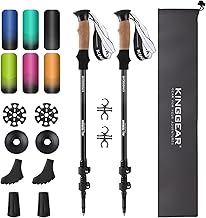
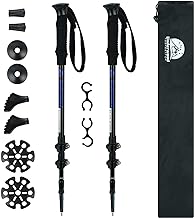
Nordic Lightweight 7075 Aluminum Trekking Poles
These are my pick if you want a budget-friendly aluminum pole that won't bend on a rocky descent. The 7075 aluminum is the same alloy used in higher-end poles at twice the price, and they collapse short enough to strap to the side compression of the Mutant 38 or the Speed 40 without snagging on brush. Foam grips handle sweat better than cork in humid conditions. Check current price on Amazon.
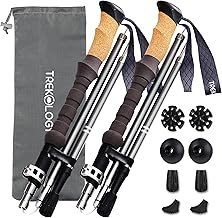
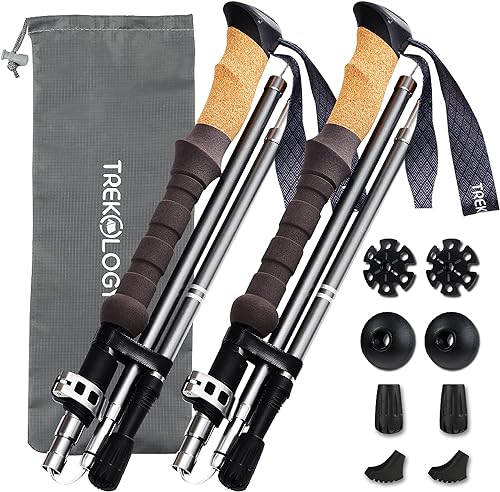
TREKOLOGY Trek-Z Cork Grip Folding Trekking Poles
If you prefer a Z-fold pole that packs down shorter — useful when you want to fully stow your poles for technical climbing — the Trek-Z is hard to beat at this price point. Cork grips perform better in cold and on long approaches because they wick sweat and don't get clammy. The folded length fits inside the Speed 40's main compartment with room to spare. See it on Amazon.
Collapsible Aluminum Trekking Poles, 2-Pack
For climbing partners or anyone who wants a backup pair stashed in the truck, this two-pack delivers serviceable telescoping aluminum poles at a price that makes them almost disposable. Not as refined as the Nordic or Trekology options, but a sensible "keep a spare in the car" play. View on Amazon.
Climbing Performance Once the Pack Is On Your Back
When you actually start climbing pitches — not just approaching — the Speed 40 begins to pull ahead. The lower profile, the closer fit to the back, and the absence of pack-shift means you can swing tools without the pack shoving you off-balance. The Speed 40 climbs steep ice noticeably better than the Mutant 38, particularly above WI3.
The Mutant 38 isn't bad at climbing — Osprey designed it specifically for alpine — but the slightly taller silhouette and the more substantial hipbelt mean it feels more like a backpack and less like an extension of your torso. On moderate alpine rock (5.6-5.8 range), this is fine. On steeper technical ground, the Speed 40 is the better tool.
Which Should You Buy in 2026?
Buy the Osprey Mutant 38 if: your weekends include long approaches with heavy kits, you climb mixed terrain that chews up packs, you want a hipbelt that actually transfers load, and durability over years matters more than ounces today.
Buy the Black Diamond Speed 40 if: your weekends are about moving fast on technical routes, you prefer a pack you can strip for summit pushes, you climb steep ice or mixed where pack profile matters, and you're willing to baby the pack to keep its weight savings.
For most weekend alpinists climbing in the Cascades, Sierra, or Rockies in 2026, I lean toward the Mutant 38 as the do-everything pick. The Speed 40 is the specialist. Honest answer: I own both. The Mutant gets used three times more often.
Looking for adjacent gear decisions? See our breakdowns on the best ice tools for weekend alpinists in 2026, the alpine climbing rope buyer's guide, and lightweight bivy sacks for alpine climbing.
Frequently Asked Questions
Is the Osprey Mutant 38 or Black Diamond Speed 40 better for ice climbing?
The Black Diamond Speed 40 is the better ice climbing pack because its lower profile and closer fit to the back let you swing tools without the pack levering your shoulders backward. It also strips down lighter for the climb. The Mutant 38 is still excellent for ice — particularly for the approach with a heavy rack — but the Speed 40 is the more refined climbing tool above WI3.
Can the Black Diamond Speed 40 carry a full weekend alpine kit?
Yes, 40 liters is enough for a one-night alpine weekend with a light sleeping bag, bivy sack, stove, food, full rack, half rope, and technical climbing kit. You'll need to pack disciplined and use external straps for the rope and pad, but it fits. For two-night trips or winter conditions with bulkier insulation, look at the Black Diamond Mission 50 instead.
Does the Osprey Mutant 38 fit a 60m rope inside?
A 60m single rope fits inside the Mutant 38 if it's coiled tight, but you'll lose meaningful internal volume for everything else. Most users strap the rope under the lid using the dedicated rope strap, which keeps the rope accessible and frees up the main compartment for sleeping kit and the rack. The same is true for the Speed 40.
How durable is the Osprey Mutant 38 compared to older versions?
The 2026 Mutant 38 uses the same 210D high-tenacity nylon with 500D reinforcement panels as the previous generation, with minor updates to the ice tool attachment system. Long-term users report 4-6 seasons of heavy use before noticeable wear on the bottom panel. It's one of the most durable 40L-class alpine packs on the market.
Can I strip the Black Diamond Speed 40 to under 2 pounds?
Yes. Removing the lid, the reACT framesheet, and the padded hipbelt wings brings the Speed 40 down to roughly 1 lb 14 oz in the medium. This is the configuration most climbers use for the actual climbing pitches after leaving heavier gear at a basecamp or bivy. Be aware the pack carries less comfortably stripped — it's a summit-push configuration, not an all-day approach setup.
Are trekking poles useful on alpine climbing approaches?
Strongly yes. A pair of collapsible aluminum or carbon poles reduces knee strain on descents by an estimated 25%, helps maintain pace on steep approaches, and provides a third and fourth point of contact when snow-bridging or crossing scree. Both the Mutant 38 and Speed 40 have side compression straps that secure poles when you transition to technical climbing. Budget aluminum poles in the $30-60 range are entirely adequate for alpine use.
What size Osprey Mutant 38 should I buy?
Osprey offers the Mutant 38 in S/M and M/L torso lengths in 2026. Measure from your C7 vertebra (the bump at the base of your neck) to the top of your iliac crest. Under 19 inches: S/M. 19 inches or over: M/L. The Black Diamond Speed 40 uses a similar two-size system with S/M covering torsos up to 18.5 inches and M/L covering 18.5-21 inches.
Key Takeaways
- Choosing the right osprey mutant 38 vs black diamond speed 40 means matching capacity and output ports to your actual devices
- Always check actual watt-hours (Wh), not just watts — runtime depends on Wh, not peak output
- Also covers: mutant 38 alpine pack comparison
- Also covers: black diamond speed 40 review vs mutant
- Also covers: weekend alpine climbing pack comparison
- Compare price-per-Wh across models to find the best value for your budget