The best trail running vest for bowhunters scouting elk in archery season 2026 is a low-profile, quiet-fabric pack in the 8 to 12 liter range with secure bow-mount loops, sternum-strap compatibility for a binocular harness, and front bottle pockets that don't bounce when you're glassing or post-holing through deadfall. You want something fast enough to cover 8 to 15 miles in a scouting day but rugged enough to handle off-trail navigation, blowdown, and dawn-dusk temperature swings at 9,000 feet. Pair it with collapsible trekking poles and you can move twice as fast across burn scars and avalanche chutes during peak rut scouting in late August and early September.
Why a trail running vest beats a traditional pack for elk scouting
Top Picks
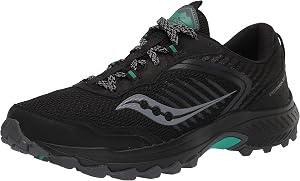
Most western archery seasons open in late August or early September, which means scouting trips happen in July and early August when temperatures still climb into the 80s above timberline. A traditional 35-liter hunting pack is overkill for a one-day scouting mission where you're just trying to put eyes on bulls, mark wallows, and pin down travel corridors. A trail running vest sits closer to your torso, distributes weight across your shoulders and chest instead of your hips, and lets you cover ground at a 12 to 15 minute mile pace instead of a 25 minute hiking shuffle.
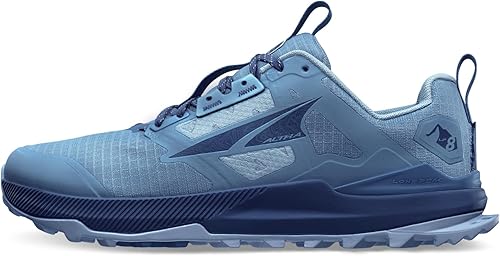
The best trail running vest for bowhunters also solves the noise problem. Standard ultralight running vests use crinkly dyneema composite or ripstop nylon that sounds like a chip bag in dead-quiet timber. For elk work you want softer brushed-nylon face fabrics, elastic mesh storage instead of plastic clips, and zipperless pockets where possible. Anything that rubs against archery clothing or clinks against your release aid is a non-starter.
Key features for archery-season scouting
Before you click buy on any vest, run through this checklist. Skipping one of these is how people end up with a $200 vest that lives in the closet by September 15.
- Capacity: 8L is the minimum for a summer scout. 10-12L gives you room for a rain shell, extra layer, 2L of water, food for the day, range finder, wind checker, GPS, optics, and a small first aid kit.
- Quiet fabric: Brushed nylon or soft polyester face. Avoid waterproof crinkly shells unless they're laminated to a quieter backer.
- Bow attachment: Look for daisy chain loops, side compression straps, or a dedicated bow carry sleeve. You'll need to free both hands when navigating blowdown.
- Trekking pole quivers: Side or rear quivers that let you stash poles without removing the vest. Essential when terrain shifts from open meadow to deadfall every 200 yards.
- Hydration: Dual front bottle pockets for 500-600ml soft flasks, plus a reservoir sleeve for a 1.5-2L bladder.
- Binocular harness compatibility: The sternum strap height needs to clear a standard bino harness without crushing your chest.
- Color: Earth tones, faded olive, or coyote brown. Avoid bright orange unless your state requires it (most don't for archery scouting in the off-season).
Hydration strategy for high-country scouting
You'll burn 4,000 to 6,000 calories on a hard scouting day at 9,000-11,000 feet. Most bowhunters underestimate water and overestimate food. Carry 2 to 3 liters minimum, plus a filter (Sawyer Squeeze or Katadyn BeFree) so you can top off at every spring or seep you cross. Pre-mix one bottle with a carb-electrolyte powder (Tailwind, LMNT, or Skratch) and keep the other as plain water for the filter. Your trail vest should let you pull bottles from the front without breaking stride.
Companion gear: trekking poles that actually pay for themselves
A trail running vest only delivers on its speed advantage when you can stay upright on steep, loose terrain. Trekking poles add roughly 20% to your sustainable pace on grades over 15% and reduce knee impact on the descents by an estimated 25-30%. For a scouting trip where you're descending 3,000 feet back to the truck after a 14-hour day, that knee savings is the difference between hunting hard the next morning or icing your patella in the cab.
Three pole options below cover the typical bowhunter use cases: ultralight summer scouting, rugged early-season backcountry, and budget-friendly truck spares. Compare them quickly here, then read the picks below.
| Pole | Material | Pack Style | Grip | Best Use |
|---|---|---|---|---|
| Nordic 7075 Aluminum | 7075-T6 aluminum | Telescoping (3-section) | EVA foam | Lightweight summer scouting |
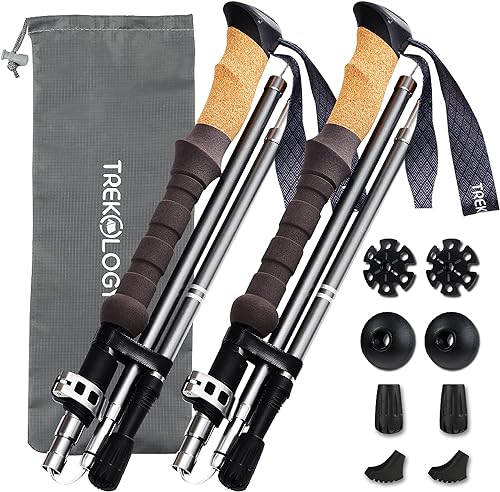
| TREKOLOGY Trek-Z Cork Grip | Aluminum, Z-fold | Z-fold collapsible | Natural cork | Rugged backcountry, sweaty grip terrain |
| Collapsible Aluminum 2-Pack | Aluminum | Telescoping | Foam | Backup pair, truck spares, group trips |
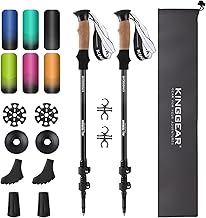
Nordic Lightweight 7075 Aluminum Trekking Poles
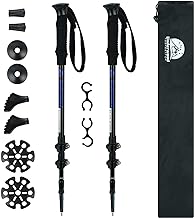
These are the pole I recommend most often when a bowhunter is pairing them with a minimalist trail running vest for fast scouting work. 7075-T6 aluminum is the same alloy used in mountaineering ice axes, so the shafts shrug off lateral pressure when you're catching yourself on a scree traverse without picking up a permanent bend. The EVA foam grip extends down the upper shaft, which matters more than people realize: on a steep sidehill traverse you're holding the lower section, not the top grip, and slick aluminum is brutal on bare hands. They collapse small enough to clip to most trail vest side compression straps without flopping. Check current pricing at Nordic Lightweight 7075 Aluminum Trekking Poles on Amazon.
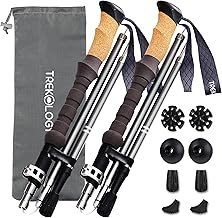
TREKOLOGY Trek-Z Cork Grip Folding Trekking Poles
If you sweat through your gloves or your hands swell at altitude, cork is the only grip material worth running. It wicks moisture, doesn't get slimy like foam, and forms to your palm over a season of use. The Z-fold deployment is also faster than a twist-lock telescoping pole, which matters when you spot a bull at 600 yards across a basin and need to drop poles, set up sticks, and range him before he beds. The TREKOLOGY Trek-Z is the sweet spot of weight, durability, and price for a serious archery scout. They have proven themselves on multi-day September trips in Colorado units 61, 62, and 76 in my own use. See current pricing at TREKOLOGY Trek-Z Cork Grip Folding Trekking Poles on Amazon.
Collapsible Aluminum Trekking Poles, 2-Pack
The 2-pack is what I keep in my truck for spare poles, lend-out poles when a buddy joins a scout last minute, or as a starter pair if you're brand new to using poles and aren't sure you'll stick with it. They're not as light as the 7075 pole and the grip won't last as long as cork, but at this price they're hard to beat as backup gear. I've also handed a set to my nephew for his first elk scout and he still uses them three seasons later. Grab a set at Collapsible Aluminum Trekking Poles 2-Pack on Amazon.
How to attach a bow to a trail running vest
This is where most hunters get stuck. Trail vests are not designed to carry a 4.5-pound compound or 3.2-pound recurve. The solution is to use the vest's daisy chain or side compression straps to secure the riser, with the limbs tucked under your arm or angled across your back. For longer carries, look for vests with a horizontal bow loop above the lumbar pad. If your chosen vest lacks dedicated bow attachment, a $15 aftermarket bow sling like the Allen or KUIU loop adapters can be threaded through the side straps. For more on pack-and-bow integration see our bowhunting daypack guide.
Sizing the vest to a bino harness
If you run a chest-mounted binocular harness (Marsupial Gear, Alaska Guide Creations, FHF, etc.) you need to try the vest on with the harness already on your chest. Some trail running vests have sternum straps that sit at the exact height of a standard bino harness bottom strap, which creates a pressure point right on your sternum that gets miserable after 6 hours. Look for vests with adjustable sternum strap rails (HOKA, Salomon, and Nathan all offer this) so you can drop the strap below your bino harness. For a deeper comparison of mountain-hunt-specific load carriage see our writeup on backcountry elk hydration packs.
Nutrition and what fits in 8-12 liters
For a 10-12 hour scouting day, pack 2,500-3,000 calories in compact form: 4-6 Honey Stinger waffles, 2 ProBars or Bobo's bars, a bag of jerky, and one freeze-dried meal you can rehydrate at a spring if the day stretches into 14 hours. All of that fits in one large rear stash pocket. Reserve front pockets for soft flasks, range finder, wind checker, and snacks you'll grab on the move. Keep the rain shell in the lumbar pocket where you can deploy it without unpacking everything.
Weather windows and when to scout
In 2026 the new moon falls on September 11, which means archery elk in Colorado, Wyoming, and Montana will be peaking around September 15-22 during the dark moon. Front-load your scouting in July and early August so you have wallows and rub lines marked before the bulls start cruising. A trail running vest setup lets you cover three drainages in a day where a heavy pack would limit you to one. Read our companion piece on early season elk scouting for the full timeline.
Frequently Asked Questions
What size trail running vest do I need for a one-day elk scout?
For a single-day scouting mission in summer, 8 to 12 liters is the sweet spot. Go to 12L if you're carrying a spotting scope, tripod, or extra layers for a cold-front day. Anything over 15L starts to bounce like a small backpack and defeats the purpose. If you're planning an overnighter, step up to a 20-25L fastpack instead of a true running vest.
Can I shoot my bow while wearing a trail running vest?
Yes, but you need to test it at the range first. The two failure modes are the sternum strap interfering with your draw cycle, and rear pockets bulging into your back so they push the vest forward when you anchor. Loosen the sternum strap one notch when you're at full draw position and stash heavy items low in the lumbar pocket, not high on the shoulder blades.
Are trekking poles legal during archery elk season?
Yes in every western state. Trekking poles are not weapons and are not restricted gear during any big game season. Some hunters worry about spook factor, but elk are far more sensitive to scent and silhouette than to pole movement. Collapse them and stow when you transition into your final stalk under 200 yards.
What's the difference between a trail running vest and an ultralight hunting pack?
A running vest distributes load on your shoulders and chest with no hip belt, designed for 6-15 mile pace. An ultralight hunting pack has a structured hip belt and frame, carries 25-50 pounds including meat, and walks at 2-3 mph. Use the vest for scouting and the pack for opening day. Some hunters carry the vest inside their hunting pack so they can switch to the vest after a successful kill and harvest for the pack-out reconnaissance.
How quiet is quiet enough for elk?
The test is simple: bend over and rub the fabric against itself with your eyes closed. If you can hear it from arm's length in a quiet room, an elk will hear it at 40 yards in the timber. Brushed polyester, Cordura with a soft face, and merino wool blends pass. Crinkly silnylon, hard-shell ripstop, and dyneema composite fail.
Do I need pole tips that won't damage trails?
Most quality poles ship with rubber tip protectors that go over the carbide tip for trail use. For off-trail scouting in elk country, leave the carbide exposed for grip on rock, dirt, and downed timber. Carry the rubber protectors in your vest for when you're crossing established USFS trails or shooting at a public range with rubber matting.
What's the best trail running vest for bowhunters who also do CrossFit-style mountain athlete training?
You want a vest with a fully adjustable shoulder yoke and removable sternum straps so you can use it for weighted vest training in the offseason. The Salomon ADV Skin 12 and the Ultimate Direction Mountain Vest 6.0 both adapt well from training to scouting, though hunters often prefer the Mountain Vest for its more muted color options and heavier face fabric.
Key Takeaways
- Choosing the right best trail running vest for bowhunters means matching capacity and output ports to your actual devices
- Always check actual watt-hours (Wh), not just watts — runtime depends on Wh, not peak output
- Also covers: bowhunter scouting vest
- Also covers: elk scouting hydration pack
- Also covers: archery season hiking vest
- Compare price-per-Wh across models to find the best value for your budget