If you're an archaeologist heading into the field to conduct artifact surveys, the right hiking backpack for archaeologists isn't a luxury—it's the difference between a productive day and a punishing one. You need a pack that carries your trowel, line level, compass, GPS, field notebook, sample bags, water, lunch, and protective gear, while sitting comfortably on your hips during 10-mile pedestrian survey transects across uneven terrain. In 2026, the best hiking backpack for archaeologists pairs 35-50L capacity with a rigid internal frame, MOLLE-style tool loops, a hydration sleeve, padded internal compartments for delicate finds, and external attachment points for trekking poles and shovels.
Field archaeology punishes gear that wasn't designed for it. A pack built for a weekend backpacker assumes you'll empty it nightly; an archaeology pack assumes you'll cram it daily with hard-edged tools, soil samples in Ziploc bags, dirty pin flags, and a sun-baked DSLR for documenting features. Below, we walk through exactly what to look for, the support gear that turns a good day into a great one, and which products on Amazon actually deliver in 2026.
What makes a backpack right for artifact surveys?
Top Picks
Before we get to picks, let's name the criteria. The hiking backpack for archaeologists you ultimately choose should hit most of these:
- 35-50 liter capacity — large enough for a full survey kit plus 3L of water, small enough not to snag in brush.
- Internal frame (aluminum or HDPE) — load transfers to your hips so your shoulders aren't dead by lunch.
- Reinforced bottom panel — 500D or 1000D Cordura survives being set on bedrock, mesquite stumps, and gravel.
- Hip-belt pockets — quick access to GPS, compass, or a flagging tape roll without dropping pack.
- Hydration reservoir sleeve — drinking via tube means fewer breaks and better hydration on hot survey days.
- External attachment points — daisy chains and compression straps for trekking poles, a shovel, a pin-flag bundle, or a rolled tarp.
- Padded internal pocket or removable cube — protects fragile diagnostics (ceramics, lithic tools) from rattling around with metal hand tools.
- Rain cover — built-in is better than nothing; you will get caught in a thunderstorm at some point.
Pay extra attention to the hip belt. A survey day is 6-9 hours of walking transects, and a pack that floats on your shoulders will leave you with trapezius knots by week's end and a chiropractor bill by month's end.
Top hiking backpack picks for archaeology field surveys
1. Best overall: a 45L tactical-style hiking pack
For most archaeologists running pedestrian survey or shovel-test transects, a 45-liter tactical hiking pack with MOLLE webbing is the sweet spot. The MOLLE grid lets you mount accessory pouches for sample bags, a small first-aid kit, or a brush/dustpan combo without compromising the main compartment. Look for one with a dedicated hydration sleeve, top and front access (a clamshell zipper saves time when you need something buried), and load-lifter straps. Brands like 5.11 Tactical, Mardingtop, and Eberlestock dominate this category and routinely show up on Amazon under $200.
2. Best ultralight option for crew chiefs
If you're the crew chief or PI bouncing between transects rather than digging alongside the crew all day, you can downsize to a 30-35L ultralight pack. Osprey's Stratos series and Gregory's Zulu line both work well: they're framed enough for water and a laptop, light enough not to fatigue you, and have stretchy front shove-pockets ideal for stashing a clipboard or rolled site map.
3. Best for survey in arid environments
Surveying the Mojave, Chihuahuan, or Sonoran Desert? Prioritize ventilation. Packs with a suspended mesh back panel (think Deuter Aircontact or Osprey Anti-Gravity) keep your shirt mostly dry and prevent the chafing that ruins week three of a field season. Pair with a wide-brim sun hat and a 3L reservoir at minimum.
Trekking poles: the underrated archaeology tool
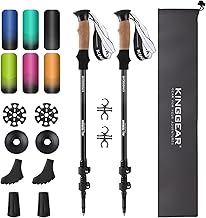
Most archaeologists don't think of themselves as trekking-pole users, but a pair of folding poles dramatically reduces knee load when you're walking 10+ miles per day across rocky uplands, doing closely-spaced transects up and down hillsides, or carrying a 35-pound pack through a wash. They also double as monopods for steadying a Brunton compass, makeshift datum stakes for sketch maps, or measuring sticks for quick pace counts. Here are the three poles worth bundling with your archaeology pack in 2026:
Nordic Lightweight 7075 Aluminum Trekking Poles
The 7075 aluminum construction makes these substantially stronger than the more common 6061-T6 poles, which matters when you're catching yourself on a loose talus slope with a heavy pack. Three-section telescoping design adjusts from roughly 26" to 53"—long enough for tall surveyors, short enough to lash to a pack lid when crawling under brush. Wrist straps adjust quickly with gloves on, and the carbide tips bite into shale and sandstone without skating.
Buy on Amazon: Nordic Lightweight 7075 Aluminum Trekking Poles
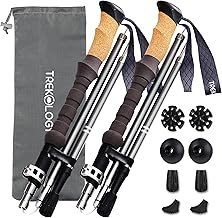
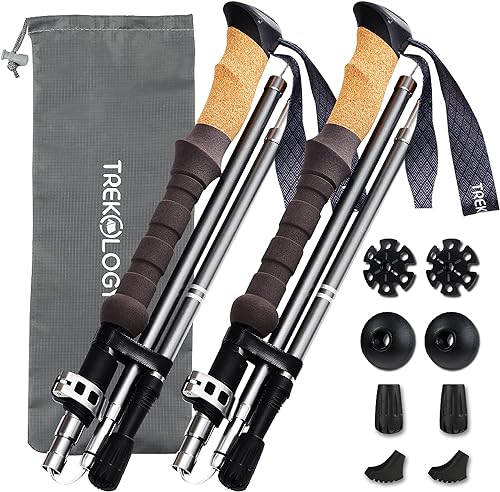
TREKOLOGY Trek-Z Cork Grip Folding Trekking Poles
The cork grip is the headline feature for archaeology use: cork doesn't get slippery when your palms sweat through nitrile gloves, and it doesn't blister you on hour eight the way foam can. The Z-fold design collapses to about 15 inches, short enough to fit inside most 45L pack lids when you're crossing a barbed-wire fence and need both hands. TREKOLOGY's flick-lever lock system is faster to deploy on rocky drops between transects than a twist-lock, which is the right tradeoff when you're working through 30 datum points before lunch.
Buy on Amazon: TREKOLOGY Trek-Z Cork Grip Folding Trekking Poles
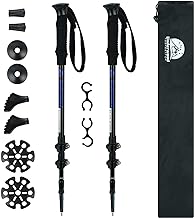
Collapsible Aluminum Trekking Poles, 2-Pack
For field schools, CRM firms outfitting a survey crew, or PIs who want spares in the truck, the 2-pack is the cost-effective choice. Each pole telescopes through a standard three-section twist-lock system, and the budget price means you won't cry if a student leaves one at a shovel-test pit. They lack the premium cork grip and 7075 alloy of the picks above, but for occasional use over a four-week project they hold up fine.
Buy on Amazon: Collapsible Aluminum Trekking Poles, 2-Pack
Trekking pole comparison
| Pole | Material | Grip | Lock Type | Best For |
|---|---|---|---|---|
| Nordic 7075 | 7075 aluminum | EVA foam | Twist-lock telescoping | Heavy-pack survey, durability |
| TREKOLOGY Trek-Z | 7075 aluminum | Cork | Flick-lever Z-fold | Solo PI, fast deploy, sweaty climates |
| Collapsible 2-Pack | 6061 aluminum | Foam | Twist-lock telescoping | Field schools, crew outfit, budget |
How to pack your archaeology survey backpack
The way you pack matters as much as the pack you choose. After a decade of field seasons, here's the layout that works:
- Bottom of main compartment: rain jacket, emergency bivvy, extra socks.
- Middle: 3L water bladder against your back (load close to spine = better balance), then your hard-tool pouch (trowel, line level, root cutters).
- Top: field notebook, GPS, calipers, anything you'll grab repeatedly.
- Brain/lid: sunblock, lip balm, snacks, headlamp, multi-tool.
- Hip-belt pockets: Brunton compass, pencil/sharpie, flagging tape.
- External daisy chain: trekking poles when not in use, pin-flag bundle, rolled site map tube.
- Padded internal pocket: any diagnostic artifacts collected (always with a Tyvek tag and acid-free baggies).
Pro tip: keep a dry-bag inside the main compartment specifically for artifact transport. Soil clings to lithics, ceramics shed dust, and you don't want your lunch sandwich tasting like a 4,000-year-old hearth.
Common mistakes when choosing a survey backpack
Three pitfalls show up repeatedly across crews we've worked with:
- Buying too big. A 65L expedition pack tempts you to overload it. Stick to 35-50L and you'll move faster and hurt less.
- Skipping the hip belt fit. Pack hip belts come sized; the belt should ride on the iliac crest, not the waist, with at least 80% of pack weight on your hips. Try it on loaded if you can.
- Ignoring brush resistance. Mesh side pockets shred in mesquite, manzanita, and yucca country. Look for solid fabric or Cordura side pockets if you survey in scrub.
For more on dialing in your field kit, see our guides to trekking poles for uneven archaeological terrain and hiking boots for archaeological fieldwork. If you're outfitting an entire crew, our survey vest buying guide covers complementary load distribution, and our geologist field-pack comparison overlaps closely if you carry rock samples.
Frequently Asked Questions
What size hiking backpack do archaeologists use for day surveys?
Most field archaeologists running single-day pedestrian or shovel-test surveys use a 35-50 liter pack. That's enough for a 3L water bladder, hand tools, GPS, field notebook, lunch, raingear, and a few sample bags without being so large it tempts overloading. Crew chiefs who carry less can size down to 28-32L; lead PIs hauling laptops and total-station rod accessories may go up to 55L.
Is a tactical or hiking backpack better for archaeological field work?
Tactical packs win for MOLLE attachment flexibility and abrasion resistance, which matter when you're constantly mounting and dismounting tool pouches and dragging through brush. Hiking packs win for hip-belt comfort and ventilation on long days. Many archaeologists settle on a hybrid: a 40-45L tactical-influenced hiking pack with both MOLLE webbing and a real internal frame with load-lifters.
Can I use a hydration bladder with a survey backpack?
Yes, and you should. A 3L hydration reservoir keeps you drinking steadily without stopping, which matters in heat. Look for a pack with a dedicated bladder sleeve against the back panel and a tube port on the shoulder strap. Magnetic clips for the bite valve are a small upgrade that prevents losing it in brush.
How do I attach a shovel or trekking poles to my pack?
Most 40L+ hiking packs have compression straps on the sides and a daisy chain on the front. For a shovel, slide the handle behind the side compression strap with the blade down, then cinch tight; for trekking poles, use the dedicated pole loops at the pack's bottom and the upper compression strap. If your pack lacks loops, two short Voile straps (around $8 each on Amazon) solve it.
What's the best way to transport artifacts safely back from the field?
Artifacts should ride in acid-free, properly labeled bags inside a rigid or padded interior compartment so they aren't crushed by tools. Many archaeologists drop a small padded camera cube or a foam-lined Tupperware into the main compartment specifically for diagnostics. Never carry diagnostic ceramics or fragile bone loose in the main bag where they can knock against a trowel.
Do I really need trekking poles for archaeology field work?
If your survey area is flat tilled cornfield, probably not. If you're surveying canyon walls, talus slopes, dune fields, or wet boggy ground with hummocks, trekking poles reduce knee strain by an estimated 25% under load and prevent the slips that cause field-season-ending sprains. Folding poles (like the TREKOLOGY Trek-Z above) lash to a pack lid when you don't need them.
How much should I spend on a survey backpack in 2026?
Budget $120-220 for a solid 40-50L pack that will survive multiple field seasons. Sub-$80 packs save money short-term but commonly fail at the shoulder strap stitching by season two, and a failed pack mid-survey costs you a day. Premium expedition packs over $300 are overbuilt for normal pedestrian survey work and add weight you don't need.
Bottom line
The best hiking backpack for archaeologists in 2026 is a 35-50L internally framed pack with MOLLE or daisy-chain attachment points, hip-belt pockets, hydration sleeve, padded interior section for diagnostics, and a reinforced bottom panel. Pair it with quality trekking poles—the TREKOLOGY Trek-Z is our pick for the solo crew chief, the Nordic 7075 for the durability-focused field archaeologist, and the 2-pack collapsible aluminum poles for field schools outfitting an entire crew. Get the fit right at the hip belt, pack heavy items close to your spine, and you'll finish each season strong instead of limping into the lab.
Key Takeaways
- Choosing the right hiking backpack for archaeologists means matching capacity and output ports to your actual devices
- Always check actual watt-hours (Wh), not just watts — runtime depends on Wh, not peak output
- Also covers: field survey backpack
- Also covers: artifact collection pack
- Also covers: trowel and brush daypack
- Compare price-per-Wh across models to find the best value for your budget