Picking a hydration pack for hybrid CrossFit ruckers comes down to four non-negotiables: a low-profile silhouette that won't fight your plate carrier or ruck straps, a 1.5-2L bladder that survives burpees and bear crawls, MOLLE webbing for attaching extras, and a sternum/waist strap system that locks the load to your torso during sprints and overhead kettlebell work. In 2026, the gear has finally caught up to the sport — hybrid athletes no longer have to choose between a tactical assault pack and an ultramarathon vest. This guide breaks down the specs that matter for kettlebell-and-ruck WODs, plus the complementary load-bearing gear that finishes the loadout.
What makes a hydration pack work for hybrid training
Top Picks
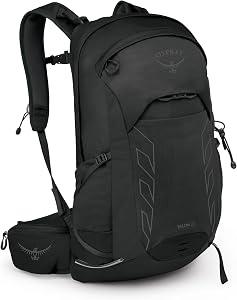
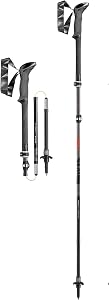
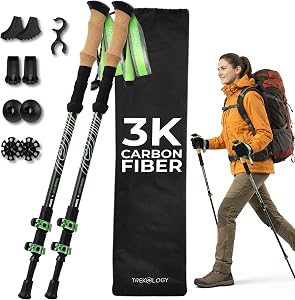
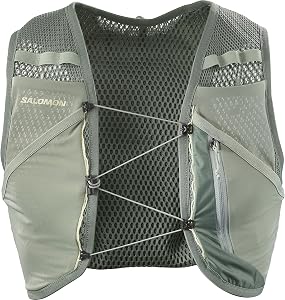
A standard trail-running vest assumes you'll cover 20+ miles at 8-10 minute miles with nothing on your back but soft flasks and gels. A standard tactical hydration carrier assumes you're walking, slowly, with a 35 lb plate already on your chest. Neither one is built for the modern hybrid block: 800m ruck, 21 kettlebell swings, 12 burpees over the ruck, 400m sprint, repeat. The right hydration pack for hybrid CrossFit ruckers sits in the overlap between those two worlds.
Capacity: 1.5L to 2L is the sweet spot
A 3L bladder is overkill for anything under 90 minutes and the slosh ruins your cadence on burpees. A 1L bladder runs dry on a hot 60-minute ruck. The Goldilocks zone is 1.5-2L — enough water for an hour of high-intensity work in 80°F+ weather without the weight penalty. Look for bladders rated TPU-coated polyurethane (not PVC), with a wide-mouth fill port that takes ice cubes, and a quick-release hose so you can swap it mid-WOD.
Profile: low and centered, never tall
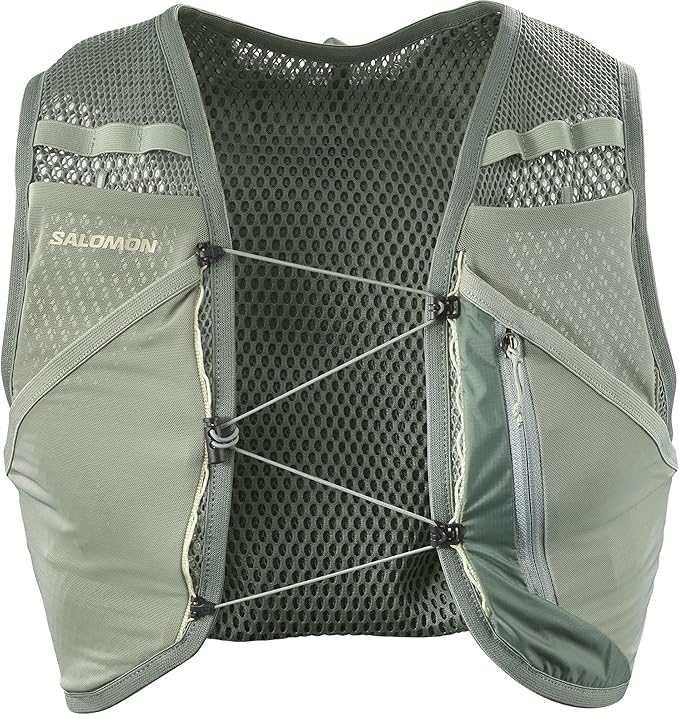
If the pack rides above your shoulder blades it will catch on a plate carrier collar and torque your neck on every burpee. If it rides below your lumbar it will bounce off the ruck plate. The pack body should sit between T4 and T10 — roughly upper-mid back — with the bladder hose routed over the dominant shoulder. A 7-12 liter total volume hits that profile without giving up cargo space for a windbreaker, headlamp, and emergency 800-calorie ration bar.
Strap system: 4 points of contact minimum
Shoulder straps, an adjustable sternum strap, and a waist belt with at least a 1.5" wide buckle. Two sternum straps (a high and a low) are better — common on vest-style packs — because they distribute load across the pec line instead of choking the windpipe when you breathe hard on a sprint. The waist belt should sit on the iliac crest, not the soft belly, and it must not interfere with the bottom edge of a plate carrier cummerbund.
MOLLE and admin pouches
Hybrid ruckers carry an ID, a phone, a key, a multitool, sometimes a small first-aid kit, and usually a gel or two. PALS-spec MOLLE webbing on the front shoulder straps means you can clip on a chest rig admin pouch without rebuilding the whole loadout. Avoid packs with sewn-in pouches that you can't reconfigure — your gear list will change between a Memorial Day Murph and a 12-mile GORUCK challenge.
The mechanics of running with a hydration pack and a ruck
Hybrid athletes wear two systems at once: a ruck on the back (20-50 lbs) and a hydration vest on top of or in front of it. The hydration pack lives between the ruck and the skin, with bladder on the inner face so the cold water cools the lumbar spine. Hose routes up under the ruck strap and over the shoulder — this is non-negotiable for sprint mechanics. A hose that snakes around the side will whip your arm on every stride and the bite valve will end up in your armpit.
For shorter metcons (under 30 minutes) you can skip the ruck entirely and run the hydration pack solo with a weighted vest underneath. The vest acts as the load and the pack supplies water and small-item storage. This is the configuration most CrossFit gyms use for the hero WODs that involve runs — it's faster than rucking and the hydration pack doesn't fight the vest plates because the vest is closer to the torso.
Bladder care: the make-or-break maintenance issue
Most hydration bladders fail not from puncture but from mold in the hose. After every session, drain the bladder, blow air through the hose to clear water, and hang it inverted with a clothespin clipped to the fill port so air circulates. Once a week, run a denture-cleaning tablet through it. Once a month, freeze the bladder empty — this kills any biofilm that's started to form. A hydration pack for hybrid CrossFit ruckers gets abused in ways trail-running packs don't, so this maintenance routine is the difference between a 5-year bladder life and a 6-month one.
Complementary gear: trekking poles for long heavy carries
Once you push past the 90-minute mark on a heavy ruck — especially with elevation — trekking poles save your knees, transfer 20-30% of the load to your upper body, and stabilize the descent. Hybrid athletes training for events like the GORUCK Heavy, the Spartan Hurricane Heat 12-hour, or any tactical selection ruck use poles for the long Sunday session even if they wouldn't be allowed in the actual event. They turn a ruck into a full-body workout and protect the joints that get hammered by daily metcons.
Three pole options worth considering in 2026 — all three pair well with a hydration-pack-plus-ruck loadout because they collapse small enough to clip to MOLLE webbing when you don't need them in your hands.
Comparison: trekking poles for hybrid ruckers
| Pole | Weight (pair) | Material | Pack-down length | Best for |
|---|---|---|---|---|
| Nordic Lightweight 7075 Aluminum | ~1.0 lb | 7075 aluminum | ~25 in | Maximum durability under heavy ruck loads |
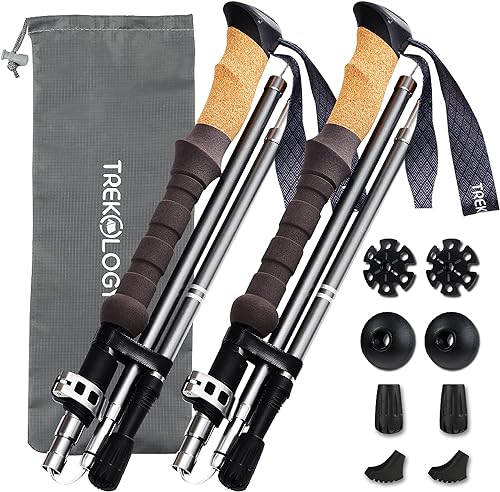
| TREKOLOGY Trek-Z Cork Grip Folding | ~1.1 lb | Aluminum, Z-fold | ~15 in | Fast deploy, sweat-resistant cork grip |
| Collapsible Aluminum 2-Pack | ~1.2 lb | Aluminum, telescoping | ~24 in | Budget-friendly backup pair |
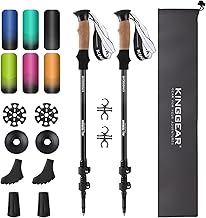
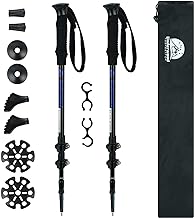
Nordic Lightweight 7075 Aluminum Trekking Poles
These use 7075-series aluminum, the same alloy used in aerospace structural parts — significantly stronger and more fatigue-resistant than the standard 6061 aluminum found in budget poles. For a hybrid athlete who's regularly pushing a 45 lb ruck up hills, the upgraded alloy means the poles won't bend under a hard plant on rocky descents. The shaft is a 3-section telescoping design with cam locks, EVA foam grips for sweat absorption, and tungsten carbide tips that bite into trail or pavement. Pair them with your hydration pack on any session over 60 minutes with elevation. Check the Nordic 7075 poles on Amazon.
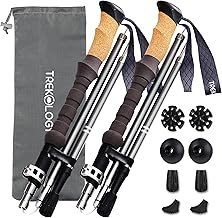
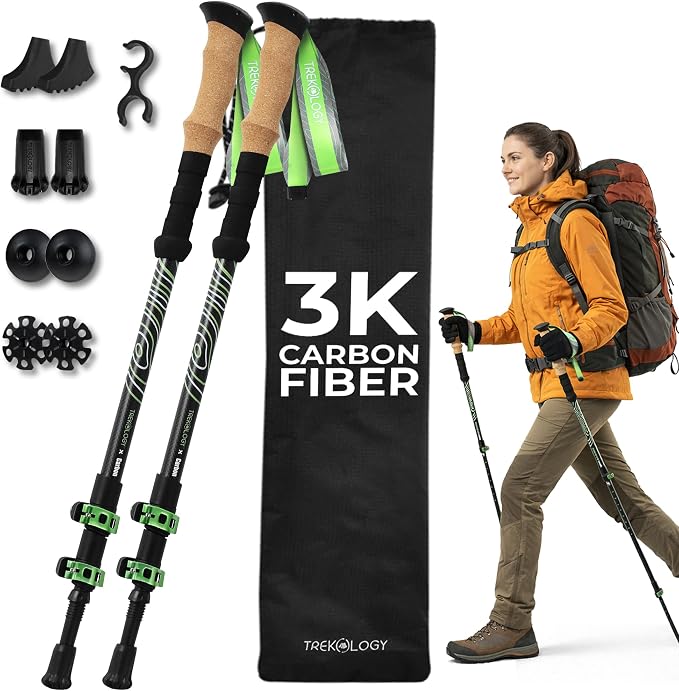
TREKOLOGY Trek-Z Cork Grip Folding Trekking Poles
The Z-fold design collapses to roughly 15 inches — small enough to stash inside the main compartment of a 12L hydration pack or clip to external MOLLE without dangling. That matters for hybrid WODs where you want the poles available for the ruck portion but stowed during a kettlebell complex or pull-up station. The cork grip is the real differentiator: cork wicks sweat better than EVA foam, doesn't get slick when wet, and molds to the hand over time. The trade-off versus a pure telescoping pole is slightly less length adjustability, but for a hybrid athlete with a fixed grip height this is irrelevant. See the TREKOLOGY Trek-Z on Amazon.
Collapsible Aluminum Trekking Poles, 2-Pack
The budget pick. Standard aluminum, telescoping design, basic foam grips, but functional and reliable. For a hybrid athlete still figuring out whether poles will become a regular part of training, this is the no-regrets entry point — cheap enough that if you discover you only use them on one out of every ten sessions, you haven't burned $150. They also serve as a solid backup pair to keep in the gym bag once you've upgraded your primary set. View the 2-pack on Amazon.
Putting the full loadout together
A complete hybrid CrossFit rucker setup for a 2026 training block looks like this: a 12L low-profile hydration pack with 2L bladder, worn over a 30 lb GORUCK or 5.11 rucksack, with sternum strap routed above the ruck shoulder straps. Trekking poles stowed in the side compression straps for runs and metcons, deployed for any session with sustained climbing. Phone, key, ID, and one emergency gel in an admin pouch on the front shoulder strap. A small first-aid kit in the pack's main compartment along with a packable windbreaker.
For longer events — anything over three hours — add an electrolyte mix to the bladder (Liquid IV, LMNT, or homemade) and a backup soft flask in the front pocket with plain water for chasing salt. Hybrid athletes underestimate sodium loss because the CrossFit portion of training is intermittent rather than steady-state, but a 90-minute ruck in summer heat is just as sweaty as a 90-minute road run.
Related guides
If you're still building the rest of your kit, these companion guides go deeper on the surrounding gear: best rucking backpacks with a water bladder compartment, trekking poles built to handle heavy ruck loads, chest-strap hydration packs for CrossFit WODs, and hydration bladders that survive tactical training.
Frequently Asked Questions
What size hydration pack should a CrossFit hybrid athlete buy?
Aim for 7-12 liters of total volume with a 1.5-2L bladder. Smaller than 7L and you can't fit a windbreaker, phone, ID, and snacks. Larger than 12L and the pack rides too tall to clear a plate carrier collar or ruck shoulder straps. The 10L mark is the most popular size among hybrid athletes because it carries everything a 60-90 minute session needs without bouncing.
Can you wear a hydration pack over a plate carrier?
Yes, and it's the standard configuration for tactical hybrid athletes. The hydration pack goes on top, with shoulder straps routed over (not under) the plate carrier shoulder straps so it can be ditched in under five seconds without taking the plate off. Make sure the hydration pack's waist belt sits below the plate carrier cummerbund — layering two waist straps at the same height creates a pressure ring that restricts breathing on max-effort work.
Is a hydration vest or a hydration backpack better for rucking?
For rucks under 90 minutes, a vest-style pack is better because it distributes weight across the chest and shoulders and doesn't compete with the ruck for back real estate. For rucks over 90 minutes or with cargo loads above 35 lbs, a backpack-style hydration carrier with a structured waist belt wins because the rigid frame transfers water weight to the hips instead of letting it hang off the shoulders.
How much water do you need for a 60-minute kettlebell ruck WOD?
Between 750ml and 1.25L depending on heat and intensity, plus a 250ml buffer in case the WOD runs long. Hybrid sessions burn more water per minute than steady-state rucking because the metcon intervals spike core temperature and the recovery walks between rounds don't fully cool you down. Always start with at least 1.5L in the bladder for any session over 45 minutes in temperatures above 75°F.
Do you need trekking poles for rucking or are they overkill?
For training rucks under 5 miles on flat ground, poles are overkill. For training rucks over 8 miles, rucks with sustained climbing, or any ruck with a load above 35 lbs, poles reduce knee impact by an estimated 20-25% and let you keep moving on days when your knees would otherwise force a rest day. Most hybrid athletes start using poles around year three of serious training when accumulated joint wear makes them necessary rather than optional.
How do you clean a hydration bladder used for electrolyte drinks?
Rinse with hot water immediately after the session, run a brush through the hose, then soak the bladder in a solution of one tablespoon baking soda and one tablespoon white vinegar per liter of warm water for 30 minutes. Rinse twice. Hang inverted to dry. Electrolyte mixes feed bacteria much faster than plain water, so this routine has to happen the same day, not the next morning — biofilm forms within 12 hours of an electrolyte drink sitting in a wet bladder.
What's the best way to carry a phone while wearing a hydration pack and a ruck?
Use a MOLLE-mounted phone pouch on the dominant-hand shoulder strap of the hydration pack. This puts the phone above the ruck shoulder straps, accessible without breaking stride, and protected from sweat by the pouch fabric. Avoid armband-style phone holders for hybrid training — they slide on sweaty arms and end up in your wrist crease during burpees. The shoulder-strap pouch is also the right spot for an ID, a credit card, and one emergency gel.
Can the same hydration pack work for trail running and CrossFit hybrid workouts?
Yes, if you choose a hybrid-tactical model rather than a pure ultrarunning vest. Pure trail vests skimp on MOLLE and have stretchy mesh storage that won't survive sandbag carries or bear crawls. Hybrid-tactical packs from brands like Source, CamelBak Mil-Spec, and 5.11 use ripstop fabric and PALS webbing while still offering the front-pocket soft flask compatibility that trail runners need. One pack, two sports.
Key Takeaways
- Choosing the right hydration pack for hybrid CrossFit ruckers means matching capacity and output ports to your actual devices
- Always check actual watt-hours (Wh), not just watts — runtime depends on Wh, not peak output
- Also covers: kettlebell ruck training pack
- Also covers: hybrid athlete hydration vest
- Also covers: weighted ruck hydration
- Compare price-per-Wh across models to find the best value for your budget